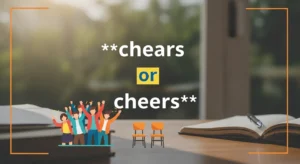
Many people get confused between “chears or cheers” when writing messages, emails, or social media posts. The problem is simple: both look similar, but only one is correct in English. The correct spelling is “cheers”, while “chears” is just a common mistake.
When people hear “cheers,” they sometimes wrongly add an “a” and write “chears.”
In this article, you will quickly learn the correct spelling, its meaning, and how to use “cheers” in real life situations like chatting, thanking someone, or saying goodbye. You will also see why “chears” is incorrect and how to avoid this mistake in the future.
Cheers or Chears – Quick Answer
The correct spelling is “cheers.”
“Chears” is incorrect and not used in standard English.
Meaning of “Cheers”:
- A toast before drinking
- Example: Cheers! Let’s celebrate your success.
- A friendly expression of thanks
- Example: Cheers for your help!
- A casual goodbye (mostly UK English)
- Example: Cheers, see you tomorrow!
Key Point:
- ❌ Chears → Wrong spelling
- ✅ Cheers → Correct spelling
Even in informal writing, “cheers” is always the standard form.
The Origin of Cheers
The word “cheers” comes from the Old French word “chiere,” meaning “face” or “expression.” Over time, it evolved into Middle English, where it was used to describe mood or spirit.
By the 18th century, “cheer” became associated with happiness and encouragement. People began using “cheers” during drinking to wish good health and happiness.
Historical development:
- Old French: chiere (face, expression)
- Middle English: chere (mood, joy)
- Modern English: cheer / cheers (celebration, thanks, goodbye)
Why “chears” is wrong:
The spelling “chears” likely comes from pronunciation confusion. Since “ear” sounds like a natural vowel combination, some learners mistakenly insert “a,” but English never adopted this spelling.
British English vs American English Spelling
Interestingly, “cheers” is used in both British and American English with the same spelling and meaning. However, usage frequency differs.
Comparison:
| Feature | British English 🇬🇧 | American English 🇺🇸 |
| Spelling | Cheers | Cheers |
| Toast usage | Very common | Less common |
| Casual goodbye | Common | Rare |
| Thank you meaning | Very common | Informal/slang |
Example usage:
- UK: Cheers mate! See you later.
- US: Thanks, cheers to your success! (less common)
👉 Conclusion: No spelling difference exists, only usage style changes.
Which Spelling Should You Use?
You should always use “cheers.”
Based on audience:
- USA audience:
Use “thanks” or “cheers” only in informal tone - UK, Australia, New Zealand:
“Cheers” is widely used in daily conversation - Global English (blogs, SEO, formal writing):
Always use “cheers”
Professional advice:
If you are writing articles, emails, or academic content, “cheers” is correct and safe everywhere. “Chears” should never be used.
Common Mistakes with Cheers
Many learners make simple but repeated mistakes with this word.
1. Wrong spelling
- ❌ Chears for help
- ✅ Cheers for help
2. Overusing in formal writing
- ❌ Dear Sir, cheers for your email
- ✅ Dear Sir, thank you for your email
3. Using in wrong tone
- ❌ Using “cheers” in legal documents
- ✅ Use formal alternatives like “sincerely”
4. Confusing meaning
“Cheers” does not always mean drinking. It can also mean:
- Thanks
- Goodbye
- Good wishes
5. Adding unnecessary letters
- ❌ Cheaers
- ❌ Cheeres
- ✅ Cheers
Cheers in Everyday Examples
1. Emails
- Cheers, looking forward to your response.
- Cheers for your quick reply.
2. Social Media
- Cheers to new beginnings! 🎉
- Big cheers for the team!
3. Chat messages
- Cheers mate!
- Cheers, see you soon.
4. Formal writing (limited use)
- In formal writing, it is better to avoid “cheers” unless the tone is friendly.
5. News / Media
- Fans raised cheers as the team won the match.
Cheers – Google Trends & Usage Data
The word “cheers” is widely searched because of confusion with spelling and meaning.
Observations:
- High search volume in South Asia (India, Pakistan, Bangladesh)
- Also common in ESL (English as Second Language) countries
- Lower confusion in native UK speakers
Search intent behind “chears or cheers”:
- Spelling confirmation
- Meaning clarification
- Usage in sentences
- Formal vs informal use
Popularity insight:
- “Cheers” is a stable high-frequency word
- “Chears” has almost no official usage but appears in typo searches
Comparison Table: Chears vs Cheers
| Feature | Chears ❌ | Cheers ✅ |
| Correctness | Incorrect | Correct |
| Usage | Never used | Standard English |
| Meaning | None | Thanks, toast, goodbye |
| Dictionary | Not listed | Listed in all dictionaries |
| Formal use | Invalid | Accepted |
FAQs
1. What is correct, chears or cheers?
“Cheers” is correct. “Chears” is a spelling mistake.
2. Is cheers British or American English?
It is used in both, but more common in British English.
3. Can I use cheers in formal writing?
Only in informal or friendly emails. Avoid in official documents.
4. Does cheers only mean drinking toast?
No, it also means thanks or goodbye in casual English.
5. Why do people write chears?
Because of pronunciation confusion and typing errors.
6. Is cheers rude in American English?
No, it is not rude, but less commonly used than in the UK.
7. Can cheers replace thank you?
Yes, in informal conversation:
- Cheers for your help! = Thank you for your help!
Conclusion
The confusion between “chears or cheers” is very common, but the correct spelling is always “cheers.” It is used for thanking someone, celebrating success, or saying goodbye in everyday English.
“Chears” is not a correct English word and should be avoided in all writing. Since English spelling can be tricky, remembering the right form helps improve your writing and makes it more professional.
Whether you are writing emails, chats, or social media posts, using “cheers” correctly keeps your communication clear and confident.
Learn More About:
Trialled or Trialed: Meaning, difference And Usage
Finalise or Finalize: Which One Is Correct? (2026)

I’m a U.S. based content writer and language researcher with a strong focus on English grammar, spelling differences, and frequently confused terms. My writing is aimed at helping readers write more clearly and correctly in daily use, workplace communication, and digital content.