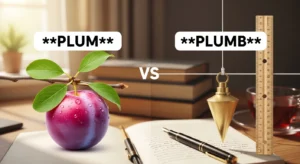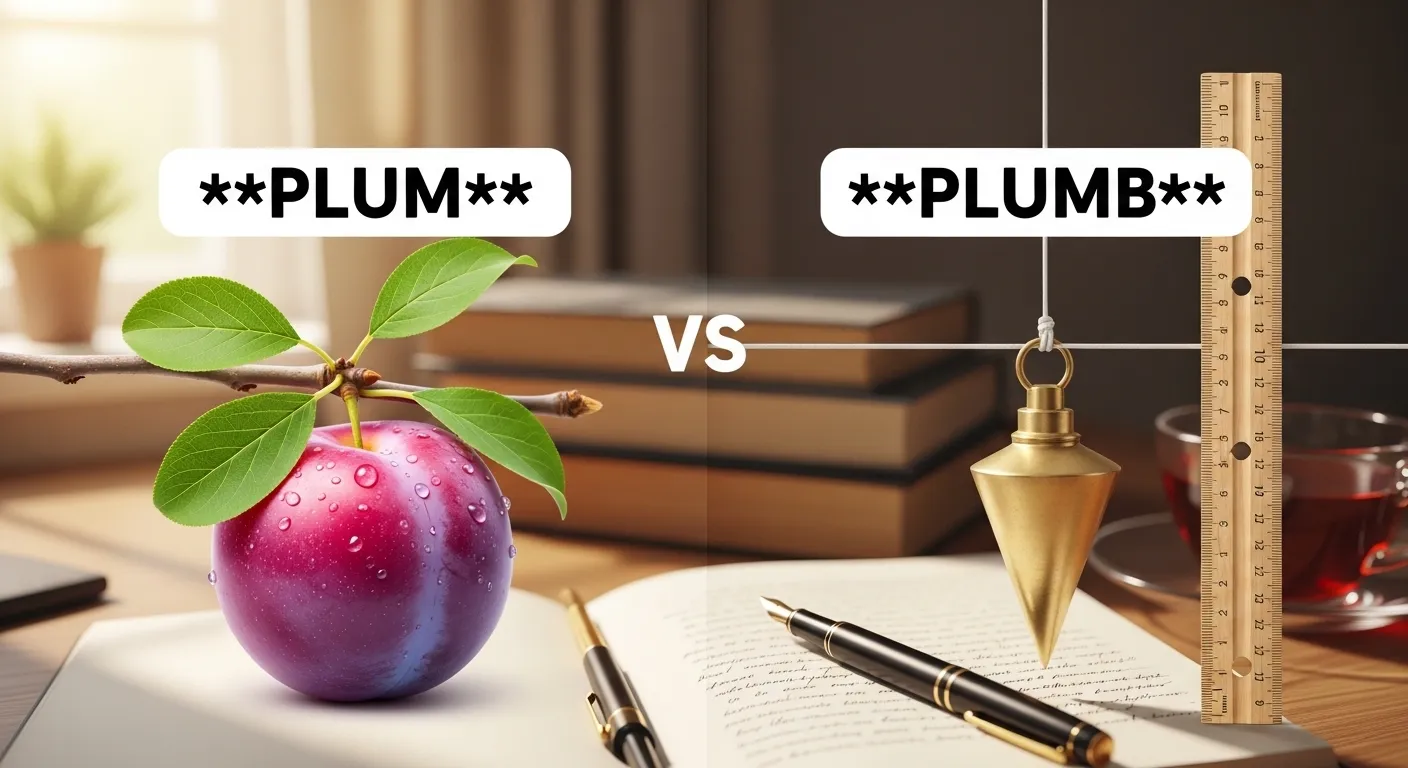
People often get confused between plum and plumb because they sound almost the same, but they are completely different words.
- Plum is a sweet fruit.
Example: I ate a juicy plum. - Plumb is about measuring, aligning, or going deep into something.
Example: The wall is perfectly plumb.
👉 Simple way to remember:
Plum = eat (fruit)
Plumb = measure or check straight/deep
So, neither is a spelling mistake. Both are correct but used in different situations.
Plum or Plumb – Quick Answer
The simple answer is: both are correct, but they mean completely different things.
- Plum → A fruit that is sweet and juicy.
Example: I ate a ripe plum after lunch. - Plumb → A word related to straight measurement, depth, or investigation.
Example: The builder used a tool to plumb the wall.
Key difference:
- Plum = Fruit 🍑
- Plumb = Measure, examine, or go deep 📏
Even though they sound similar, they are not interchangeable. Using the wrong one can completely change the meaning of your sentence.
The Origin of Plum and Plumb
Origin of “Plum”
The word plum comes from Old English “plume”, which was borrowed from Latin prunum, meaning a fruit. Over time, it became plum in modern English. The meaning has stayed simple and unchanged for centuries: a soft, sweet fruit.
Origin of “Plumb”
The word plumb comes from Latin “plumbum”, meaning lead. In ancient times, lead weights were used to measure straight lines in construction. That is why builders used a “plumb line” to check if something was straight.
Later, the word expanded to mean:
- Measuring depth (like water)
- Studying something deeply
- Investigating fully
Why the confusion exists
Both words developed in English with different meanings but similar pronunciation. That is why learners often mix them up.
British English vs American English Spelling
Unlike many English words, plum and plumb are not British vs American spelling differences. They are two completely different words used in both varieties of English.
However, their usage frequency may slightly differ depending on context.
Comparison Table
| Word | Meaning | Usage Type | Example Sentence |
| Plum | Fruit | Noun | I bought a fresh plum. |
| Plumb | Measure/depth | Verb/Adjective | The engineer will plumb the wall. |
Important Note:
- Both UK and US English use plum for fruit.
- Both use plumb for measurement and depth.
So, spelling does NOT change by region in this case.
Which Spelling Should You Use?
Choosing between plum and plumb depends on meaning, not geography.
Use plum when:
- Talking about fruit
- Writing food-related content
- Describing color (plum shade)
Use plumb when:
- Talking about construction or alignment
- Describing depth or investigation
- Using phrases like “plumb the depths”
Simple rule:
If you can eat it → plum
If you can measure or explore it → plumb
Common Mistakes with Plumb or Plum
Many errors happen because of sound similarity.
Mistake 1: Wrong spelling in food writing
❌ I ate a plumb after dinner
✔ I ate a plum after dinner
Mistake 2: Mixing meanings
❌ The chef plumb cake with fruit
✔ The chef made plum cake with fruit
Mistake 3: Misuse in technical writing
❌ The worker used plum line
✔ The worker used plumb line
Why these mistakes happen:
- Similar pronunciation
- Fast typing on mobile
- Lack of awareness of meaning difference
Plumb and Plum in Everyday Examples
1. Food context
- The juice of a plum is sweet and rich.
- Plum jam is popular in breakfast spreads.
2. Construction context
- The builder used a plumb line to check the wall.
- The structure must be perfectly plumb.
3. Formal writing
- Engineers ensure buildings are plumb and stable.
- The report helped plumb the issue deeply.
4. Social media
- “Fresh plum smoothie today!” 🍹
- “Let’s plumb the truth behind this story.”
5. Emails
- Casual: I bought some fresh plums from the market.
- Professional: The wall must be plumb before finishing work.
Plumb vs Plum – Google Trends & Usage Data
Search behavior shows that:
- “plum” is more commonly searched in food, recipes, and health content.
- “plumb” is mostly searched in construction, grammar, and technical contexts.
- Confusion searches like “plum or plumb meaning” appear frequently among students and writers.
General usage pattern:
- Plum → High everyday usage (food, lifestyle, health)
- Plumb → Medium usage (technical, academic, professional writing)
Why this matters:
People often search this keyword when:
- Writing assignments
- Editing articles
- Learning English spelling rules
- Preparing professional documents
This shows that the confusion is not random—it is language-learning related.
Comparison Table – Plum vs Plumb
| Feature | Plum | Plumb |
| Word Type | Noun | Verb / Adjective |
| Meaning | Fruit | Measure / depth / align |
| Origin | Latin prunum | Latin plumbum (lead) |
| Usage Area | Food, lifestyle | Construction, analysis |
| Example | Plum is sweet fruit | Plumb the wall straight |
FAQs
1. Is plum and plumb the same word?
No, they are completely different words with different meanings.
2. What is the meaning of plum?
Plum is a sweet fruit eaten fresh or used in desserts.
3. What does plumb mean?
Plumb means to measure depth, align something straight, or investigate deeply.
4. Why do plum and plumb sound the same?
They are homophones in English, meaning they sound similar but have different meanings.
5. Is plumb used in British or American English?
Both British and American English use the word “plumb” in technical and general contexts.
6. Can plum be used as an adjective?
Yes, “plum” can describe color or quality, like “plum color” or “plum job” (informal).
7. What is the easiest way to remember the difference?
Think: plum = fruit you eat, plumb = tool or measurement you use.
Conclusion
The confusion between plum and plumb is common, but the difference is simple.
- Plum refers to a sweet fruit or its rich color. 🍑
- Plumb is used in construction, measurement, or deep analysis. 📏
They are not spelling mistakes—they are two different words with different meanings.
👉 Easy rule:
If it’s edible or natural → plum
If it’s about straightness or depth → plumb
Understanding this helps you write more clearly and avoid common mistakes in everyday writing, emails, and studies.
Discover More About:
Handle or Handel: Which One Is Right And Wrong (2026)
Affect or Effect: Meaning, Difference And Usage