Confused about employees or employee’s? You’re not alone. A single apostrophe can completely change the meaning of a sentence.
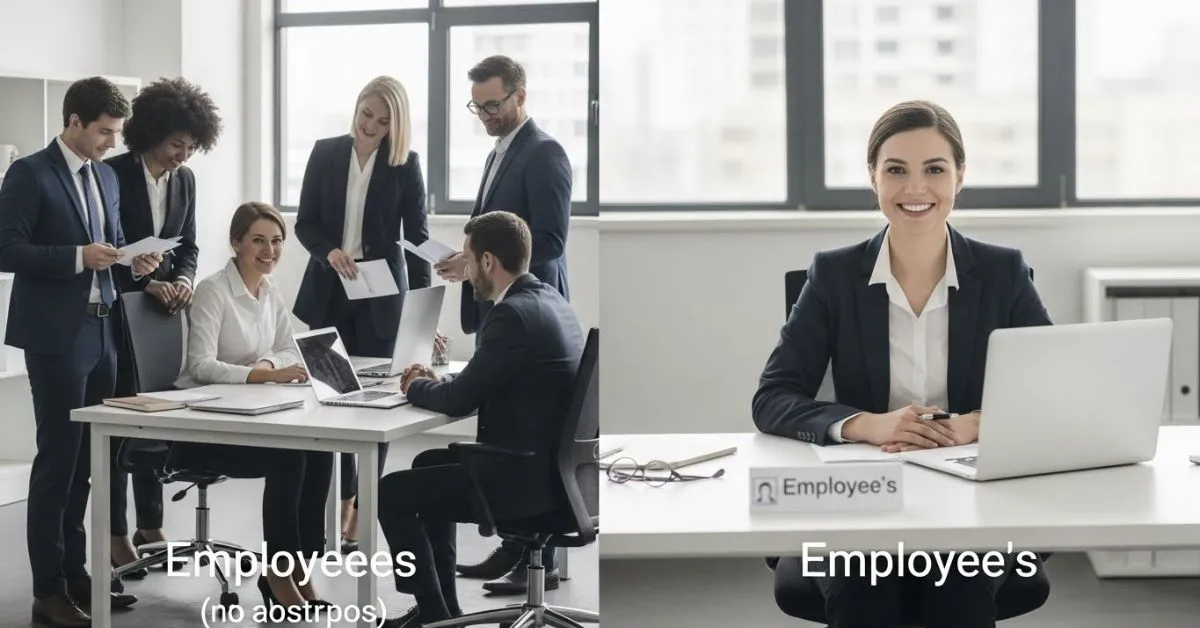
Here’s the quick idea: employees is plural (more than one employee).
Employee’s shows possession (something belongs to one employee).
Many people think apostrophes make words plural, but that’s incorrect in English grammar.
In this guide, you’ll quickly learn the difference and how to use both forms correctly in everyday and professional writing.
Employees or Employee’s – Quick Answer
Employees is the plural form of employee.
Employee’s is the singular possessive form of employee.
Examples:
- ✅ Employees are required to attend the meeting.
- ✅ The employee’s ID card was missing.
- ❌ The employee’s are unhappy. (Incorrect)
Simple Rule:
- Use employees when talking about more than one worker.
- Use employee’s when showing ownership by one employee.
The Origin of Employee’s and Employees
The word employee comes from the French word employe, meaning one who is hired. It entered the English language in the 1800s during the rise of modern businesses and organizations.
English grammar later added rules for:
- Plural nouns → usually by adding -s
- Possessive nouns → by adding an apostrophe + s
That’s where the confusion started. Since both forms end with s, many writers assume they are interchangeable. However, the apostrophe was introduced specifically to show possession, not quantity.
There is no spelling difference between British and American English for employee. The confusion exists worldwide because apostrophes are widely misunderstood in modern writing, especially online and on social media.
British English vs American English Spelling
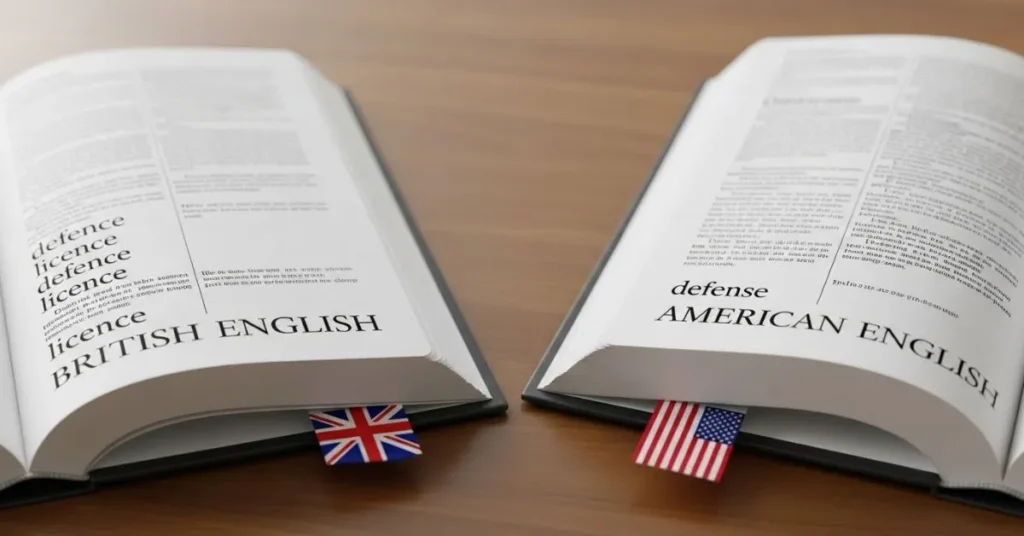
There is no spelling difference between British and American English for employees or employee’s. The rules are exactly the same.
Grammar Comparison Table
| Form | British English | American English | Meaning |
| employees | ✔ employees | ✔ employees | More than one employee |
| employee’s | ✔ employee’s | ✔ employee’s | Belonging to one employee |
| employees’ | ✔ employees’ | ✔ employees’ | Belonging to multiple employees |
Examples:
- UK: Employees must follow company rules.
- US: The employee’s performance was reviewed.
Which Spelling Should You Use?
The correct choice depends on what you want to say, not where you live.
Use employees if:
- You are talking about more than one worker
- No ownership is involved
Example:
Employees received their salaries on time.
Use employee’s if:
- One employee owns something
- You are showing possession
Example:
The employee’s desk was clean.
Use employees’ if:
- Multiple employees own something together
Example:
The employees’ union negotiated a new contract.
Audience Advice:
- US audience: Follow standard grammar rules
- UK/Commonwealth audience: Same rules apply
- Global audience: Keep sentences simple and clear
Common Mistakes with Employee’s or Employees
These mistakes appear very often in blogs, emails, and websites.
Mistake 1: Using an apostrophe for plural
The employee’s are working late.
✅ Correct:
The employees are working late.
Mistake 2: Missing apostrophe in possession
The employees uniform is blue.
✅ Correct:
The employee’s uniform is blue.
Mistake 3: Confusing singular and plural possession
The employee’s salaries were increased.
✅ Correct:
The employees’ salaries were increased.
Quick Tip:
If you can replace the word with his/her, use employee’s.
Employee’s vs Employees in Everyday Examples
Emails
- ✅ Employees are requested to submit reports.
- ✅ The employee’s leave was approved.
News
- ✅ Employees protested outside the factory.
- ✅ An employee’s statement was released.
Social Media
- ❌ Employee’s deserve better pay.
- ✅ Employees deserve better pay.
Formal Writing
- ✅ The employee’s contract was renewed.
- ✅ Employees must follow safety rules.
Employees or Employee’s – Google Trends & Usage Data
Search trends show that employees or employee’s is commonly searched in:
- United States
- United Kingdom
- India
- Pakistan
- Australia
Why People Search This:
- Writing office emails
- Creating HR documents
- Blogging and SEO content
- Academic assignments
Usage Insight:
- Employees is used far more often
- Employee’s appears mainly in formal writing
- Apostrophe errors are common in casual writing
This keyword shows high intent, meaning users want a quick answer plus a clear explanation exactly what this guide provides.
Comparison Table: Employees vs Employee’s
| Word | Type | Meaning | Example |
| employees | Plural noun | More than one employee | Employees attended training |
| employee’s | Singular possessive | Belonging to one employee | Employee’s badge |
| employees’ | Plural possessive | Belonging to many employees | Employees’ lounge |
FAQs:
1. Is employee’s plural?
No. Employee’s shows possession by one employee, not plural.
2. What does employees mean?
It means more than one employee.
3. When do I use employees’?
Use it when multiple employees own something.
4. Is employee’s correct in formal writing?
Yes, but only when showing possession.
5. Why is this mistake so common?
Because many people think apostrophes make words plural.
6. Does British English use different rules?
No. The rules are the same worldwide.
7. Employee’s or Employees’? What’s the difference?
- Employee’s (singular possessive) = One employee
- Employees’ (plural possessive) = Many employees
8. What is the plural of employee?
The employee plural is employees.
Conclusion:
The confusion between employees and employee’s is small but important. One extra apostrophe can completely change your meaning.
If you’re talking about more than one worker, the correct word is employees no apostrophe needed. If you’re showing that something belongs to one employee, then employee’s is the right choice.
It also improves your credibility, especially in business and academic writing. Always pause and ask yourself one simple question: Am I showing ownership, or am I talking about more than one person?
Once you understand that rule, this grammar problem disappears completely. With practice, choosing between employees and employee’s will feel natural and automatic.
Discover More About:
Continuous or Continual: Meaning And Differences
Classes or Class’s: Which One Is Correct?