English learners and even fluent writers often search for dissociating or disassociating because these two words look almost identical and sound similar.
At first glance, both seem correct. Spellcheck tools sometimes accept one and flag the other, which increases confusion. This leads people to wonder: Is there a difference? Are both correct? Or is one a mistake?
The confusion usually appears in academic writing, psychology topics, legal texts, and professional emails where accuracy matters.
Many users want a quick answer, while others want a clear explanation with examples they can trust. This article solves that exact problem.
In this guide, you will learn the correct spelling, where each word comes from, and why one form is preferred over the other. You’ll also see how British and American English treat the word, common mistakes people make, and how to choose the right spelling for your audience.
By the end, you’ll be confident using the correct word in everyday writing, professional documents, and online content.
Dissociating or Disassociating – Quick Answer
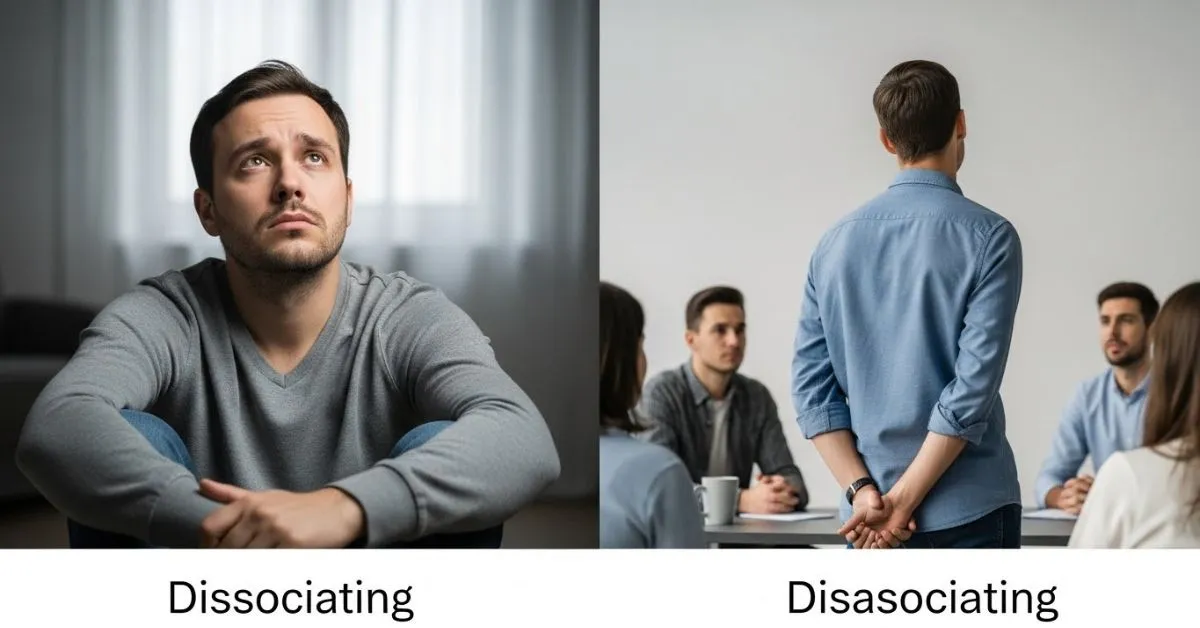
Dissociating is the correct and standard spelling.
Disassociating is nonstandard and rarely accepted in modern English.
Examples:
- ✅ She is dissociating herself from the incident.
- ❌ She is disassociating herself from the incident.
The correct form uses one dis- prefix, not two.
The Origin of Dissociating or Disassociating

The word dissociate comes from the Latin word dissociāre:
- dis = apart
- sociare = to join or associate
Together, they mean to separate from association.
Why the Confusion Exists
The confusion happens because English already uses:
- associate
- disassociate (less common but sometimes seen)
Some writers assume:
- associate → disassociate → disassociating
However, English historically standardized dissociate, not disassociate. Over time, dictionaries and style guides agreed on dissociate as the correct form.
Disassociating appears due to logical guessing, not grammatical correctness.
British English vs American English Spelling
Both British English and American English agree on the correct spelling.
Key Point:
There is no spelling difference between UK and US English for this word.
Comparison Table
| English Variant | Correct Form | Incorrect Form |
| American English | dissociating | disassociating |
| British English | dissociating | disassociating |
| Canadian English | dissociating | disassociating |
| Australian English | dissociating | disassociating |
✔️ Global standard: dissociating
Which Spelling Should You Use?
Your choice should always be dissociating, regardless of audience.
Audience-Based Advice
- US audience → dissociating
- UK audience → dissociating
- International / global readers → dissociating
- Academic or medical writing → dissociating
Using disassociating may harm credibility, especially in professional or educational contexts.
Common Mistakes with Dissociating or Disassociating
Here are the most frequent errors writers make:
❌ Adding an Extra Prefix
- disassociating ❌
- Correction: dissociating ✅
❌ Mixing Verb Forms
- He dissociated from the group yesterday and is disassociating today.
- Correction: Keep consistent tense and spelling.
❌ Assuming Spellcheck Is Always Right
Some tools fail to flag disassociating, but that does not make it correct.
Dissociating or Disassociating in Everyday Examples

Emails
- I am dissociating myself from the decisions made by the former management.
News Articles
- The company issued a statement dissociating itself from the controversial remarks.
Social Media
- Just to be clear, I’m dissociating from this drama.
Formal Writing
- The researcher formally dissociated the findings from earlier assumptions.
Dissociating or Disassociating – Google Trends & Usage Data
Search behavior shows that:
- Dissociating is widely used in psychology, law, and academic writing.
- Disassociating appears mostly in user queries due to confusion, not usage.
Popularity by Context
- Psychology & mental health: dissociating
- Legal & corporate language: dissociating
- Everyday communication: dissociating
The incorrect form appears mostly in search queries, not authoritative writing.
Keyword Comparison Table
| Word | Correct | Usage Status | Recommendation |
| dissociate | ✔️ Yes | Standard English | Use always |
| dissociating | ✔️ Yes | Standard English | Use always |
| disassociate | ⚠️ Rare | Sometimes debated | Avoid |
| disassociating | ❌ No | Nonstandard | Do not use |
FAQs
1. Is disassociating ever correct?
No. It is considered nonstandard and should be avoided.
2. Why do people still use disassociating?
Because it looks logical based on associate – disassociate, but English does not follow that pattern here.
3. Do dictionaries accept disassociating?
Most major dictionaries list dissociate as the standard form.
4. Is dissociating related to mental health?
Yes. In psychology, dissociating describes a mental process of disconnection from thoughts or identity.
5. Is there any regional difference?
No. British, American, and global English all prefer dissociating.
6. Can I use dissociating in formal writing?
Yes. It is the correct and professional choice.
7. What is the noun form?
Dissociation is the correct noun form.
Conclusion
The confusion between dissociating or disassociating is common, but the answer is simple once you understand the origin and standard usage.
Dissociating is the correct, accepted, and professional spelling in all forms of English. It comes from Latin roots and has been standardized in dictionaries, academic texts, and professional writing for decades.
On the other hand, disassociating exists mainly because it looks right, not because it is right. While some spellcheck tools fail to catch it, relying on them can lead to mistakes that affect credibility.
If you are writing an email, a blog post, a legal statement, or academic content, choosing the correct spelling matters.
To avoid confusion, remember this rule:
One prefix, one dis, and one correct choice dissociating.

I’m a U.S. based content writer and language researcher with a strong focus on English grammar, spelling differences, and frequently confused terms. My writing is aimed at helping readers write more clearly and correctly in daily use, workplace communication, and digital content.