You may have seen grayscale and greyscale and felt unsure which one is correct.
Many designers, photographers, developers, students, and writers face this same confusion.
The words look almost the same, so it is easy to wonder if one is wrong or if both are acceptable.
The confusion exists because English spelling changes by region. American English uses gray, while British English uses grey.
People search for “grayscale or greyscale” to get a clear answer and avoid mistakes.
This guide explains which spelling is correct, where each one is used, and how to choose the right option for your audience so you can write with confidence every time.
Grayscale or Greyscale: Quick Answer
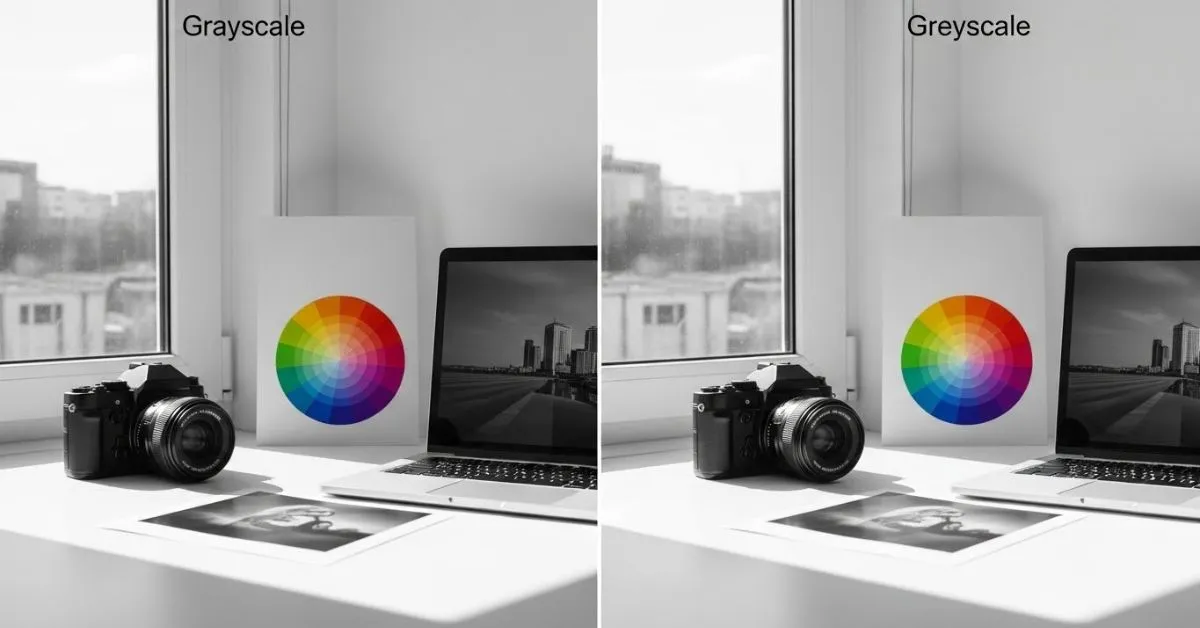
Both grayscale and greyscale are correct spellings.
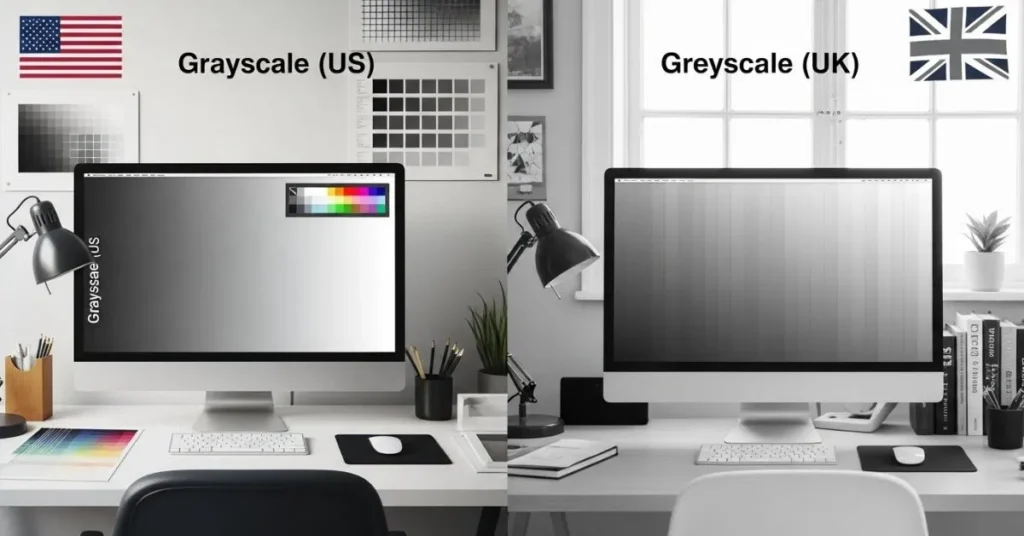
- Grayscale is used in American English
- Greyscale is used in British English
They mean the same thing: a range of shades from black to white, without color.
Examples:
- US English: Convert the image to grayscale before uploading.
- UK English: The photo appears clearer in greyscale.
The spelling depends on regional language rules, not meaning.
The Origin of Grayscale or Greyscale
The word comes from two parts:
- Gray/Grey – a color between black and white
- Scale – a range or gradient
The difference between gray and grey goes back centuries. Both spellings existed in Old English and Middle English. Over time, regional preferences developed.
When English split into American and British standards:
- American English settled on gray
- British English preferred grey
When the compound word formed, it followed the same rule:
- Grayscale = American spelling
- Greyscale = British spelling
Technology later made the word more common, especially in photography, printing, film, and digital displays. Despite modern usage, the regional spelling rule stayed the same.
British English vs American English Spelling
The difference is simple and consistent.
Core Rule
- American English: gray → grayscale
- British English: grey → greyscale
Examples in Context
- American: The camera shoots in grayscale mode.
- British: The magazine uses greyscale images.
Comparison Table
| Feature | American English | British English |
| Base color | gray | grey |
| Correct form | grayscale | greyscale |
| Used in | USA, tech docs, US media | UK, Australia, Commonwealth |
| Meaning | Black-and-white tones | Black-and-white tones |
| Correctness | Fully correct | Fully correct |
Neither spelling is more right. They simply follow different standards.
Which Spelling Should You Use?
Your audience decides the answer.
For a US Audience
Use grayscale
This applies to:
- American websites
- US-based clients
- Software documentation
- Technical writing
For a UK or Commonwealth Audience
Use greyscale
This fits:
- British publications
- Australian and New Zealand readers
- UK academic writing
For a Global Audience
Pick one spelling and stay consistent.
Most global brands choose grayscale because:
- American English dominates tech and software
- It is more common in coding, CSS, and image tools
Consistency matters more than the specific variant.
Common Mistakes with Greyscale or Grayscale
Even though both spellings are correct, mistakes still happen.
Mixing Spellings
❌ The image uses grayscale tones in a greyscale layout.
✅ Choose one spelling and use it everywhere.
Assuming One Is Wrong
❌ Greyscale is incorrect spelling.
✅ Both are correct in different regions.
Switching Based on Sound
❌ Writing randomly based on pronunciation
✅ Follow your regional English standard.
Incorrect Hyphenation
❌ grey-scale or gray-scale
✅ grayscale / greyscale (one word)
Grayscale or Greyscale in Everyday Examples
Emails
- Please export the image in grayscale format.
- The report includes greyscale charts for printing.
News Articles
- The newspaper printed the photos in greyscale.
- Older films were shot in grayscale.
Social Media
- This edit looks better in grayscale.
- Trying a greyscale theme today.
Formal Writing
- The dataset was converted to grayscale for analysis.
- The thesis includes greyscale visual data.
The meaning stays the same in all cases.
Grayscale or Greyscale – Google Trends & Usage Data
Search behavior shows clear regional patterns.
- Grayscale dominates searches in:
- United States
- Canada
- Technology-related queries
- Software and coding contexts
- Greyscale is more popular in:
- United Kingdom
- Australia
- Academic and print media contexts
Globally, grayscale appears more often because of American tech influence. Tools like Photoshop, CSS filters, and operating systems mostly use the American spelling.
Comparison Table: Keyword Variations
| Term | Correct? | Region | Notes |
| grayscale | Yes | American English | Most common globally |
| greyscale | Yes | British English | Preferred in UK |
| gray scale | No | — | Incorrect spacing |
| grey scale | No | — | Incorrect spacing |
| greyscale/grayscale mix | No | — | Avoid mixing |
FAQs:
1. Are grayscale and greyscale the same thing?
Yes. They have the same meaning. Only the spelling differs by region.
2. Is greyscale wrong in American English?
It is not wrong, but grayscale is preferred and expected.
3. Which spelling is used in Photoshop and CSS?
Most tools use grayscale, following American English.
4. Should I use grayscale in academic writing?
Use the spelling that matches your institution’s language standard.
5. Grayscale vs Greyscale, What’s the Difference?
There is no difference in meaning. Grayscale is the standard spelling in American English, while Greyscale is preferred in British English.
6. Can I use both in the same article?
No. Consistency is important.
7. Which spelling is better for SEO?
Grayscale usually performs better globally, but local SEO may favor greyscale in the UK.
Conclusion:
The choice between grayscale and greyscale is about region, not correctness.
Both spellings mean the same thing: black and white shades without color.
Use grayscale for American or global audiences.
Use greyscale for UK and Commonwealth readers.
Neither spelling is wrong or unprofessional.
The most important rule is consistency. Choose one spelling and use it everywhere. Once you know this, the confusion is gone.
Discover More About:
Biography or Autobiography: Which One Should You Use?
Volcanos or Volcanoes: Which Is Correct?

I’m a U.S. based content writer and language researcher with a strong focus on English grammar, spelling differences, and frequently confused terms. My writing is aimed at helping readers write more clearly and correctly in daily use, workplace communication, and digital content.