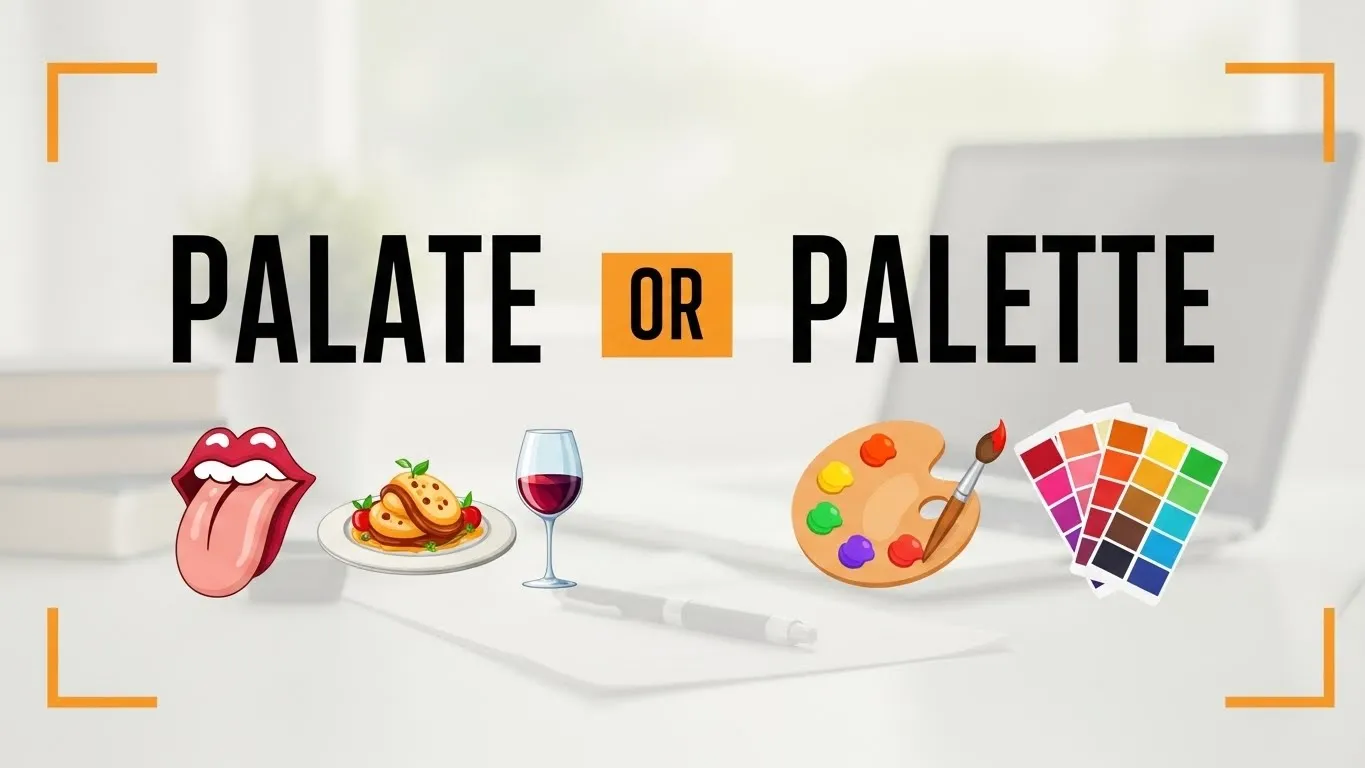
The confusion between palate and palette is very common in English. Both words look and sound similar, but they belong to completely different worlds taste and food versus art and color.
One wrong letter can change the meaning of a sentence and weaken professional or SEO-focused writing.
Writers often mix them up, such as writing a chef’s refined palette instead of palate, or an artist’s color palate instead of palette. These small mistakes are easy to miss but can hurt clarity and credibility.
This guide clears up the confusion fast. You’ll get a quick answer, simple explanations, real examples, and practical usage tips.
By the end, you’ll know exactly when to use palate and when to use palette every time.
Palate or Palette – Quick Answer
Palate and palette are both correct English words, but they have completely different meanings.
- Palate refers to taste, flavor preference, or the roof of the mouth.
- Example: She has a refined palate for spicy food.
- Palette refers to colors, especially in art, design, or fashion.
- Example: The painter chose a soft color palette.
Quick Tip to Remember
- Palate = taste / mouth
- Palette = colors / art
If your sentence is about food, flavor, or taste, use palate.
If it’s about colors, design, or visual style, use palette.
The Origin of Palate or Palette
Understanding the origin of these words explains why they look similar but mean very different things.
Origin of Palate
- Comes from Latin palatum, meaning “roof of the mouth.”
- Entered English through Old French.
- Over time, its meaning expanded from anatomy to sense of taste and taste preference.
Origin of Palette
- Comes from French palette, meaning “small flat board.”
- Originally referred to the board artists used to mix paints.
- Later evolved to mean a range of colors or visual styles.
Why the Confusion Exists
- Both words came into English through French.
- They sound similar when spoken.
- Only one letter difference separates them.
- Spellcheck often doesn’t catch misuse because both are valid words.
British English vs American English Spelling
Unlike many spelling debates, palate and palette are not British vs American variants. The spelling and meaning are the same in both forms of English.
Key Point
- Palate means taste in both British and American English.
- Palette means colors in both British and American English.
Comparison Table
| Word | Meaning | British English | American English |
| Palate | Taste / mouth | Palate | Palate |
| Palette | Colors / art | Palette | Palette |
There is no regional spelling difference only a difference in meaning.
Which Spelling Should You Use?
The correct choice depends on context, not location.
If Your Audience Is Global
Use the word that matches your meaning. Both spellings are universally accepted.
If You’re Writing About Food or Taste
Always use palate.
- Food blogs
- Restaurant reviews
- Cooking articles
- Wine or coffee tasting notes
If You’re Writing About Design or Art
Always use palette.
- Graphic design
- UI/UX
- Fashion
- Interior design
- Branding
Professional Advice
Before publishing, ask yourself:
“Am I talking about taste or color?”
Your answer gives you the correct word instantly.
Common Mistakes with Palate or Palette
These mistakes are frequent, even among fluent English speakers.
Mistake 1: Using palette for taste
❌ She has a strong spice palette.
✅ She has a strong spice palate.
Mistake 2: Using palate for colors
❌ The brand uses a bright color palate.
✅ The brand uses a bright color palette.
Mistake 3: Assuming They Are Interchangeable
They are not interchangeable. Each word has a specific meaning.
Mistake 4: Relying Only on Sound
They sound similar, but spelling changes meaning.
Palate or Palette in Everyday Examples
In Emails
- The menu is designed to please every palate.
- Please update the color palette in the presentation.
In News Articles
- Chefs are experimenting with flavors to challenge the modern palate.
- The new logo features a minimalist color palette.
On Social Media
- Traveling expands your palate and your mind.
- Loving this summer color palette!
In Formal Writing
- The study examines changes in consumer palate preferences.
- The designer selected a neutral palette to reflect professionalism.
Palate or Palette – Google Trends & Usage Data
Search data shows clear patterns in how these words are used.
Popularity by Context
- Palate is commonly searched with:
- Food
- Taste
- Wine
- Cuisine
- Palette is commonly searched with:
- Colors
- Design
- UI
- Branding
Popularity by Country
- Both words are widely searched in:
- United States
- United Kingdom
- Canada
- Australia
- India
SEO Insight
People often search “palate or palette” because they know one is wrong but aren’t sure which. Clear explanations like this reduce bounce rate and improve user satisfaction.
Palate vs Palette – Comparison Table
| Feature | Palate | Palette |
| Meaning | Taste or roof of the mouth | Range of colors |
| Used In | Food, flavor, preference | Art, design, fashion |
| Related To | Eating, tasting | Visual creativity |
| Part of Body | Yes | No |
| Art Context | No | Yes |
| Common Error | Used instead of palette | Used instead of palate |
FAQs:
1. Is palate or palette correct for food?
Palate is correct for food and taste.
2. Is palette related to painting?
Yes. Palette refers to colors and art tools.
3. Are palate and palette interchangeable?
No. They have different meanings and should not be swapped.
4. Does British English use different spelling?
No. Both British and American English use the same spellings.
5. How can I remember the difference?
Think palate = plate (food) and palette = paint (colors).
6. Can palate be used figuratively?
Yes. It can describe taste in music, art, or experience.
7. Is palette used outside art?
Yes. It’s common in branding, fashion, UI, and marketing.
Conclusion:
The difference between palate and palette is easy when you focus on meaning.
Palate relates to taste, flavor, and the mouth. Palette refers to color, design, and visual style.
They are not spelling variants or regional differences each word has its own purpose.
The confusion happens because they look and sound alike, but context makes the choice clear. Food and flavor point to palate. Art and design point to palette.
If you’re writing a blog, reviewing food, or designing a brand, using the right word keeps your writing clear and professional.
When unsure, ask one question: Is this about taste or color? The answer gives you the correct word every time.
Learn More About:
Months or Monthes: Which Spelling Is Correct?

I’m a U.S. based content writer and language researcher with a strong focus on English grammar, spelling differences, and frequently confused terms. My writing is aimed at helping readers write more clearly and correctly in daily use, workplace communication, and digital content.