Few English word pairs confuse writers as much as shall or should.
They sound similar and often appear in rules, contracts, and polite advice, which makes people unsure which one is correct or modern.
The choice matters.
Shall can sound strict or formal, while should feels softer and more natural.
Using the wrong word can change meaning, especially in legal or professional writing.
This guide explains the difference simply, with clear examples, so you know exactly when to use shall and when should with confidence.
Shall or Should – Quick Answer
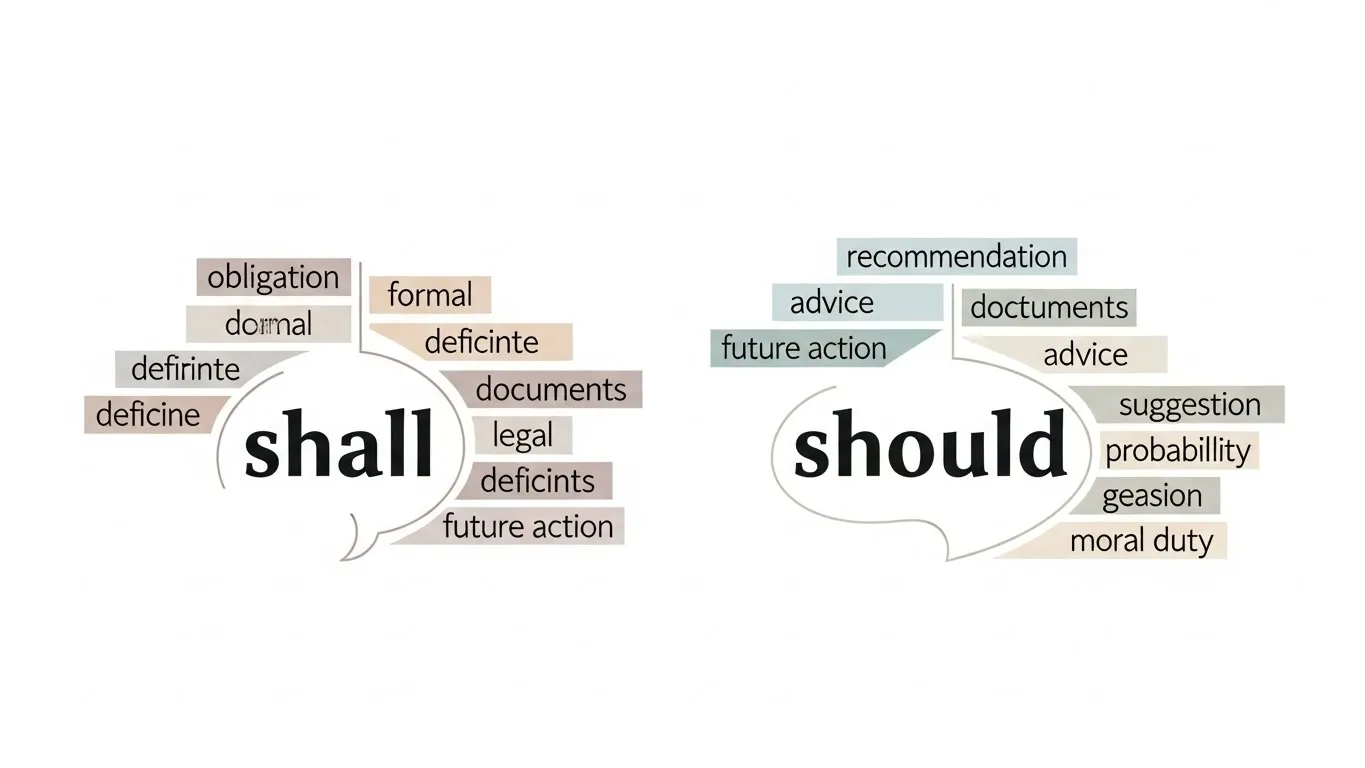
Shall is used to express strong obligation, certainty, or formal rules, especially in legal or official writing.
Should is used to give advice, recommendations, or expectations, and is far more common in everyday English.
Examples:
- You shall submit the form by Friday. (mandatory, formal)
- You should submit the form by Friday. (advice or recommendation)
In modern English, should is used much more often than shall, especially in American English.
The Origin of Should or Shall
Both shall and should come from Old English and are closely related.
- Shall comes from sceal, meaning to owe or to be obliged.
- Should developed as the past form of shall, but its meaning softened over time.
Historically:
- Shall expressed duty, command, or inevitability.
- Should expressed moral obligation, advice, or expectation.
Over centuries, English evolved. Spoken English became less formal, and should replaced shall in most situations. Today, shall survives mainly in legal documents, contracts, and very formal statements, while should dominates everyday use.
There are no spelling differences between regions, but there are strong usage differences, which causes most confusion.
British English vs American English Usage
The biggest difference between shall or should is usage, not spelling.
Key Differences
- British English still uses shall occasionally in formal speech and polite offers.
- American English rarely uses shall outside legal or very formal writing.
- Should is common and natural in both varieties.
Comparison Table: British vs American Usage
| Context | British English | American English |
| Legal rules | Common | Common |
| Polite suggestions | Sometimes “shall” | Almost never |
| Everyday advice | Should | Should |
| Questions (offers) | “Shall we go?” | “Should we go?” |
| Professional writing | Limited use | Very rare |
Example:
- UK: Shall we begin the meeting?
- US: Should we begin the meeting?
Which Should You Use?
Your choice depends on audience and purpose.
Use shall if:
- You are writing legal, contractual, or regulatory text
- You need to express mandatory obligation
- You want a formal, authoritative tone
Use should if:
- You are giving advice or recommendations
- You are writing emails, blogs, or general content
- You want a natural, modern tone
Audience-Based Advice
| Audience | Best Choice |
| US readers | Should |
| UK readers | Should (shall only in formal cases) |
| Global audience | Should |
| Legal documents | Shall (with caution) |
For SEO, blogs, and everyday writing, should is almost always the safer and clearer option.
Common Mistakes with Shall or Should
Mistake 1: Using shall in casual writing
❌ You shall enjoy this movie.
✅ You should enjoy this movie.
Mistake 2: Using should when obligation is required
❌ Employees should wear safety helmets.
✅ Employees shall wear safety helmets.
Mistake 3: Mixing both in the same document
❌ Inconsistent rules confuse readers.
✅ Choose one standard and stay consistent.
Mistake 4: Thinking shall sounds more professional
Formality does not always equal clarity. Modern professional writing prefers should unless obligation is required.
Shall or Should in Everyday Examples
Emails
- You should review the attached file.
- All employees shall follow company policy.
News Writing
- The government said citizens should remain calm.
- The law states that vehicles shall stop.
Social Media
- You should try this new app.
- Shall is almost never used here.
Formal Writing
- Participants shall adhere to the guidelines.
- Students should prepare in advance.
Shall or Should – Google Trends & Usage Data
Search data shows that “shall or should” is commonly searched by:
- Students
- Non-native English learners
- Legal and business writers
Usage Trends
- Should dominates everyday English worldwide.
- Shall appears mostly in:
- Legal texts
- Contracts
- Terms and conditions
By country:
- United States: “Should” overwhelmingly preferred
- United Kingdom: “Should” common, “shall” declining
- Global English: “Should” is standard
Modern English is moving away from shall, except where precision is legally required.
Comparison Table: Shall vs Should
| Feature | Shall | Should |
| Strength | Strong obligation | Advice or expectation |
| Tone | Formal | Neutral |
| Everyday use | Rare | Very common |
| Legal writing | Common | Limited |
| SEO-friendly | No | Yes |
FAQs:
1. Is shall outdated?
Not completely, but it is rare in modern everyday English.
2. Can I replace shall with should?
Only if obligation is not required. In legal writing, they are not interchangeable.
3. Do Americans use shall?
Very rarely, mostly in laws or contracts.
4. Is should always polite?
Yes, it sounds softer and more conversational.
5. Which is better for professional emails?
Should is clearer and more natural.
6. Is shall stronger than should?
Yes. Shall expresses duty; should expresses advice.
7. Which helps SEO and readability?
Should performs better for clarity and user intent.
Conclusion
The difference between shall and should is about tone and strength, not spelling.
Shall shows firm obligation and fits legal or formal writing.
Should gives advice or polite guidance, which is why it’s common in modern English.
For most readers and everyday writing, should is the better choice. It sounds clear, friendly, and natural. Shall can feel stiff unless a strict rule is required.
Simple rule:
Use shall for mandatory duties.
Use should for advice and recommendations.
When in doubt, choose should.
Discover More About:
Stabilise or Stabilize: What’s the Difference?(2026)
Inact or Enact: Which Spelling Is Correct in 2026?

I’m a U.S. based content writer and language researcher with a strong focus on English grammar, spelling differences, and frequently confused terms. My writing is aimed at helping readers write more clearly and correctly in daily use, workplace communication, and digital content.