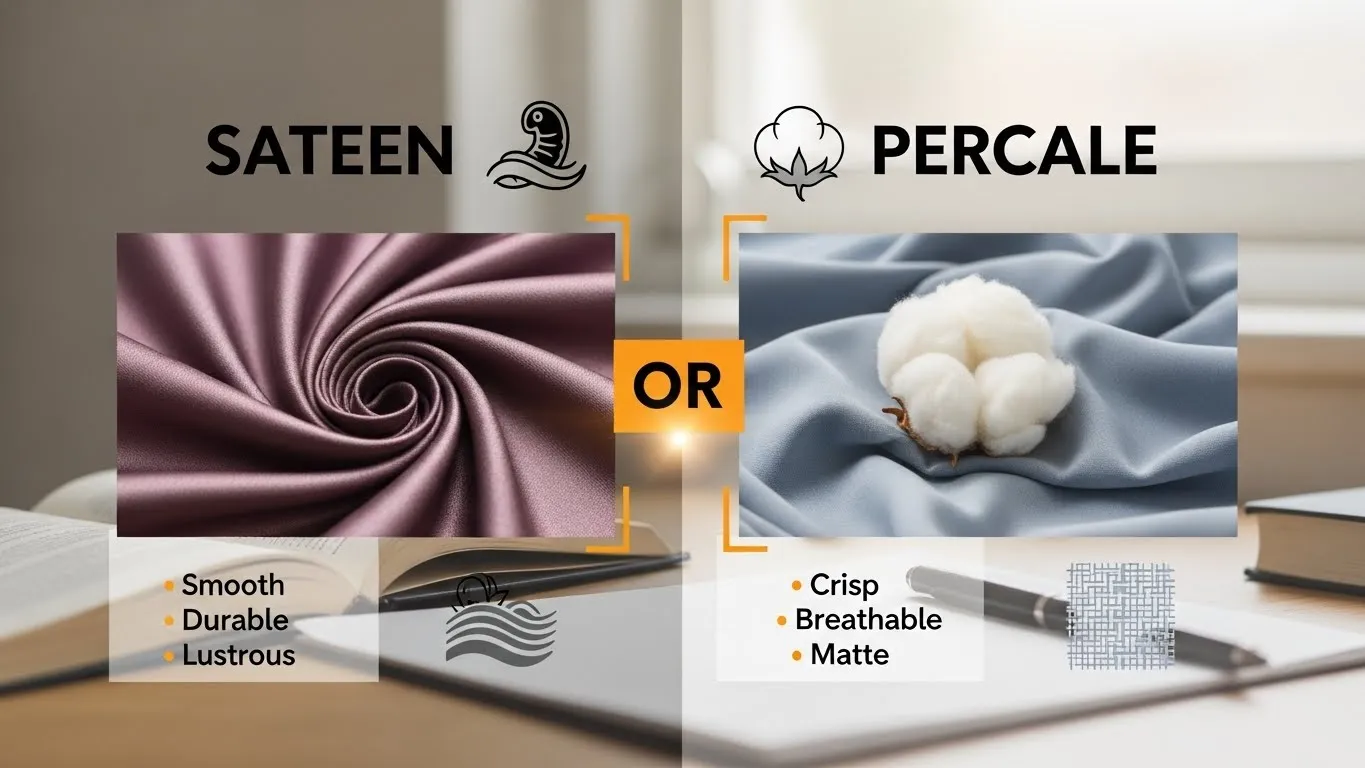
Choosing between sateen or percale can be confusing for anyone buying sheets. Both feel different, but it’s not about the material it’s the weave.
Percale is crisp and cool, perfect for hot nights, while sateen is soft and silky, ideal for cozy comfort.
Knowing the difference helps you pick the bedding that suits your sleep style and climate.
In this guide, you’ll get quick explanations, real examples, and practical tips to choose between sateen and percale with confidence.
Sateen or Percale – Quick Answer
Sateen and percale are weave styles used in bedding fabrics:
- Percale: A crisp, cool plain weave (one thread over, one under) that feels light and airy. Great for warm sleepers or hot climates.
- Sateen: A smooth, silky satin-like weave (multiple threads over one) that feels warmer and softer with a slight sheen. Ideal for cooler nights and a luxurious feel.
Both can be made from cotton or blends, but the texture and feel change because of the weave pattern.
The Origin of “Sateen or Percale”
“Sateen” and “percale” don’t come from words with confusing spelling rules they come from weaving terminology:
- Percale likely comes from French origins, historically referring to fine woven cloth.
- Sateen comes from satin weave but specifically describes that weave when cotton or similar fibers are used.
There’s no alternate spelling like “satean” or “perkale” that is widely accepted in English. The confusion often comes because many people think they are fabric types rather than weave patterns. However, both words are standard and spelled the same in all major dictionaries and textile references.
British English vs American English Spelling
When comparing British and American English:
| Term | British English | American English |
| Sateen | sateen | sateen |
| Percale | percale | percale |
👍 Good news: There is no spelling difference for either word between British and American English. Both are spelled exactly the same in the UK, US, and Commonwealth countries.
👉 Many people mistakenly try satean, satan, or perckle but these are simply misspellings. Consistent spelling helps search engines show accurate results.
Which Spelling Should You Use?
Use “sateen” and “percale” for all audiences.
- 🇺🇸 US English: “sateen” and “percale” — same.
- 🇬🇧 UK/Commonwealth: “sateen” and “percale” — same.
- 🌍 Global English: These are standard textile terms everywhere.
These words aren’t regionally different — they refer to fabric weave processes used worldwide in bedding and linens.
So there’s no need to choose a different spelling based on location. Just keep it simple:
✔️ Sateen or Percale every time.
Common Mistakes with “Sateen or Percale”
Here are frequent errors viewers make — and how to fix them:
❌ Mistake: “satean”
✔️ Correct: “sateen”
Mistake: “perckle”
Correct: “percale”
❌ Mistake: Using the terms to mean material
✔️ Correct: They refer to weave types not cotton vs polyester.
Mistake: Assuming higher thread count always means better quality
Correct: Thread count matters less than weave and fiber quality.
Most people confuse the texture differences with material types or assume that one weave is always superior but comfort often depends on climate and personal sleep style.
Sateen or Percale in Everyday Examples
Here’s how these words appear in daily writing:
📧 Email to a friend:
“I’m choosing between sateen or percale sheets — percale feels crisp, and sateen feels silkier. Which do you prefer?”
📰 News article snippet:
“Percale bedding, known for airflow and crisp feel, is recommended for hot summer sleep.”
💬 Social media caption:
“Just got new sateen sheets! So soft and cozy 😴 #bedding #sateen”
📄 Formal writing:
“The percale weave provides a matte finish and excellent breathability, while the sateen weave has a softer hand and lustrous appearance.”
In each case, the key is correct spelling and context.
Sateen or Percale – Google Trends & Usage Data
While specific real-time trends change, sateen vs percale consistently ranks as a popular bedding search topic every year, especially when seasons change people in warmer months search for percale for cool comfort and in cooler months search for sateen for warmth and softness.
Globally, searches for “percale” often spike in summer, while “sateen” spikes in winter or fall, showing seasonal bedding preferences. Bedding retailers and sleep influencers frequently compare these terms to help buyers make better decisions. The confusion around the differences keeps this keyword popular year-round.
Comparison Table: Sateen vs Percale
| Feature | Sateen | Percale |
| Weave Type | Multiple threads over one | One thread over one |
| Feel | Silky, smooth | Crisp, cool |
| Warmth | Warmer | Cooler |
| Breathability | Moderate | High |
| Sheen | Slight sheen | Matte finish |
| Wrinkle Resistance | Better | More wrinkles |
| Best For | Cold climates, luxury feel | Hot sleepers, daily use |
FAQs:
1. What does “sateen” mean?
✔️ Sateen is a weave pattern that creates a smooth, silky surface with a subtle shine.
2. What does “percale” mean?
✔️ Percale is a plain weave pattern that results in a crisp, light, breathable fabric.
3. Is sateen warmer than percale?
✔️ Yes — sateen tends to trap more heat due to its tight weave.
4. Are the terms spelled differently in UK vs US?
✔️ No — both words are spelled the same in British and American English.
5. Does thread count matter more than weave?
✔️ Not always. The weave and quality of the fiber usually have bigger impact on feel than thread count.
6. Can both be cotton?
✔️ Yes — both sateen and percale can be cotton or blended with other fibers.
7. Which is better for hot weather?
✔️ Percale — because it’s more breathable and cool.
Conclusion:
When choosing sateen or percale, it all comes down to feel and climate.
Percale is crisp, cool, and breathable perfect for hot sleepers. Sateen is soft, smooth, and cozy ideal for warmth and luxury.
Both are correct and widely used worldwide. Focus on weave, fiber, and thread count, and you’ll pick the bedding that’s perfect for your comfort.
Learn More About:
Devide or Divide: Which Is Correct?
Employees or Employee’s: Which One Is Correct?