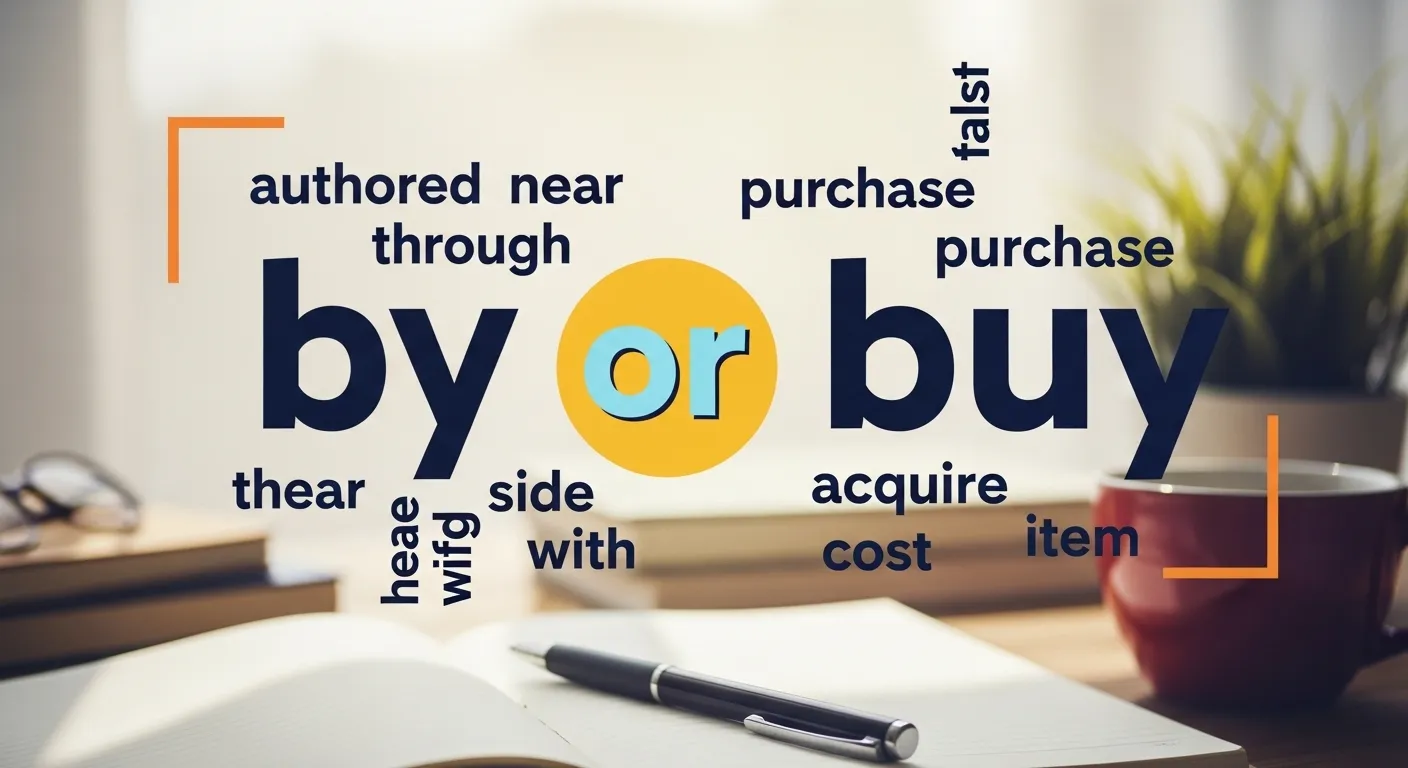
Many people search “by or buy” because the words sound the same but have different meanings. This small spelling difference can completely change a sentence.
For example, “Stand buy me” is wrong, while “Stand by me” is correct.
This guide quickly explains the difference, gives clear examples, and helps you choose the right word with confidence in emails, essays, and everyday writing.
By or Buy – Quick Answer
By and buy are different words with different meanings.
- By is a preposition or adverb.
It shows position, method, time, or authorship.- The book was written by her.
- Sit by me.
- Pay by card.
- Buy is a verb.
It means to purchase something.- I will buy a new phone.
- She wants to buy a car.
Quick Comparison Table
| Word | Part of Speech | Meaning | Example |
| By | Preposition / Adverb | Near, through, using, before | A song by Adele |
| Buy | Verb | To purchase | I will buy shoes |
Simple rule:
👉 If money is involved, use “buy.”
👉 If not, use “by.”
The Origin of By or Buy
Understanding history helps you remember the difference.
Origin of “By”
The word by comes from Old English bi or be. It meant near, beside, or about. Over time, it became a common preposition in English grammar. It is short but powerful. It connects ideas in sentences.
Origin of “Buy”
The word buy comes from Old English bycgan. It meant to obtain something in exchange for money. The spelling changed over centuries, but the meaning stayed the same.
Why the Confusion Exists
Both words sound the same in modern English. This is because English spelling and pronunciation changed over time. The sounds became similar, but the spellings stayed different.
That is why learners and even fluent speakers confuse them.
British English vs American English Spelling
Good news:
There is no spelling difference between British and American English for “by” and “buy.”
Unlike words such as “color” and “colour,” these two words are spelled the same in:
- United States
- United Kingdom
- Canada
- Australia
- India
- Pakistan
Comparison Table
| Word | American English | British English | Meaning |
| By | By | By | Near, through, using |
| Buy | Buy | Buy | Purchase |
So the confusion is not regional. It is about meaning, not spelling.
Which Spelling Should You Use?
The answer depends on your meaning, not your country.
If You Are Writing in the US
Use:
- Buy when talking about purchasing.
- By for everything else (time, author, method).
If You Are Writing in the UK or Commonwealth
The rule is exactly the same.
If You Write for a Global Audience
Keep sentences simple:
- “Buy now.”
- “Written by John.”
- “Pay by cash.”
Clear writing avoids confusion.
Common Mistakes with Buy or By
Here are frequent errors:
❌ Mistake 1
I will by a new laptop.
✔ Correct: I will buy a new laptop.
❌ Mistake 2
The book was buy Shakespeare.
✔ Correct: The book was by Shakespeare.
❌ Mistake 3
Stand buy me.
✔ Correct: Stand by me.
❌ Mistake 4
You can pay buy card.
✔ Correct: You can pay by card.
Why These Mistakes Happen
- Both words sound the same.
- Typing fast causes errors.
- Spell check does not always help.
By or Buy in Everyday Examples
Let’s see real world usage.
In Emails
- Please confirm by Monday.
- I will buy the tickets today.
In News
- A new policy introduced by the government.
- Consumers plan to buy more online this year.
On Social Media
- Click here to buy now.
- Photo by @username.
In Business Writing
- Payment must be made by bank transfer.
- We plan to buy new equipment.
By Vs Buy – Google Trends & Usage Data
Search data shows that many users type:
- by or buy difference
- when to use by and buy
- buy vs by meaning
- homophones in English
Countries with high search volume include:
- United States
- United Kingdom
- India
- Pakistan
- Canada
The confusion is common among English learners and students preparing for exams.
In e-commerce contexts, “buy” appears more in search results. In grammar learning content, “by” is more common.
Full Comparison Table
| Feature | By | Buy |
| Type | Preposition / Adverb | Verb |
| Meaning | Near, through, before, created by | Purchase |
| Related Forms | Bypass, Byline | Buyer, Buying |
| Used with Money? | No | Yes |
| Example | A novel by Jane | I will buy milk |
FAQs:
1. Is it “stand by me” or “stand buy me”?
Correct: Stand by me.
2. Is “buy” ever a preposition?
No. “Buy” is only a verb.
3. Can “by” mean purchase?
No. It never means purchase.
4. Why do they sound the same?
English pronunciation changed over time, but spelling stayed different.
5. Is there a British spelling difference?
No. Both countries use the same spelling.
6. How can I remember the difference?
“Buy” has a u like “us.” When you buy something, it is for us.
7. Does spell check fix this mistake?
Not always. Both words are correct spellings.
Conclusion:
The confusion between by or buy is common because they sound the same. But their meanings are very different. “By” is a preposition or adverb used to show method, position, time, or authorship. “Buy” is a verb that means to purchase something.
There is no difference between British and American English. The spelling stays the same worldwide. The key is understanding meaning and context.
If your sentence involves money, shopping, or purchasing, use buy. If it shows time, location, method, or authorship, use by.
Clear writing builds trust. Small grammar mistakes can change meaning and reduce professionalism. Now you know the rule. You can write emails, essays, blog posts, and business content with confidence.
When in doubt, check the meaning. That simple step will save you from mistakes.
Dicover More About:
Employees or Employee’s: Which One Is Correct?
Devide or Divide: Which Is Correct?