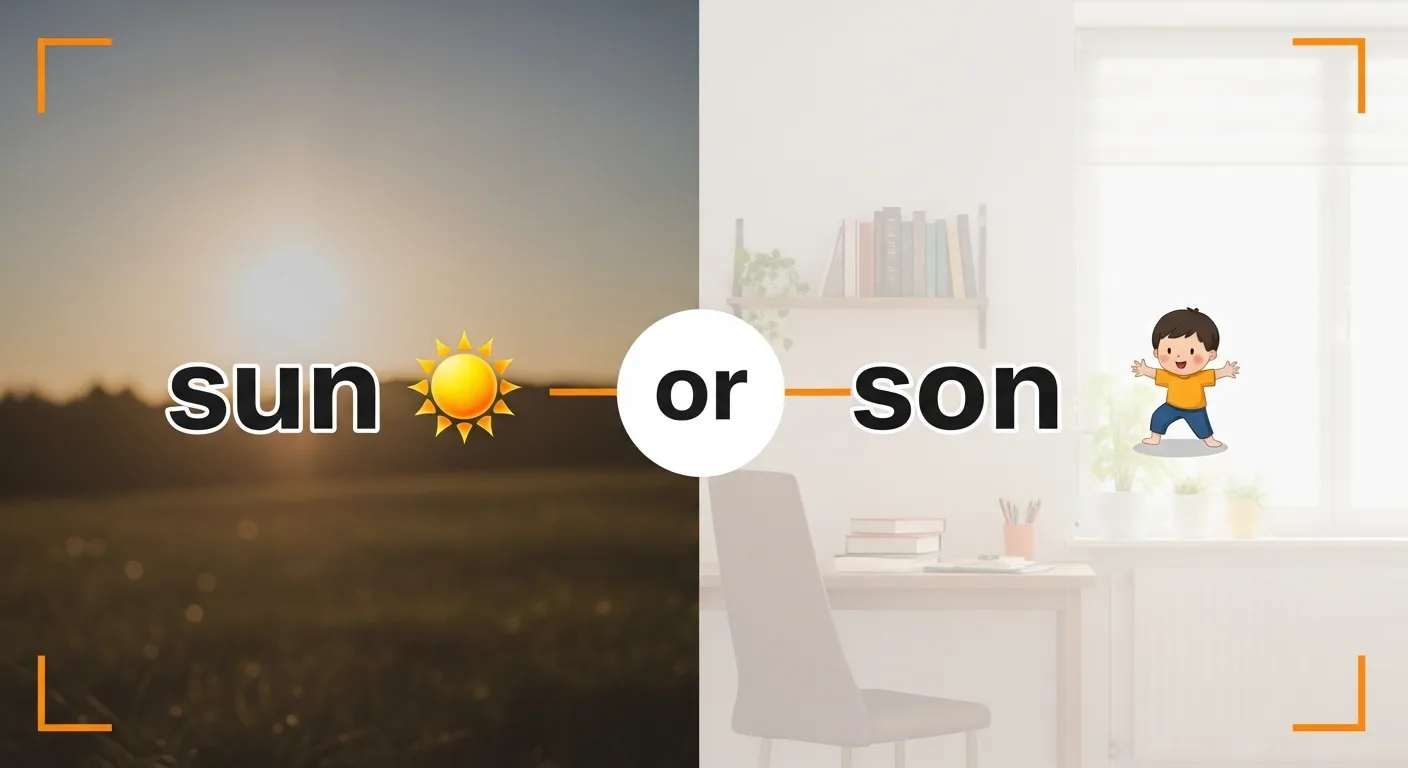
Many people search for “sun or son” because the words sound the same but mean completely different things. This confusion often leads to spelling mistakes in emails, schoolwork, and social media posts.
Here’s the simple answer:
Sun is the star in the sky that gives us light and heat.
Son is a male child.
If you are talking about space or weather, use sun. If you are talking about family, use son.
This quick guide will help you understand the difference clearly so you never mix them up again.
Sun or Son – Quick Answer
Sun refers to the star that gives Earth light and heat.
Son refers to a male child in relation to his parents.
Simple Examples:
- The sun is very bright today.
- Their son just started school.
If you are talking about space, light, heat, or daytime → use sun.
If you are talking about family or a male child → use son.
That’s the quick and simple rule.
The Origin of Sun or Son
Understanding the origin helps remove confusion.
Origin of “Sun”
The word sun comes from Old English sunne. It has roots in Germanic languages. Similar words exist in German (Sonne) and Dutch (zon). The meaning has always been the same: the star at the center of our solar system.
In modern science, the Sun is the main source of energy for Earth.
Origin of “Son”
The word son comes from Old English sunu. It also comes from Germanic roots. It has always meant a male child.
The spelling difference between sun and son developed over time as English evolved. Even though they sound the same today, they were shaped by different historical paths.
British English vs American English Spelling
Good news: there is no spelling difference between British and American English for “sun” and “son.”
Unlike words such as color/colour or judgment/judgement, both countries use the same spelling here.
| Word | American English | British English | Meaning |
| Sun | Sun | Sun | The star in the sky |
| Son | Son | Son | Male child |
So no matter where you are US, UK, Australia, Canada, or Pakistan the spelling remains the same.
The confusion is not regional. It is phonetic.
Which Spelling Should You Use?
The answer depends on meaning, not location.
Use “Sun” If:
- You are talking about weather.
- You mean daylight or heat.
- You refer to astronomy or space.
Example:
- The sun rises in the east.
Use “Son” If:
- You are talking about family.
- You refer to a male child.
- You are addressing someone religiously (e.g., “Son of God”).
Example:
- She is proud of her son.
For global writing, always focus on context. Ask yourself:
Am I talking about space or family?
That question solves everything.
Common Mistakes with Son or Sun
Here are frequent errors people make:
1. Mixing Meaning
❌ My sun is studying medicine.
✅ My son is studying medicine.
2. Weather Confusion
❌ The son is very hot today.
✅ The sun is very hot today.
3. Autocorrect Errors
Sometimes phones change “son” to “sun” or vice versa. Always proofread.
4. Social Media Typos
Quick typing leads to mistakes:
- “Love you my little sun ❤️” (unless poetic)
5. Religious or Metaphorical Usage
In Christianity, “Son” often refers to Jesus Christ:
- The Jesus Christ is called the Son of God.
Capitalization matters in religious context.
Son vs Sun in Everyday Examples
Let’s see real-life contexts.
1. In Emails
- “Please excuse my son from school tomorrow.”
- “The sun was too strong during the event.”
2. In News Headlines
- “Solar Storm From the Sun Expected This Week”
- “Local Hero Welcomes New Son”
3. On Social Media
- “Beach day under the bright sun ☀️”
- “Proud mom of a smart son 💙”
4. In Formal Writing
- “The Earth revolves around the sun.”
- “The company founder and his son attended the ceremony.”
5. In Poetry
Sometimes writers use “sun” symbolically:
- “You are my sunshine, my only sun.”
Sun or Son – Google Trends & Usage Data
Search data shows that many users type “sun or son difference” or “sun vs son meaning.”
Countries where confusion is common:
- United States
- United Kingdom
- India
- Pakistan
- Canada
Why?
Because English learners often struggle with homophones. The pronunciation is identical. Speech does not help spelling.
The word sun appears more often in science, weather, and astronomy content.
The word son appears frequently in family, religion, and legal documents.
Both words are very common in English writing.
Sun vs Son – Comparison Table
| Feature | Sun | Son |
| Meaning | Star in the sky | Male child |
| Category | Noun (astronomy) | Noun (family) |
| Pronunciation | /sʌn/ | /sʌn/ |
| British Spelling | Sun | Son |
| American Spelling | Sun | Son |
| Example | The sun is bright. | Her son is kind. |
FAQs
1. Are sun and son pronounced the same?
Yes. They are perfect homophones. Both sound like “sʌn.”
2. Is one spelling more correct?
No. Both are correct. It depends on meaning.
3. Why do people confuse sun and son?
Because English spelling does not always match pronunciation.
4. Can sun ever mean child?
Not literally. Only in poetic or symbolic language.
5. Can son refer to anything other than a child?
Yes. It can be used religiously or metaphorically:
- “Son of the soil”
- “Son of God”
6. Do British and Americans spell them differently?
No. Both countries use the same spelling.
7. Is it a grammar mistake to mix them?
Yes. It changes the meaning completely.
Conclusion:
The difference between sun or son is simple once you understand the meaning. Both words sound exactly the same, but they refer to completely different things.
The sun is the star that gives us light and warmth. A son is a male child.
There is no British or American spelling difference, so the only thing you need to focus on is context.
English has many homophones, but this pair is easy once you practice. Now you can confidently use sun or son correctly in every situation.
Discover More About: