Have you ever typed “pour or pore” and paused, unsure which one is correct? You’re not alone these words sound the same but mean very different things.
Here’s the quick answer:
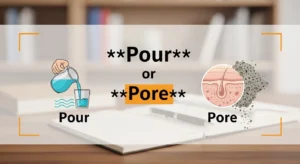
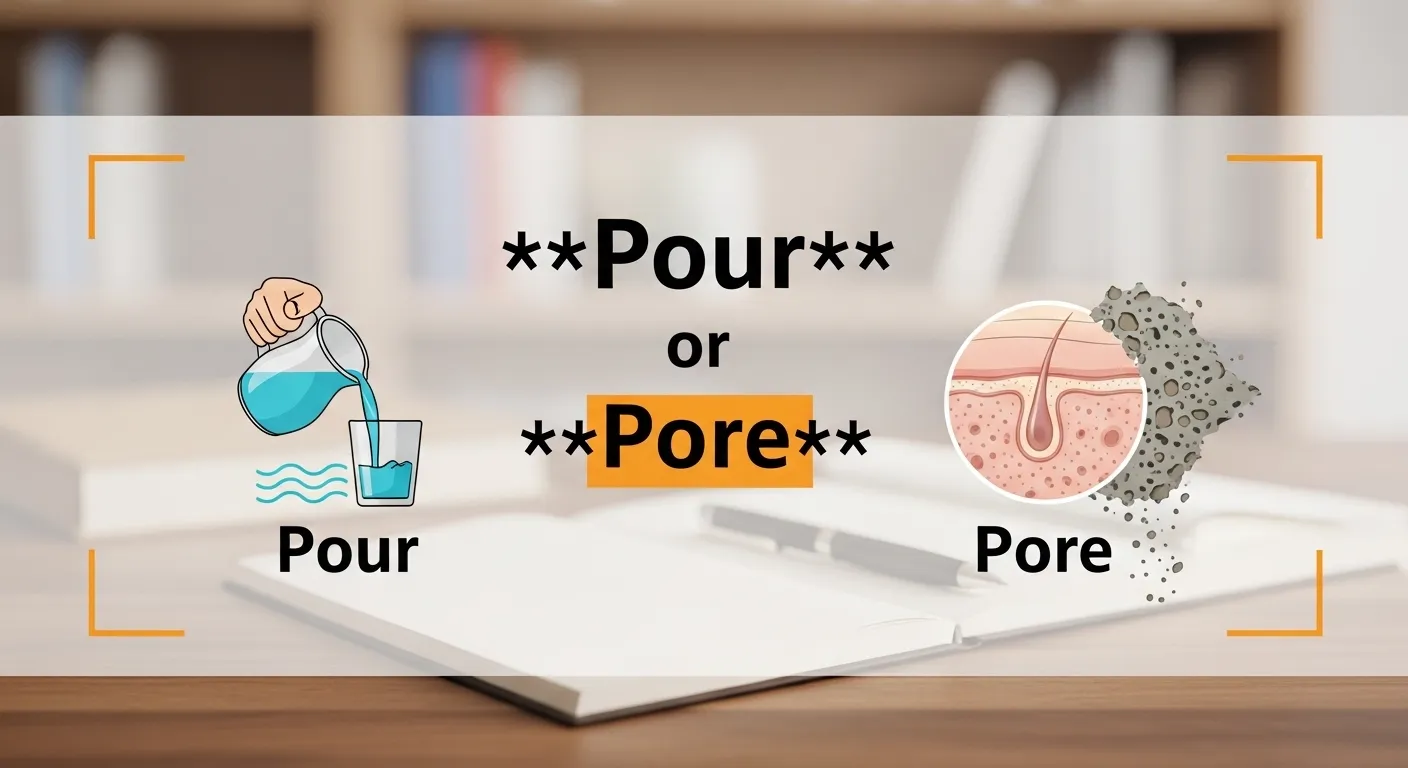
- Pour = to make liquid flow (e.g., pour water into a glass)
- Pore = a tiny hole or to study closely (e.g., skin pores, pore over notes)
This confusion happens because both words sound identical, but using the wrong one can change your sentence completely.
In this guide, you’ll quickly learn the difference so you can use pour and pore correctly every time.
Pour or Pore – Quick Answer
Pour and pore are homophones (words that sound the same but have different meanings).
- Pour → to make liquid flow
✔ Example: She will pour tea into the cup. - Pore → a tiny hole or to study closely
✔ Example: Sweat comes out through skin pores.
✔ Example: He will pore over his notes.
👉 Simple rule:
- Use pour for liquids
- Use pore for holes or deep focus
The Origin of Pour or Pore
Understanding the history of words helps you remember them better.
Origin of “Pour”
The word pour comes from Old French “purer”, meaning “to flow or stream.” It entered English around the 13th century. Over time, the spelling became fixed as pour, but the meaning stayed the same—liquid movement.
Origin of “Pore”
The word pore has two origins:
- From Latin “porus”, meaning a small opening
- From Middle English “poren”, meaning to look closely or study
This is why pore has two meanings:
- A physical hole (like skin pores)
- Deep concentration (to pore over something)
Why the Confusion Exists
English keeps old spellings but changes pronunciation over time. As a result, different words like pour and pore sound the same today.
British English vs American English Spelling
Good news: there is no spelling difference between British and American English for pour and pore.
Both forms are standard in:
- American English
- British English
- Australian English
- Canadian English
Comparison Table
| Word | Meaning | Example (US) | Example (UK) |
| Pour | To let liquid flow | Pour water into the glass | Pour tea into the cup |
| Pore | Small hole / study deeply | Skin pores are visible | She pores over her book |
👉 Unlike words like color/colour, these words stay the same worldwide.
Which Spelling Should You Use?
Choosing the correct word depends on meaning, not location.
For US Audience
Use:
- Pour for liquids
- Pore for holes or studying
✔ Example: Please pour the juice.
✔ Example: He pored over the report.
For UK & Commonwealth
Same rules apply. No variation.
For Global Writing (SEO, Blogs, Business)
Always focus on clarity:
- Use pour for actions with liquid
- Use pore for biology or focus
👉 Tip: If your sentence involves water, drink, rain, or liquid → use pour
Common Mistakes with Pore and Pour
Here are mistakes many writers make:
❌ Wrong: He will pore water into the glass
✔ Correct: He will pour water into the glass
❌ Wrong: My skin has large pours
✔ Correct: My skin has large pores
❌ Wrong: She poured over her notes
✔ Correct: She pored over her notes
❌ Wrong: Tears pore from her eyes
✔ Correct: Tears pour from her eyes
👉 Key Tip:
- Liquid action = pour
- Small holes or deep reading = pore
Pore or Pour in Everyday Examples
Let’s see how these words appear in real life.
Emails
- Please pour the data into the final report (metaphor use)
- I will pore over the document tonight
News
- Rain continues to pour across the city
- Scientists study skin pores to understand health
Social Media
- Coffee lovers love to pour latte art
- Skincare routine helps clean pores
Formal Writing
- The technician will pour the solution carefully
- Researchers pored over years of data
👉 These examples show how context changes meaning.
Pore vs Pour – Google Trends & Usage Data
Popularity
- Pour is used more often in daily conversation
- Pore appears more in science, skincare, and academic writing
Search Trends by Country
- United States → High searches for both words due to writing confusion
- United Kingdom → Similar pattern
- India & Pakistan → High search for “pour or pore” comparison
Context-Based Usage
| Context | Common Word |
| Cooking | Pour |
| Weather | Pour |
| Skincare | Pore |
| Studying | Pore |
👉 This shows why confusion happens—both words are common but used differently.
Pour vs Pore – Comparison Table
| Feature | Pour | Pore |
| Type | Verb | Noun & Verb |
| Meaning | To let liquid flow | Hole / Study closely |
| Example | Pour milk into the glass | Skin pores / Pore over notes |
| Usage | Cooking, weather, drinks | Biology, reading, analysis |
| Spelling US/UK | Same | Same |
FAQs:
1. Are pour and pore the same?
No. They sound the same but have different meanings and uses.
2. When should I use pour?
Use pour when talking about liquids like water, tea, rain, or oil.
3. What does pore mean in skin?
A pore is a tiny hole in the skin where sweat and oil come out.
4. What does “pore over” mean?
It means to study or read something very carefully.
5. Is “poured over” correct?
Yes, but it means liquid action. For studying, use “pored over.”
6. Why are pour and pore confusing?
Because they are homophones—they sound the same but have different meanings.
7. Is there a spelling difference in US and UK English?
No. Both words are spelled the same worldwide.
Conclusion
The confusion between pour and pore is common, but the difference is simple.
👉 Pour = liquids (pour water, pour tea)
👉 Pore = small holes or deep focus (skin pores, pore over notes)
There’s no US or UK difference just choose based on meaning.
Quick tip: liquid = pour, study or holes = pore.
Once you know this, using them correctly becomes easy and natural.
Learn More About:
Tier or Teir? Which One Is Right?(2026)
Trialled or Trialed: Which Spelling Is Correct? (2026)

I’m a U.S. based content writer and language researcher with a strong focus on English grammar, spelling differences, and frequently confused terms. My writing is aimed at helping readers write more clearly and correctly in daily use, workplace communication, and digital content.