Confused between boarder and border? You’re not alone.
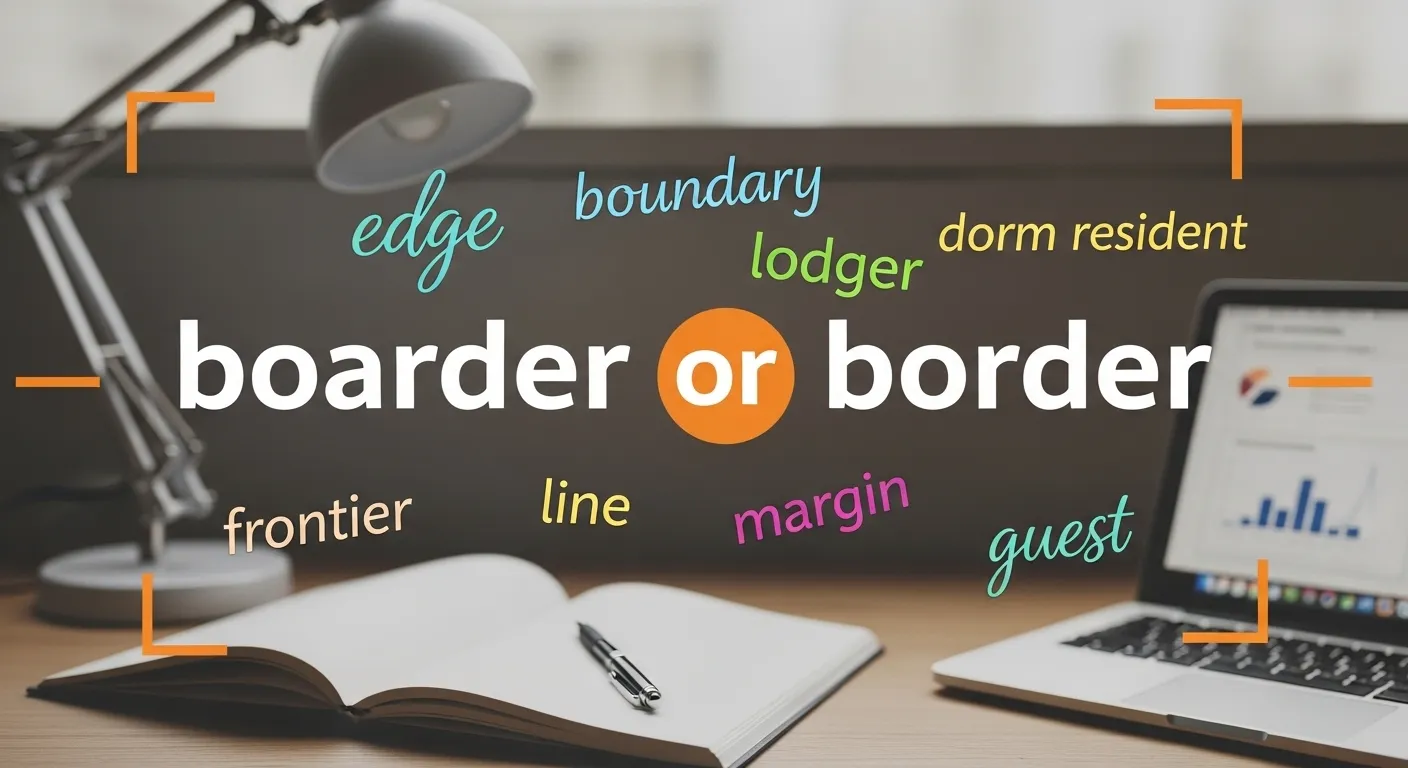
Border refers to a boundary or edge, while boarder means a person staying somewhere.
Mixing them changes your meaning: “He lives near the boarder” talks about a person instead of a place!
In this article, you’ll quickly learn the correct meanings, origins, and usage so you’ll always use boarder and border correctly
Boarder or Border – Quick Answer
Border is the correct word when talking about a line, edge, or boundary between places.
Boarder means a person who lives and eats at someone else’s house, usually for payment.
Examples:
- The border between two countries is closed.
- She lives near the city border.
- He is a boarder in a school hostel.
- We have two boarders staying in our house.
👉 Simple rule:
- Border = place or edge
- Boarder = person
The Origin of Boarder and Border
Understanding the origin helps you remember the difference.
Border
The word border comes from Old French bordure, which means “edge” or “boundary.” It is related to the idea of something forming a line around an area.
Over time, it became common in English to describe:
- Country boundaries
- Edges of objects
- Limits or lines
Boarder
The word boarder comes from the word board, which once meant “table” or “meals.” In the past, people paid to eat meals at someone’s table.
So, a boarder was:
- A person who pays for meals and lodging
- Someone staying in another person’s home
👉 That is why boarder refers to a person, not a place.
British English vs American English Spelling
Good news: there is no spelling difference between British and American English for these words.
Both use:
- Border
- Boarder
But confusion still happens because the words look similar.
Comparison Table
| Word | Meaning | British English | American English |
| Border | Edge or boundary | Border | Border |
| Boarder | Person who stays and eats | Boarder | Boarder |
👉 Unlike words like colour/color, this is not a regional spelling issue. It is a meaning issue.
Which Spelling Should You Use?
The choice depends on what you want to say, not where your audience is.
Use Border when:
- Talking about countries
- Describing edges or limits
- Writing news, reports, or geography content
Example:
The border between the two nations is peaceful.
Use Boarder when:
- Talking about a person staying somewhere
- Referring to hostels, schools, or rented homes
Example:
She is a boarder at the university hostel.
For Global Writing:
If you write for an international audience:
- Always double-check meaning
- Use context to guide your choice
👉 Tip: If it is about location → use border
👉 If it is about a person → use boarder
Common Mistakes with Border or Boarder
Here are the most common errors people make:
❌ Incorrect:
He crossed the boarder.
✅ Correct:
He crossed the border.
❌ Incorrect:
The border in our house pays rent.
✅ Correct:
The boarder in our house pays rent.
❌ Incorrect:
She lives near the school boarder.
✅ Correct:
She lives near the school border.
Why These Mistakes Happen:
- Similar spelling
- Similar pronunciation
- Lack of clarity about meaning
👉 Quick fix: Always ask, “Is it a place or a person?”
Border and Boarder in Everyday Examples
Let’s see how these words appear in real-life writing.
In Emails:
- Please confirm if the property is near the city border.
- We currently have one boarder staying with us.
In News:
- Security has increased at the national border.
- The school reported issues with hostel boarders.
On Social Media:
- Traveling near the border today!
- New boarder moved into our house.
In Formal Writing:
- The border defines the limits of the country.
- Each boarder must follow hostel rules.
👉 You can see how a small spelling change creates a big meaning difference.
Border vs Boarder – Google Trends & Usage Data
When we look at search trends, “border” is far more common than “boarder.”
Why?
- Border is used in geography, politics, and news
- It appears in global topics like travel and security
Usage by Context:
| Word | Common Use Areas |
| Border | Geography, travel, news |
| Boarder | Housing, schools, hostels |
Popularity by Region:
- Border is widely searched worldwide
- Boarder is less searched and more niche
👉 This shows that most confusion happens when people accidentally type boarder instead of border.
Comparison Table – Boarder vs Border
| Feature | Boarder | Border |
| Meaning | A person staying and eating | Edge or boundary |
| Usage | Housing, hostels | Geography, limits |
| Type | Noun (person) | Noun (place/line) |
| Example | He is a boarder | She crossed the border |
| Common Error | Used instead of border | Used instead of boarder |
FAQs
1. Is it boarder or border for countries?
Use border for countries. It means a boundary between two places.
2. What does boarder mean?
A boarder is a person who lives and eats in someone else’s home for payment.
3. Why do people confuse boarder and border?
They look and sound similar, but have different meanings.
4. Is boarder used in British English only?
No. Both boarder and border are used in British and American English.
5. Can boarder mean edge or boundary?
No. Only border means edge or boundary.
6. How can I remember the difference?
- Border = boundary
- Boarder = person
7. Is “cross the boarder” correct?
No. The correct phrase is “cross the border.”
Conclusion
The mix up between boarder and border is common but easy to fix.
- Border = a place, edge, or boundary.
- Boarder = a person staying somewhere for meals or lodging.
Spelling is the same in both British and American English meaning is what matters.
Quick tip: ask yourself, “Am I talking about a place or a person?”
With a little practice, choosing boarder or border will become second nature.
Discover More About:
Employees or Employee’s: Which One Is Correct?
Handle or Handel: Which One Is Right And Wrong (2026)