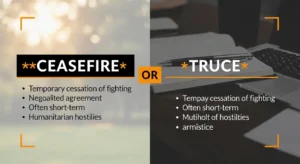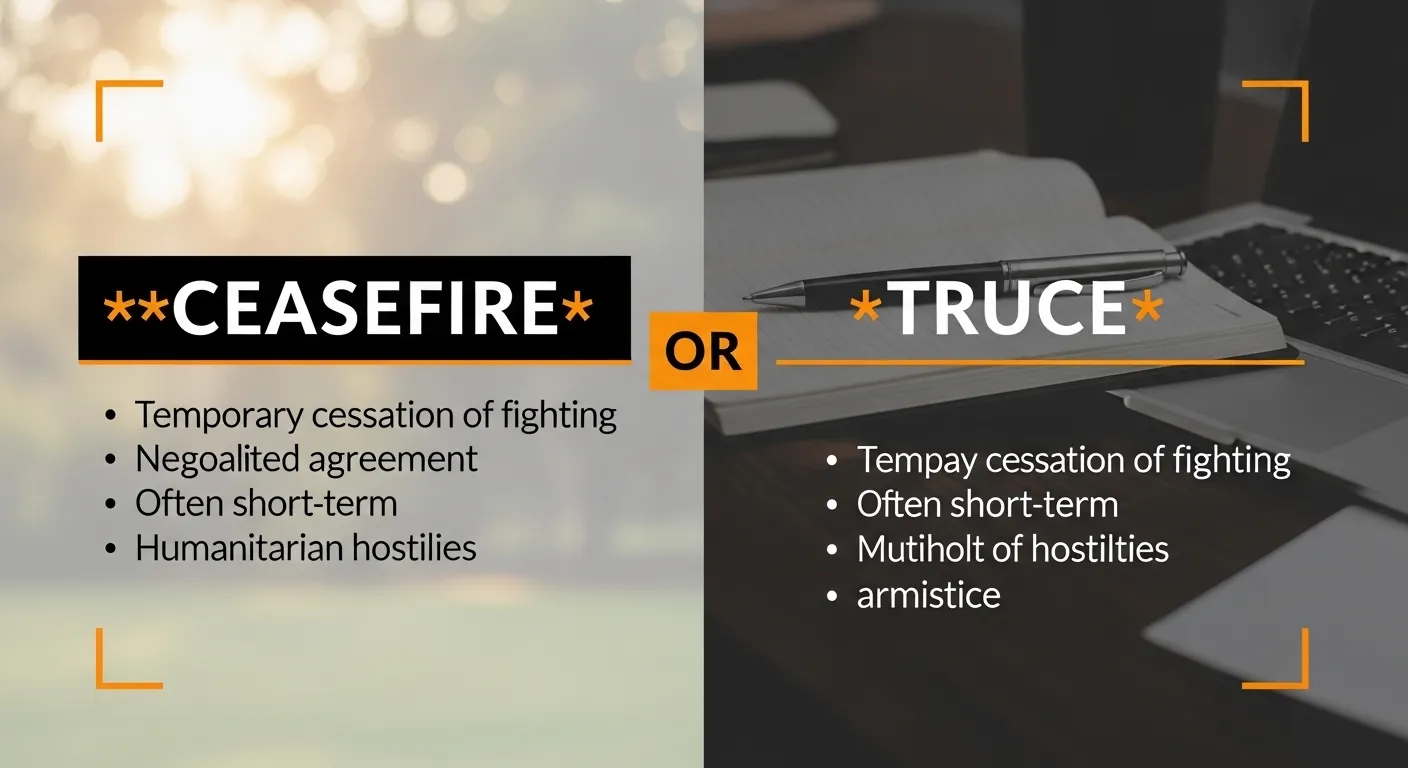
Many people search for “ceasefire or truce” because the words look alike but mean different things. Both stop fighting, yet they differ in tone, formality, and duration.
A ceasefire is official and structured, while a truce is temporary and flexible. Choosing the wrong word can make a situation sound more serious or casual than it is.
This guide makes it simple. You’ll learn the clear difference, origins, and real life examples, so you can use “ceasefire” and “truce” confidently every time.
Ceasefire or Truce – Quick Answer
Ceasefire and truce both mean stopping fighting, but they are not the same.
- Ceasefire = an official order or agreement to stop fighting
- Truce = a temporary pause in fighting, often informal
Simple Examples:
- Government agreement → Ceasefire
Example: The countries agreed to a ceasefire. - Short pause → Truce
Example: The teams called a truce for the night.
👉 Key Idea:
A ceasefire is formal and often longer. A truce is temporary and flexible.
The Origin of Ceasefire or Truce
The Word “Ceasefire”
“Ceasefire” comes from two English words:
- Cease = to stop
- Fire = shooting weapons
It became common in the 20th century, especially during major wars. It describes an official stop in military action.
The Word “Truce”
“Truce” comes from Old English trēow, meaning “faith” or “agreement.” It later came to mean a promise to stop fighting for a time.
Historically, truces were used:
- During medieval wars
- For holidays or negotiations
- As short-term peace agreements
Why the Difference Exists
The difference exists because:
- “Ceasefire” developed as a modern military term
- “Truce” comes from older, flexible agreements
This is why “ceasefire” sounds more official today.
British English vs American English Spelling
There is no spelling difference between British and American English.
Both use:
- Ceasefire ✅
- Truce ✅
Style Differences
- American English: uses “ceasefire” more in official news
- British English: uses both but often prefers “truce” in general writing
Comparison Table
| Aspect | Ceasefire | Truce |
| Spelling (US/UK) | Same | Same |
| Tone | Formal, official | Informal, flexible |
| Use in News | Military and politics | General or historical |
| Duration | Longer, structured | Short, temporary |
Which Spelling Should You Use?
Spelling is not the issue. Word choice is.
Use “Ceasefire” when:
- The situation is official
- Governments or armies are involved
- You need a formal tone
Examples:
- A ceasefire was announced.
- The ceasefire lasted for weeks.
Use “Truce” when:
- The pause is temporary
- The tone is casual or general
- It involves small groups or people
Examples:
- They called a truce after the argument.
- A holiday truce was declared.
Audience-Based Advice
- US audience: “ceasefire” is more common in news
- UK/Commonwealth: both are used, “truce” is more flexible
- Global audience: “ceasefire” is clearer and more formal
👉 Pro Tip:
Use “ceasefire” for official writing. Use “truce” for general use.
Common Mistakes with Truce or Ceasefire
1. Using “Truce” for Official Agreements ❌
- Wrong: The countries signed a truce agreement.
- Correct: The countries agreed to a ceasefire.
2. Using “Ceasefire” for Small Arguments ❌
- Wrong: We called a ceasefire in our argument.
- Correct: We called a truce.
3. Mixing Tone ❌
- Wrong: The informal ceasefire between friends…
- Correct: The truce between friends…
4. Assuming They Mean Peace ❌
Both words mean stopping fighting, not full peace.
Ceasefire or Truce in Everyday Examples
1. In Emails
- Let’s call a truce and move forward.
- The report discusses a ceasefire agreement.
2. In News
- A ceasefire was announced today.
- The sides agreed to a temporary truce.
3. On Social Media
- Time for a truce in the comments.
- Breaking: ceasefire declared.
4. In Formal Writing
- The ceasefire reduced violence.
- The truce allowed negotiations.
5. In Daily Life
- We called a truce after the fight.
- The teams agreed to a short truce.
Truce vs Ceasefire – Google Trends & Usage Data
Search trends show clear patterns.
Popularity by Context:
- Ceasefire
- Common in global news
- Used in politics and military
- Formal and serious
- Truce
- Used in history and daily language
- Common in personal situations
- More casual
Popularity by Region:
- United States: “ceasefire” is searched more
- UK & Europe: both are common
- Global: “ceasefire” is preferred in official contexts
Why This Matters
Using the right word helps:
- Improve SEO
- Build trust
- Match user intent
Comparison Table: Ceasefire vs Truce
| Feature | Ceasefire | Truce |
| Meaning | Official stop to fighting | Temporary pause |
| Tone | Formal | Informal |
| Usage | Military, politics | General, personal |
| Duration | Long or fixed | Short |
| Example | Ceasefire agreement | Call a truce |
| Flexibility | Low | High |
FAQs
1. Are ceasefire and truce the same?
No. A ceasefire is official. A truce is temporary and less formal.
2. Which word is more formal?
“Ceasefire” is more formal.
3. Can a truce become a ceasefire?
Yes. A temporary truce can lead to a formal ceasefire.
4. Do both mean peace?
No. They mean stopping fighting, not full peace.
5. Which word is used in news?
“Ceasefire” is more common in news reports.
6. Can I use truce in daily life?
Yes. It is common in personal situations.
7. Which is better for SEO?
Use both based on context:
- “Ceasefire” for news topics
- “Truce” for general content
Conclusion
“Ceasefire” and “truce” both mean stopping conflict, but they differ. Ceasefire is formal and official, while truce is temporary and flexible.
Use ceasefire for global events or formal agreements, and truce for short pauses or everyday situations. Choosing the right word makes your writing clear, professional, and precise.
Find More About:
Many or Meny: What’s the Right English Word? (2026)
Tier or Teir? Which One Is Right?(2026)