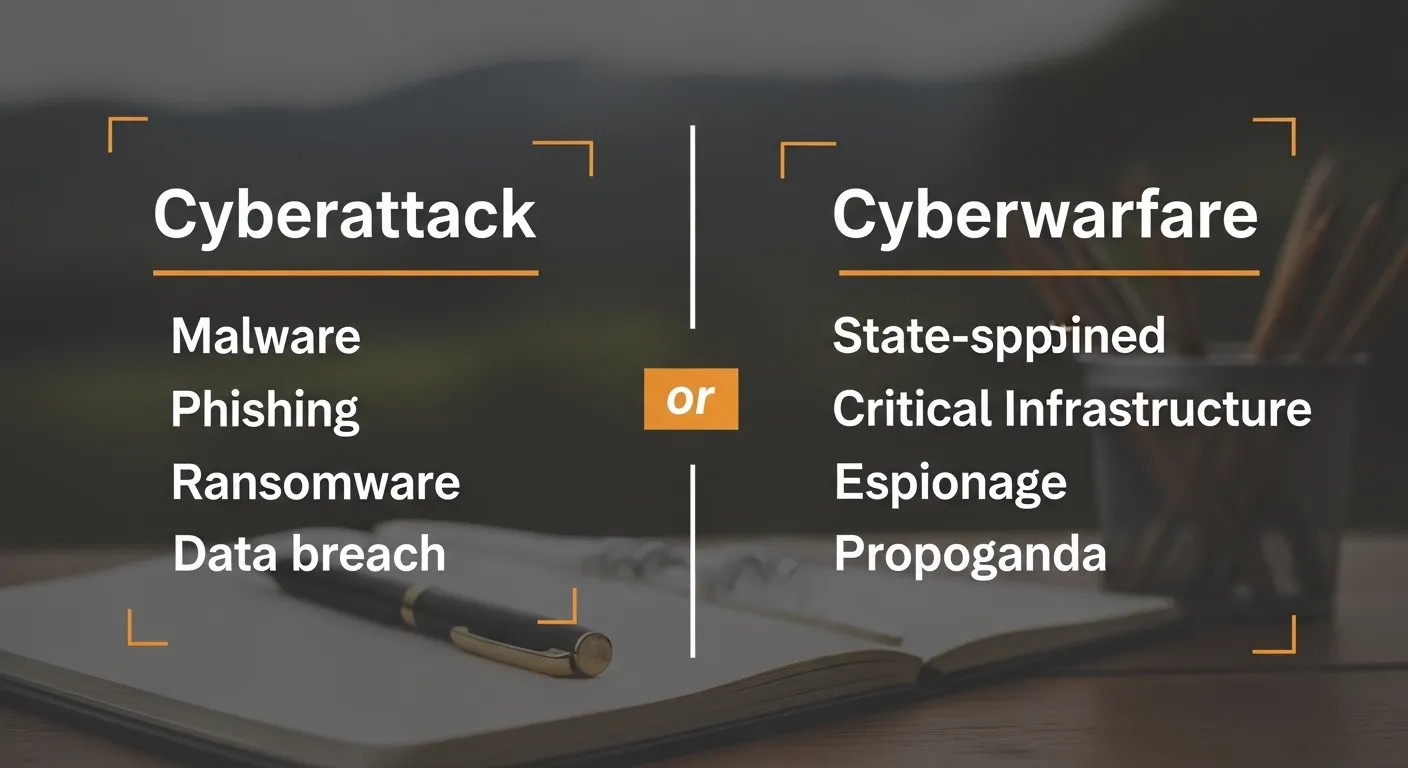
Every day, we hear about hacking, data breaches, and digital threats. Many search for cyberattack or cyberwarfare but confuse the two.
A cyberattack is a single harmful action, like hacking a system. Cyberwarfare is broader ongoing digital conflict between countries or large groups. Knowing the difference is key for clear, accurate communication.
In this guide, you’ll learn the meaning, examples, and correct usage of both terms to write confidently and professionally.
Cyberattack or Cyberwarfare – Quick Answer
Quick Answer:
- Cyberattack = a single digital attack on a system
- Cyberwarfare = large-scale, ongoing digital conflict
Cyberattack
- A specific action
- Targets systems, networks, or data
- Can be done by individuals or groups
Examples:
- Hacking a website
- Stealing user data
- Spreading malware
Cyberwarfare
- A broader concept
- Involves multiple cyberattacks
- Usually between nations or large organizations
Examples:
- Government-backed hacking campaigns
- Attacks on national infrastructure
- Digital spying between countries
Simple Rule
- One action = cyberattack
- Ongoing conflict = cyberwarfare
The Origin of Cyberattack or Cyberwarfare
Origin of Cyberattack
- “Cyber” comes from cybernetics, related to computers and systems
- “Attack” means to strike or harm
- Became popular with the rise of the internet
Origin of Cyberwarfare
- Combines “cyber” with “warfare”
- “Warfare” means organized conflict
- Gained attention in the late 20th and early 21st century
Key Insight
- Cyberattack = action
- Cyberwarfare = strategy
British English vs American English Spelling
There is no major spelling difference, but there is a small variation in formatting.
Comparison Table
| Word Form | British English | American English | Usage |
| Cyberattack | Cyber attack | Cyberattack | Both acceptable |
| Cyberwarfare | Cyber warfare | Cyberwarfare | Both acceptable |
Examples
British English:
- The company faced a cyber attack.
- Nations are preparing for cyber warfare.
American English:
- The system suffered a cyberattack.
- Experts study cyberwarfare strategies.
Which Spelling Should You Use?
Audience-Based Advice
- United States:
- Prefer cyberattack and cyberwarfare (one word)
- United Kingdom:
- Often uses cyber attack and cyber warfare (two words)
- Global audience:
- Both forms are accepted
- Stay consistent in one style
Tip
- Pick one format and use it throughout your content
Common Mistakes with cyberwarfare or Cyberattack
Mistake 1: Using both as the same
Incorrect:
- The cyberwarfare hacked the system
Correct:
- The cyberattack hacked the system
Mistake 2: Overusing cyberwarfare
Incorrect:
- A small hack is cyberwarfare
Correct:
- A small hack is a cyberattack
Mistake 3: Ignoring scale
- Cyberattack = small or single
- Cyberwarfare = large and ongoing
Quick Tip
- Small event = cyberattack
- Big conflict = cyberwarfare
Cyberattack or Cyberwarfare in Everyday Examples
Emails
- “Our system faced a cyberattack yesterday.”
- “The report discusses cyberwarfare risks.”
News
- “A major cyberattack hit the company.”
- “Experts warn of rising cyberwarfare threats.”
Social Media
- “Another cyberattack on a big platform!”
- “Cyberwarfare is becoming more common.”
Professional Writing
- “The organization improved defenses after a cyberattack.”
- “Cyberwarfare strategies are evolving globally.”
Cyberwarfare vs Cyberattack – Google Trends & Usage Data
Search interest in cyberattack or cyberwarfare has increased rapidly.
Popular Searches
- cyberattack meaning
- cyberwarfare definition
- cyberattack vs cyberwarfare
- examples of cyberwarfare
Usage by Country
| Country | Usage Trend |
| United States | High in tech and defense sectors |
| United Kingdom | Common in news and policy |
| India | Rising with digital growth |
| Pakistan | Increasing in media and education |
Trend Insight
Search spikes occur during:
- Data breaches
- Global conflicts
- Tech-related incidents
- Government warnings
Comparison Table: Cyberattack vs Cyberwarfare
| Feature | Cyberattack | Cyberwarfare |
| Meaning | Single digital attack | Large-scale conflict |
| Scope | Limited | Broad |
| Actors | Individuals or groups | Nations or large entities |
| Duration | Short-term | Long-term |
| Example | Hacking a website | Ongoing digital war |
FAQs
1. Are cyberattack and cyberwarfare the same?
No. A cyberattack is a single event. Cyberwarfare is a broader conflict involving many attacks.
2. Can a cyberattack lead to cyberwarfare?
Yes. Repeated cyberattacks can become part of cyberwarfare.
3. Which term is more serious?
Cyberwarfare is more serious because it involves large-scale conflict.
4. Is hacking always a cyberattack?
Yes, most hacking activities are considered cyberattacks.
5. Who is involved in cyberwarfare?
Usually governments, military groups, or large organizations.
6. Can businesses face cyberwarfare?
Mostly they face cyberattacks, but large companies may be targets in cyberwarfare.
7. Is cyberwarfare a modern concept?
Yes. It became important with the rise of digital technology.
Conclusion
The difference between cyberattack or cyberwarfare is clear once you understand the scale and purpose. A cyberattack is a single harmful action, such as hacking a system or stealing data. It can happen to individuals, businesses, or organizations. On the other hand, cyberwarfare is much larger. It involves ongoing digital conflict, often between nations, using multiple cyberattacks as part of a bigger strategy.
Using the correct term helps you communicate clearly and sound more informed. It also prevents confusion, especially when discussing serious global issues.
Remember the simple rule: cyberattack is one action, cyberwarfare is a larger conflict.
By applying this rule, you can improve your writing, avoid common mistakes, and better understand modern digital threats.
Whether you are writing emails, articles, or reports, choosing the right word will always make your message stronger and more professional.
Learn More About:
Employees or Employee’s: Which One Is Correct?
Devide or Divide: Which Is Correct?