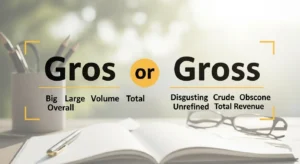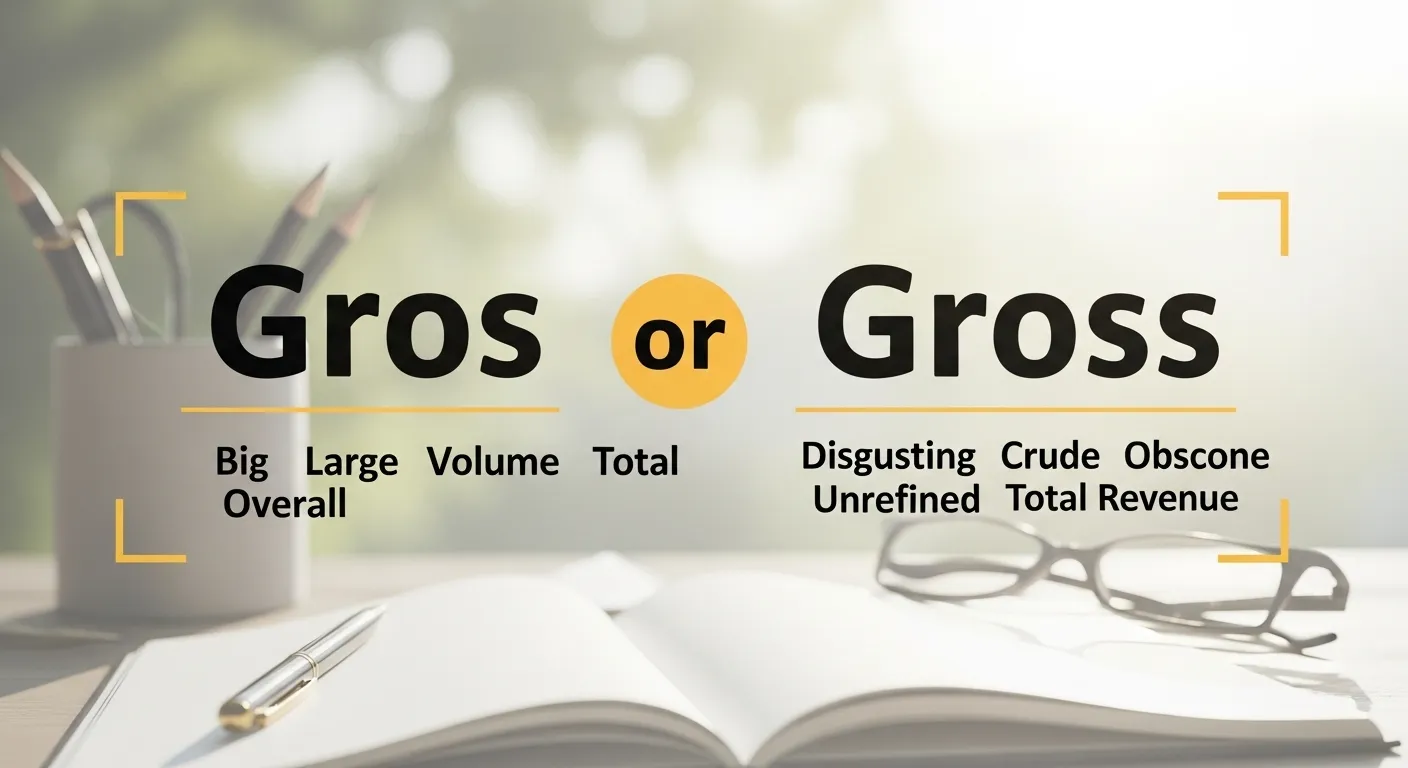
Many people wonder whether to write gros or gross. The answer is simple: always use “gross” in modern English.
Confusing the two can make emails, reports, or social media posts look unprofessional. For example, writing “gros profit” instead of “gross profit” can confuse readers or reduce credibility.
This guide explains the difference, origin, and proper usage, with easy examples and tips so you can write confidently every time.
Gros or Gross – Quick Answer
Answer: The correct spelling is gross in modern English.
- Gross (with double “s”) is used in both American and British English.
- Gros (with a single “s”) is considered outdated or a French-influenced spelling.
Examples:
- Correct: The company made a gross profit of $5 million.
- Incorrect: The company made a gros profit of $5 million.
Quick tip: Always use gross unless writing in a context where French influence is required.
The Origin of Gros and Gross
The word gross comes from Middle English gros, borrowed from Old French gros, meaning “large” or “coarse.” Over time, English spelling conventions added an extra “s” to form gross.
- Old French “gros” → meaning big, large, or total.
- Middle English adoption → spelled as gros, used in manuscripts.
- Modern English standardization → doubled “s” to become gross for clarity.
This explains why you might see older texts or some European English use gros, but the accepted modern spelling in English is gross.
British English vs American English Spelling
Both British and American English use gross, but the spelling has slightly different historical influences.
| Feature | British English | American English | Example |
| Standard spelling | gross | gross | gross income |
| Historical variation | sometimes “gros” in old texts | rarely used | gros profit (archaic) |
| Usage in finance | gross | gross | gross margin |
| Formal writing | gross | gross | gross negligence |
Note: Using gros in modern writing is generally considered incorrect in both UK and US English.
Which Spelling Should You Use?
- American Audience: Always use gross.
- British/Commonwealth Audience: Use gross in formal writing; gros may appear in historical or French-influenced contexts.
- Global Audience: Stick with gross to avoid confusion.
Recommendation: For clarity, consistency, and SEO purposes, gross is the safest choice worldwide.
Common Mistakes with Gross or Gros
Many writers make these errors:
- Writing gros instead of gross in English documents.
- Confusing gross (total amount) with grow (increase).
- Using gross when the French spelling gros is contextually correct in French sentences.
Corrections:
- Incorrect: The project had a gros cost of $10,000.
- Correct: The project had a gross cost of $10,000.
Gross and Gros in Everyday Examples
Emails:
- “Please check the gross sales for this quarter.”
News Headlines:
- “Company Reports Gross Revenue Increase of 15%.”
Social Media:
- “That’s gross! I can’t believe it!” (Note: informal meaning “disgusting”)
Formal Writing:
- “The employee was held liable for gross negligence.”
Context matters: gross can mean total, large, or disgusting depending on usage.
Gross vs Gros – Google Trends & Usage Data
According to search data:
- Gross is searched far more often than gros in English-speaking countries.
- Gros appears mainly in French websites or historical English texts.
- US, UK, Canada, and Australia consistently show higher use of gross in finance, writing, and casual contexts.
Trend Insights:
- Peak searches for gross profit occur around fiscal year ends (March, December).
- Informal searches for gross meaning spike in summer months (teen slang).
Comparison Table: Gros vs Gross
| Aspect | Gros | Gross |
| Spelling origin | Old French | Modern English |
| Correctness | Outdated in English | Correct in modern English |
| Usage context | Historical, French-influenced | Finance, formal writing, informal |
| Popularity | Low in English | High in English |
| Example | Le gros livre (French) | The gross income increased |
FAQs
- Is “gros” correct in English?
No, use gross in modern English. - Can “gross” mean both total and disgusting?
Yes, context determines meaning. Gross profit vs That’s gross! - Why do some old books use “gros”?
Older English borrowed French spelling. Modern standards prefer gross. - Which spelling is used in US financial reports?
Always gross. - Is “gros” acceptable in UK English?
Only in historical or French-influenced contexts. Otherwise, use gross. - How do I remember the correct spelling?
Think: “Double S = modern English = gross.” - Does Google SEO prefer “gros” or “gross”?
Gross ranks higher and is more searched globally.
Conclusion
In modern English, gross is the standard and widely accepted spelling. The confusion comes from historical French influence, but writers, students, and professionals should consistently use gross in finance, writing, and everyday language. Whether you are addressing an American, British, or global audience, gross is the safe choice.
Remember, context matters: in formal writing, gross refers to totals, sums, or negligence; in informal contexts, it can mean “disgusting.” Avoid using gros unless quoting French or historical sources. Clear, consistent usage improves credibility, readability, and SEO.
Key takeaway: Stick to gross, understand the context, and watch for informal uses in everyday language.
Learn More About:
Tier or Teir? Which One Is Right?(2026)
Trialled or Trialed: Which Spelling Is Correct? (2026)