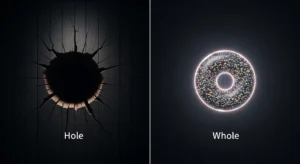
Many people search for “here or hear” because the words sound the same but have different meanings. This often creates confusion while writing emails, messages, or school work.
The difference is simple:
- Here is about place.
- Hear is about sound.
If you remember this one rule, you will easily choose the correct word every time.
Here or Hear – Quick Answer
Here = a place or position.
Hear = to listen or receive sound.
Examples:
- I am here in the office. ✅
- Can you hear me? ✅
- She lives here. ✅
- I did not hear the news. ✅
Wrong examples:
- I am hear. ❌
- Please here me out. ❌
Easy trick:
- Here has “here” like “location.”
- Hear has “ear” inside it. You hear with your ear.
The Origin of Here or Hear
Understanding the origin helps you remember the difference.
Here
The word here comes from Old English hēr. It meant “in this place.” Its meaning has stayed almost the same for centuries.
Hear
The word hear comes from Old English hieran or hȳran. It meant “to perceive sound.” Over time, spelling changed, but the meaning stayed the same.
These words sound alike today because English pronunciation changed over time. But spelling stayed different to protect meaning.
That is why they look different but sound the same.
British English vs American English Spelling
Good news:
There is no spelling difference between British and American English for here and hear.
Unlike words such as color/colour or judgment/judgement, these two words stay the same everywhere.
Whether you are in:
- The United States
- The United Kingdom
- Canada
- Australia
- Pakistan
The spelling does not change.
Comparison Table
| Word | Meaning | Part of Speech | Example | US Spelling | UK Spelling |
| Here | A place | Adverb | I am here. | Here | Here |
| Hear | To listen | Verb | I hear music. | Hear | Hear |
There are no regional differences.
Which Spelling Should You Use?
The answer depends on your sentence, not your country.
Use here when talking about location.
Use hear when talking about sound or listening.
If you write for:
- US audience → Same rule
- UK/Commonwealth audience → Same rule
- Global audience → Same rule
There is no variation. The only thing that matters is meaning.
Always ask yourself:
Am I talking about place? → here
Am I talking about sound? → hear
Common Mistakes with Hear or Here
These are very common errors:
1. Writing “I am hear”
Wrong: I am hear.
Correct: I am here.
2. Writing “Please here me”
Wrong: Please here me out.
Correct: Please hear me out.
3. Confusing in fast typing
People often type quickly and choose the wrong one because they sound the same.
4. Auto-correct problems
Sometimes phones change the word automatically.
5. Social media mistakes
Short posts often contain this error because users do not proofread.
Quick tip: Always re-read your sentence before sending.
Here vs Hear in Everyday Examples
Let’s see how they are used in daily writing.
Emails
Correct:
- I am here to help you.
- I did not hear your message clearly.
Wrong:
- I am hear to help.
- I did not here your message.
News Writing
- Witnesses say they could hear loud noises.
- The event will take place here tomorrow.
Social Media
- I’m here at the concert!
- Can you hear this song?
Formal Writing
- The meeting will be held here at 10 AM.
- The court will hear the case next week.
Hear vs Here – Google Trends & Usage Data
Search data shows that many users type “here or hear” into Google each month. This usually happens because:
- They are unsure about spelling.
- They are writing an email or assignment.
- They want to avoid embarrassment.
Countries with high English learning populations often search this phrase more often.
In everyday language:
- Here appears more often in general writing.
- Hear appears frequently in conversations and commands.
Both words are common. But confusion remains high because they are perfect homophones.
Quick Comparison Table
| Feature | Here | Hear |
| Meaning | A place | To listen |
| Type | Adverb | Verb |
| Contains “ear”? | No | Yes |
| Related to sound? | No | Yes |
| Example | Come here. | I hear you. |
FAQs;
1. Are here and hear pronounced the same?
Yes. They are pronounced exactly the same.
2. Is “I am hear” ever correct?
No. It is always wrong. The correct sentence is “I am here.”
3. How can I remember the difference?
Hear has “ear” inside it. You hear with your ear.
4. Are here and hear interchangeable?
No. They have completely different meanings.
5. Do British and American English spell them differently?
No. The spelling is the same in both versions.
6. Why do people confuse here and hear?
Because they sound identical when spoken.
7. Is this mistake common in professional writing?
Yes. But proofreading usually fixes it.
Conclusion:
The confusion between here or hear is common, but the solution is simple. These words sound the same, but they mean very different things. Here refers to a place. Hear refers to listening or sound.
There is no difference between British and American spelling. The rule stays the same everywhere in the world. The only thing you must check is meaning.
Before you send an email, publish a blog post, or submit school work, pause for one second. Ask yourself: Am I talking about a location or about sound? That small check will protect your writing from a common mistake.
Clear spelling builds trust. It makes your writing look professional. And now that you understand the difference, you can use both words with full confidence.
Discover More About:
Analyses or Analysis: Using These Words Correctly
Maximise or Maximize: Which Is Correct?

I’m a U.S. based content writer and language researcher with a strong focus on English grammar, spelling differences, and frequently confused terms. My writing is aimed at helping readers write more clearly and correctly in daily use, workplace communication, and digital content.