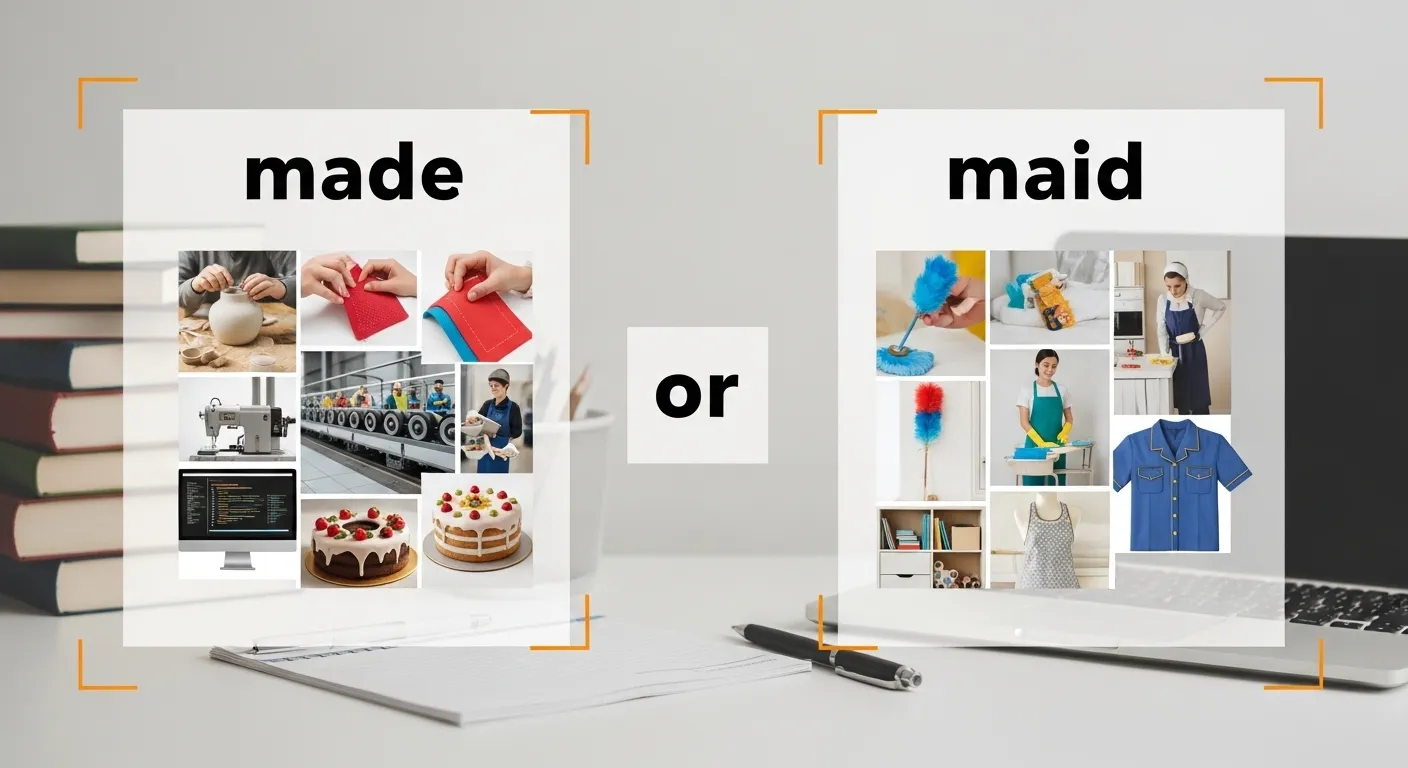
These two words sound the same but have very different meanings. The quick answer is simple: made is the past tense of make and refers to creating or doing something,
while maid is a noun that refers to a female domestic worker or housekeeper.
For example, “She made a cake” talks about an action, but “The maid cleaned the room” refers to a person.
In this guide, you’ll quickly learn the difference between made and maid, see clear examples, avoid common mistakes, and understand how to use both words correctly in everyday writing.
Made or Maid – Quick Answer
The difference between made and maid is simple once you know their meanings.
| Word | Meaning | Part of Speech | Example |
| Made | Past tense of “make,” meaning created or produced | Verb | She made a cake for the party. |
| Maid | A female domestic worker or unmarried girl (old usage) | Noun | The hotel maid cleaned the room. |
Simple Explanation
Made is a verb related to the action of creating or producing something.
Example:
- He made a wooden table.
- She made a promise.
Maid is a noun referring to a female servant or cleaner, especially in hotels or homes.
Example:
- The maid changed the bedsheets.
- The maid brought fresh towels.
Quick Tip to Remember
- Made = Action (from “make”)
- Maid = Person (a worker)
If the sentence talks about doing or creating something, use made.
If it talks about a cleaning worker, use maid.
The Origin of Made or Maid
Understanding the history of these words helps explain why they sound the same but mean different things.
Origin of “Made”
The word made comes from the Old English word “macian”, which meant to build, create, or construct.
Over time, make became a common English verb, and made developed as its past tense.
Examples from history include:
- “He made a sword.”
- “They made peace after the war.”
Because make is one of the most frequently used verbs in English, made appears constantly in speech and writing.
Examples today include:
- She made dinner.
- The company made a big profit.
- They made a decision.
Origin of “Maid”
The word maid comes from the Old English “mægden”, meaning young girl or virgin.
In medieval times, the word referred to an unmarried woman or young girl. Over time, the meaning shifted toward female household workers.
Today, maid is mostly used in contexts such as:
- Housemaid
- Hotel maid
- Maid of honor at weddings
Examples:
- The maid cleaned the hallway.
- She served as the maid of honor at the wedding.
Why the Words Sound the Same
English pronunciation changed over centuries, causing many words with different origins to sound identical.
This is why made and maid are pronounced the same but have different meanings and spellings.
British English vs American English Spelling
Unlike many English words, made vs maid does not change between British and American English.
Both countries use the same spelling and meaning.
| Word | British English | American English | Meaning |
| Made | Made | Made | Past tense of make |
| Maid | Maid | Maid | Female domestic worker |
Examples in British English
- She made tea for everyone.
- The maid cleaned the hotel room.
Examples in American English
- He made a new plan.
- The maid changed the towels.
As you can see, the spelling stays the same in both versions of English.
This makes made vs maid easier than words like color vs colour or organize vs organise.
Which Spelling Should You Use?
Choosing between made and maid depends entirely on meaning, not location.
If You Mean “Created or Produced”
Use made.
Examples:
- I made a mistake.
- She made breakfast.
- They made a website.
This word is used worldwide in:
- American English
- British English
- Australian English
- Canadian English
If You Mean “A Female Domestic Worker”
Use maid.
Examples:
- The maid cleaned the office.
- The maid prepared the room.
Advice for Global Writing
If your audience is international, simply choose the word based on context.
- Action → made
- Person → maid
There is no regional spelling difference.
Common Mistakes with Maid or Made
Because the words sound identical, many people accidentally swap them in writing.
Here are common mistakes and their corrections.
| Incorrect Sentence | Correct Sentence | Explanation |
| She maid a cake. | She made a cake. | “Made” is the past of make. |
| The hotel made cleaned the room. | The hotel maid cleaned the room. | Maid is a worker. |
| He maid a mistake. | He made a mistake. | Action requires “made.” |
| The made brought towels. | The maid brought towels. | Person = maid. |
Why These Mistakes Happen
The main reason is pronunciation.
Both words sound like /meɪd/.
Writers often rely on sound instead of meaning when typing quickly.
Simple Memory Trick
Think of the letter “I” in maid as representing individual or person.
- Maid → Person
- Made → Action
Made or Maid in Everyday Examples
Understanding real-life examples makes it easier to remember the difference.
Emails
Correct:
- I made the changes you requested.
- The hotel maid will clean your room tomorrow.
Incorrect:
- I maid the changes you requested.
News Writing
Example:
- The chef made a record-breaking cake for the festival.
- The hotel maid discovered the missing jewelry.
Social Media
Examples:
- I made my first website today!
- The maid decorated the room beautifully.
Formal Writing
Examples:
- The company made a strategic decision.
- The royal maid of honor led the ceremony.
Business Communication
Examples:
- Our team made significant progress.
- The housekeeping maid reported the issue.
Maid vs Made – Google Trends & Usage Data
Search data shows that made vs maid is a common query worldwide.
People often search for it because:
- The words sound identical
- Writers want correct grammar
- Students need help with homophones
Countries Searching Most
High search interest appears in:
- United States
- United Kingdom
- India
- Pakistan
- Canada
- Australia
These countries have large English-speaking populations and many English learners.
Usage Frequency
The word made is used far more often because it is the past tense of the very common verb make.
Maid, however, appears in specific contexts such as:
- Hotels
- Weddings
- Historical writing
- Household services
Comparison Table: Maid vs Made
| Feature | Made | Maid |
| Meaning | Created or produced | Female domestic worker |
| Word Type | Verb | Noun |
| Pronunciation | /meɪd/ | /meɪd/ |
| Usage Frequency | Very common | Less common |
| Example | She made dinner | The maid cleaned the room |
FAQs
1. Are made and maid pronounced the same?
Yes. Both words are pronounced /meɪd/, which is why they are often confused in writing.
2. Is maid the past tense of make?
No. The past tense of make is made, not maid.
Correct example:
- She made a cake.
3. What does maid mean today?
Today, maid usually refers to a female domestic worker or housekeeper, especially in hotels or homes.
4. Can maid mean something else?
Yes. In historical or ceremonial contexts, maid can refer to:
- An unmarried woman
- Maid of honor in weddings
5. Is “maid a mistake” correct?
No. The correct phrase is “made a mistake.”
Example:
- I made a mistake in the report.
6. Is maid used in modern English?
Yes, but mainly in specific contexts such as hotel maid, housemaid, or maid of honor.
7. How can I remember the difference?
Use this trick:
- Made = Make (action)
- Maid = Worker (person)
Conclusion
The confusion between made vs maid is common because both words sound the same, but their meanings are very different.
Made is the past tense of make and refers to creating or doing something, such as “She made a cake.”
Maid is a noun that refers to a female domestic worker or housekeeper, as in “The maid cleaned the room.”
There is no difference in British and American spelling, so the correct choice depends only on the sentence meaning.
If you mean an action, use made. If you mean a person who cleans or serves, use maid.
Find More About:
Affect or Effect: Grammar Rules Explained Clearly ( 2026)
Handle or Handel: Which One Is Right And Wrong (2026)
Many or Meny: What’s the Right English Word? (2026)

I’m a U.S. based content writer and language researcher with a strong focus on English grammar, spelling differences, and frequently confused terms. My writing is aimed at helping readers write more clearly and correctly in daily use, workplace communication, and digital content.