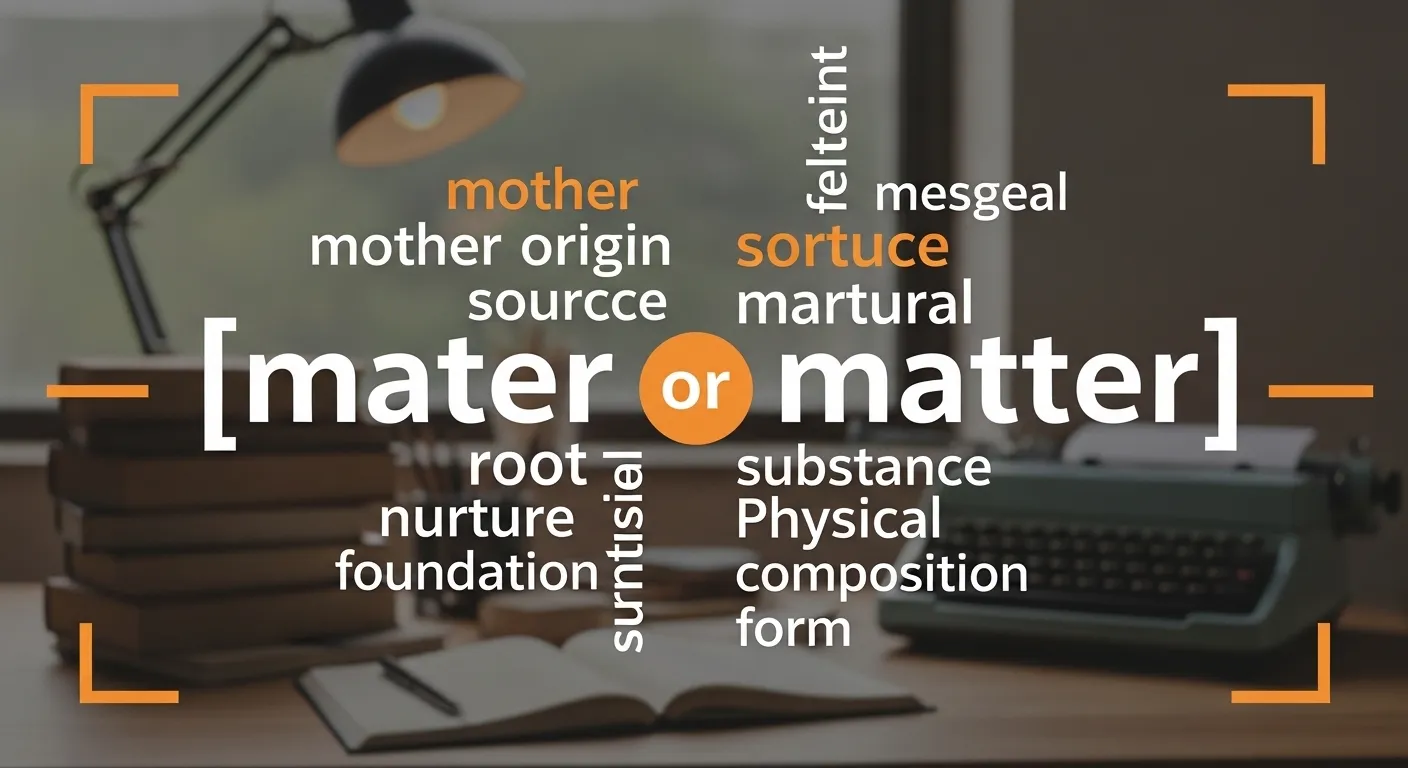
Many English words look similar but have very different meanings. Mater or matter is a common confusion. Many people are unsure which spelling is correct, and a small mistake can change the whole meaning.
Here’s the simple answer:
Matter is the correct word in almost all cases. It means a topic, issue, or substance.
Mater is a rare Latin word meaning “mother” and is only used in special phrases like alma mater.
In short, if you are writing in everyday English, you almost always need matter, not mater.
Mater or Matter – Quick Answer
The difference between mater and matter is simple.
| Word | Meaning | Usage |
| Matter | A subject, issue, or physical substance | Common in daily English |
| Mater | Latin word meaning “mother” | Rare, formal or specific use |
Matter Meaning
Matter is a very common English word. It has several meanings:
- A topic or issue
- Something important
- Physical substance
Examples:
- This is an important matter.
- It does not matter to me.
- Scientists study matter.
Mater Meaning
Mater is not commonly used in modern English. It comes from Latin and means mother.
It is mostly used in:
- Old or formal phrases (e.g., alma mater)
- Academic or cultural contexts
Examples:
- My alma mater is a famous university.
- The term mater comes from Latin.
The Origin of Mater or Matter
Understanding the origin helps explain why these words are so different.
Origin of Matter
The word matter comes from the Latin word “materia,” which means substance or material. It entered English through Old French.
Over time, its meaning expanded to include:
- Physical substance
- Topics or issues
- Importance
That is why matter is used in many contexts today.
Origin of Mater
The word mater comes directly from Latin, where it means mother.
It appears in phrases like:
- Alma mater (nourishing mother)
- Maternal (related to a mother)
Unlike matter, this word did not evolve into common daily English use.
British English vs American English Spelling
There is no difference between British and American English when it comes to mater and matter.
Both forms use the same spelling and meaning in all regions.
Comparison Table
| Word | British English | American English | Meaning |
| Matter | Matter | Matter | Subject, issue, or substance |
| Mater | Mater | Mater | Latin word for mother |
Examples
- British: This matter needs attention.
- American: This matter needs attention.
- British: She returned to her alma mater.
- American: She returned to her alma mater.
Which Spelling Should You Use?
Choosing between mater or matter is easy when you know the context.
Use Matter (Most Cases)
Use matter in almost all situations.
Examples:
- This is a serious matter.
- It does not matter what you choose.
- The matter is under review.
Use Mater (Rare Cases)
Use mater only in special or formal phrases.
Examples:
- I visited my alma mater.
- The word mater means mother in Latin.
Audience-Based Advice
| Audience | Recommendation |
| United States | Use “matter” in normal writing |
| United Kingdom | Use “matter” in normal writing |
| Global audience | Use “matter” unless using Latin phrase |
| Academic writing | Use “mater” only in correct context |
✔ Simple rule:
99% of the time, you need “matter,” not “mater.”
Common Mistakes with Matter or Mater
Here are common errors people make:
Mistake 1
❌ This is an important mater.
✔ This is an important matter.
Mistake 2
❌ It does not mater to me.
✔ It does not matter to me.
Mistake 3
❌ We need to discuss this mater.
✔ We need to discuss this matter.
Mistake 4
❌ My matter is Harvard University.
✔ My alma mater is Harvard University.
Quick Tip
- If you mean topic or issue → use matter
- If you mean mother (Latin) → use mater
Mater or Matter in Everyday Examples
Emails
- This matter needs urgent attention.
- It does not matter if you are late.
News
- The court will decide the matter tomorrow.
- Environmental matter is a global concern.
Social Media
- It does not matter what others think.
- Small things matter the most.
Formal Writing
- This matter requires careful analysis.
- The university honored its alma mater.
Matter vs Mater – Google Trends & Usage Data
Search data shows that “matter” is far more popular than “mater.”
Search Intent
People search:
- mater vs matter
- does it matter or mater
- meaning of matter
- alma mater meaning
Usage by Context
| Context | Common Word |
| Daily conversation | Matter |
| Academic writing | Matter |
| Latin phrases | Mater |
| Science | Matter |
Popular Countries
Search interest is high in:
- United States
- United Kingdom
- India
- Pakistan
- Canada
This shows the confusion is global, especially among learners.
Mater vs Matter: Comparison Table
| Feature | Matter | Mater |
| Type | Common English word | Latin-based word |
| Meaning | Topic, issue, substance | Mother |
| Usage | Everyday language | Rare, formal |
| Example | It does not matter | Alma mater |
| Frequency | Very high | Very low |
FAQs
1. Is it mater or matter?
In most cases, matter is correct. Use mater only in specific Latin phrases.
2. What does “matter” mean?
Matter means a topic, issue, or physical substance.
3. What does “mater” mean?
Mater means mother in Latin.
4. Is “mater” used in English?
Yes, but only in limited contexts like alma mater.
5. Why do people confuse mater and matter?
They look similar, but only one is commonly used in English.
6. Is “it doesn’t mater” correct?
No. The correct phrase is “it doesn’t matter.”
7. What is alma mater?
Alma mater means the school or university you attended.
Conclusion
The confusion between mater or matter is common, but the difference is simple.
Matter is a common English word used for a topic, issue, or substance. You will use it in almost every type of writing.
Mater, however, is a rare Latin word meaning “mother.” It is only used in fixed phrases like alma mater.
The rule is easy: use “matter” in everyday English.
Remember: Matter = common | Mater = rare.
Discover More About:
Maxxed or Maxed: Which Spelling Is Correct? (2026)
Employees or Employee’s: Which One Is Correct?
Trialled or Trialed: Which Spelling Is Correct? (2026)