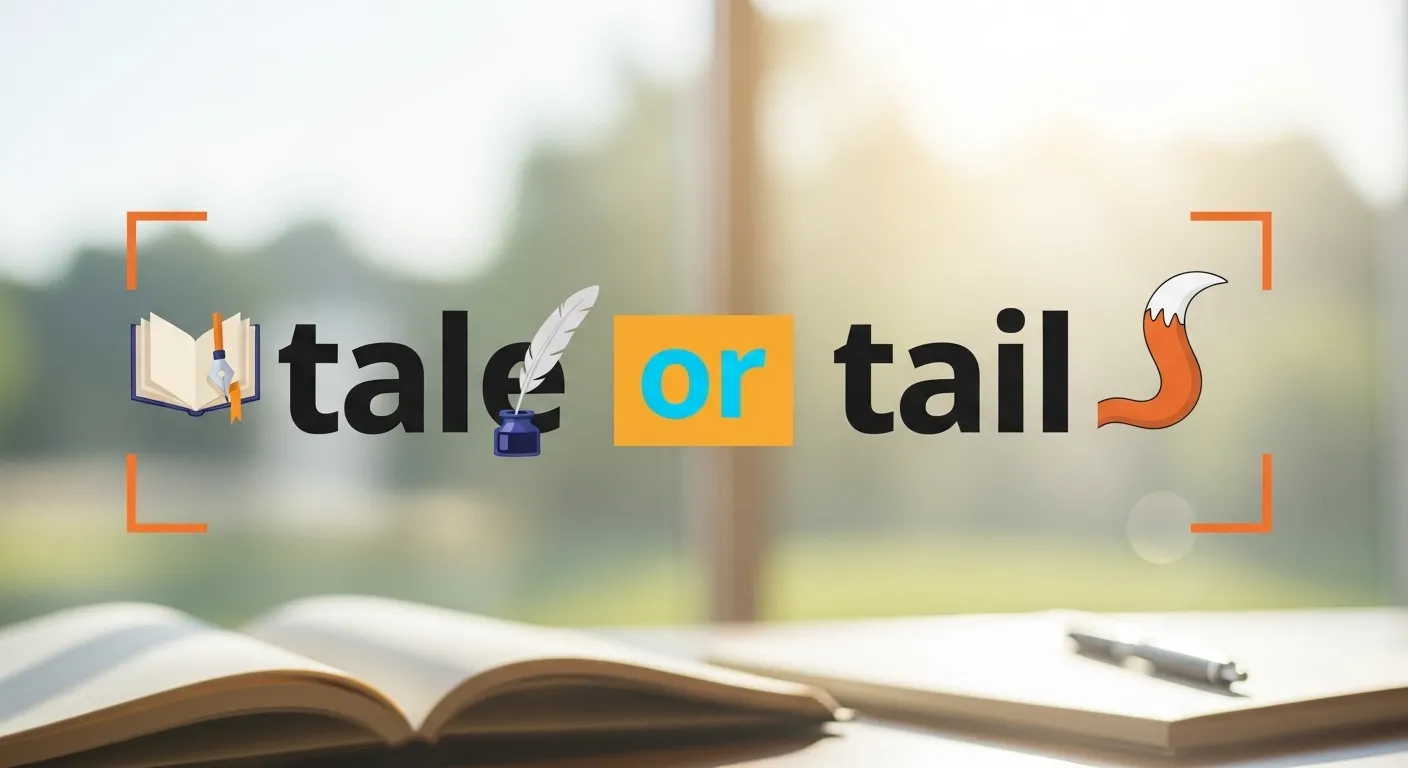
Many people search for tale or tail because the words sound the same but have very different meanings. This small spelling difference can cause mistakes in emails, school work, blog posts, and professional writing. One wrong letter can change your message and make your writing look careless.
“Tale” means a story. “Tail” means the back part of an animal or the end of something. Because they are homophones, writers often mix them up, especially in phrases like “fairy tale.”
This guide gives you a quick answer, clear examples, simple rules, and practical tips so you can choose the correct word with confidence every time.
Tale or Tail – Quick Answer
Tale means a story or narrative.
Tail means the back part of an animal or object.
Simple Examples:
- She told a scary tale. ✅ (story)
- The dog wagged its tail. ✅ (body part)
- This is a fairy tale. ✅
- The cat has a long tail. ✅
Wrong Examples:
- She told a scary tail. ❌
- The dog wagged its tale. ❌
Quick Tip:
If you mean a story → use tale.
If you mean a body part or end part → use tail.
The Origin of Tale or Tail
Understanding the history of these words helps explain why they sound the same but mean different things.
Origin of “Tale”
The word tale comes from Old English talu, meaning speech, story, or account. Over time, it came to mean a narrative or story. You see it in phrases like:
- Fairy tale
- Tall tale
- Bedtime tale
The word kept its spelling for centuries.
Origin of “Tail”
The word tail comes from Old French taille, which relates to cutting or shaping. It later meant the rear part of an animal. The spelling evolved, but the pronunciation stayed close to “tale.”
That is why both words sound the same today. English kept both spellings because they come from different roots.
British English vs American English Spelling
Good news: There is no spelling difference between British and American English for these words.
Both use:
- Tale (story)
- Tail (rear part)
Unlike words such as color/colour or judgment/judgement, “tale” and “tail” stay the same in:
- 🇺🇸 United States
- 🇬🇧 United Kingdom
- 🇨🇦 Canada
- 🇦🇺 Australia
Comparison Table
| Word | Meaning | Example | US Spelling | UK Spelling |
| Tale | Story | A fairy tale | Tale | Tale |
| Tail | Back part | A fox’s tail | Tail | Tail |
There is no regional variation.
Which Spelling Should You Use?
The choice is not about region. It is about meaning.
Use “Tale” if:
- You are writing fiction.
- You are describing a story.
- You are using phrases like fairy tale or tall tale.
- You are writing creatively.
Use “Tail” if:
- You are describing animals.
- You are talking about airplanes (tail section).
- You are describing the end of something.
- You are using phrases like tail light or ponytail.
For Global Writing
If your audience is international, focus only on correct meaning. Since spelling does not change between countries, your only job is choosing the right word.
Common Mistakes with Tail or Tale
Here are the most common errors:
1. Fairy Tail ❌
Correct: Fairy Tale ✅
A fairy tale is a magical story.
2. Tall Tail ❌
Correct: Tall Tale ✅
A tall tale is an exaggerated story.
3. Dog’s Tale ❌
Correct: Dog’s Tail ✅
Animals have tails.
4. Bedtime Tail ❌
Correct: Bedtime Tale ✅
5. Fish Tale ❌ (If meaning story)
Correct: Fish Tale ✅ only if talking about story.
Correct: Fish Tail ✅ if describing the body part.
Context matters.
Tale Vs Tail in Everyday Examples
Here is how these words appear in daily writing.
In Emails
- Please share your travel tale with us.
- The mechanic checked the plane’s tail section.
In News Articles
- The book tells a powerful tale of survival.
- The animal escaped with its tail injured.
On Social Media
- What a crazy tale from last night!
- My dog is wagging his tail non-stop!
In Formal Writing
- The novel presents a historical tale.
- The aircraft’s tail stabilizer was damaged.
Tail Vs Tale – Google Trends & Usage Data
Search data shows people often type “tale or tail” into Google because:
- They hear the word but are unsure of spelling.
- They are writing “fairy tale.”
- They confuse the words in school writing.
- They want grammar clarity.
Countries where this confusion is common:
- United States
- United Kingdom
- India
- Pakistan
- Canada
“Tale” appears more in literature and entertainment searches.
“Tail” appears more in animal, fashion (ponytail), and aviation searches.
The confusion comes from pronunciation, not spelling rules.
Comparison Table – Tale vs Tail
| Feature | Tale | Tail |
| Meaning | Story | Rear part |
| Part of Speech | Noun | Noun |
| Related Words | Story, narrative | End, rear |
| Example Phrase | Fairy tale | Ponytail |
| Used in Fiction? | Yes | Rarely |
| Used in Animal Context? | No | Yes |
FAQs:
1. Are tale and tail pronounced the same?
Yes. They are homophones. They sound identical.
2. What does tale mean?
It means a story or narrative.
3. What does tail mean?
It means the back part of an animal or object.
4. Is fairy tail ever correct?
No. The correct phrase is fairy tale.
5. Is there a British spelling difference?
No. Both US and UK use the same spelling.
6. How can I remember the difference?
“Tale” has “ale” like “story time.”
“Tail” has “ai” like in “animal.”
7. Can tail mean something other than an animal part?
Yes. It can mean the end of something, like a plane’s tail.
Conclusion:
The confusion between tale and tail happens because they sound the same, but their meanings are different. Tale means a story.
Tail means the back part of an animal or the end of something. The spelling is the same in British and American English, so context is what matters.
If you mean a story, use tale. If you mean a body part or ending, use tail. Choosing the correct word keeps your writing clear and professional.
Learn More About:
Affect or Effect: Grammar Rules Explained Clearly ( 2026)
Handle or Handel: Why One Is Right And The Other Is Wrong (2026)

I’m a U.S. based content writer and language researcher with a strong focus on English grammar, spelling differences, and frequently confused terms. My writing is aimed at helping readers write more clearly and correctly in daily use, workplace communication, and digital content.