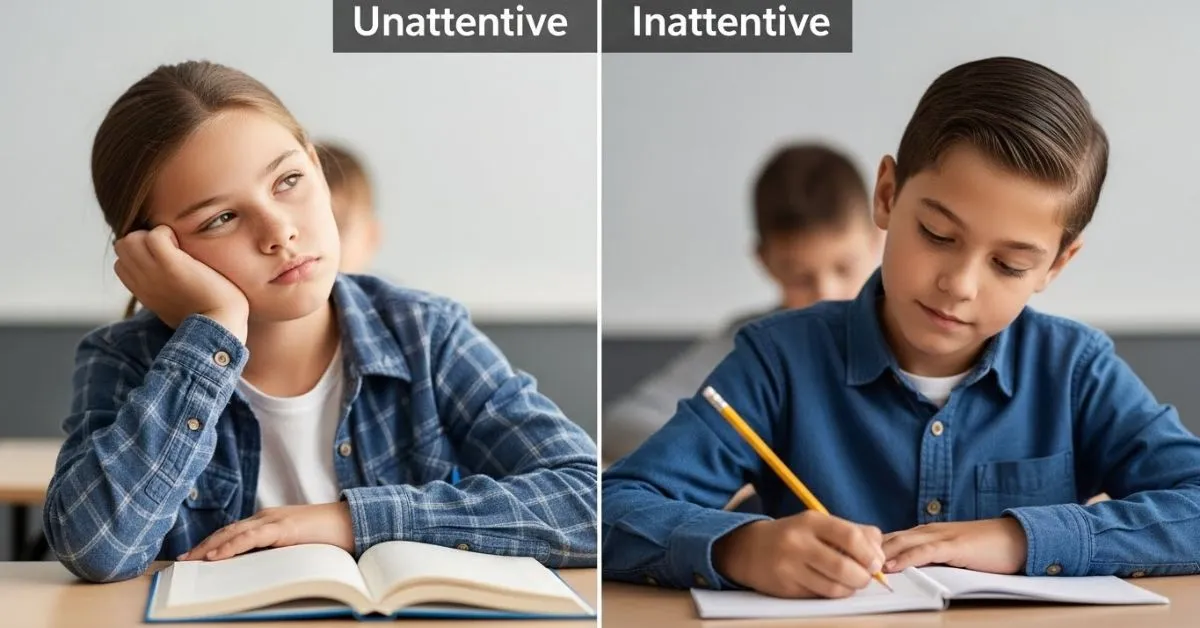
Have you ever paused while writing an email or article and wondered: is it unattentive or inattentive? You’re not alone. This keyword is searched thousands of times because both words look correct, sound similar, and appear in real writing.
The confusion exists because both words actually come from the same root idea and are often used in similar situations. However, they are not equally common, and one spelling is clearly preferred in modern English.
Searchers want a fast answer, but they also want confidence why one word is right, where the other came from, and whether British or American English makes a difference.
This guide solves that confusion completely. You’ll get a quick answer, the history behind both words, clear British vs American comparisons, real-life examples, common mistakes, and practical advice on which spelling you should use for your audience.
By the end, you’ll never hesitate over unattentive or inattentive again.
Unattentive or Inattentive – Quick Answer
Inattentive is the correct and preferred spelling in modern English.
Unattentive is rare and often considered incorrect or outdated.
Examples:
- ✅ The student seemed inattentive during the lecture.
- ❌ The student seemed unattentive during the lecture. (rare/uncommon)
Inattentive means not paying attention, distracted, or careless about details. It is widely accepted in dictionaries, professional writing, and everyday use.
The Origin of Inattentive or Unattentive
The confusion comes from how English forms negative words.
Word Roots
- Attentive → from Latin attendere (to pay attention)
- In- → a common Latin prefix meaning not
- Un- → a Germanic prefix also meaning not
Why Two Forms Exist
English allows both in- and un- as negative prefixes, but usage not grammar decides correctness.
Historically:
- Inattentive entered English earlier and became dominant.
- Unattentive appeared occasionally but never gained wide acceptance.
- Over time, dictionaries, educators, and style guides standardized inattentive as the correct form. Unattentive now appears mainly in older texts or as a spelling error.
- Complimented or Complemented: Understand the Difference
British English vs American English Spelling
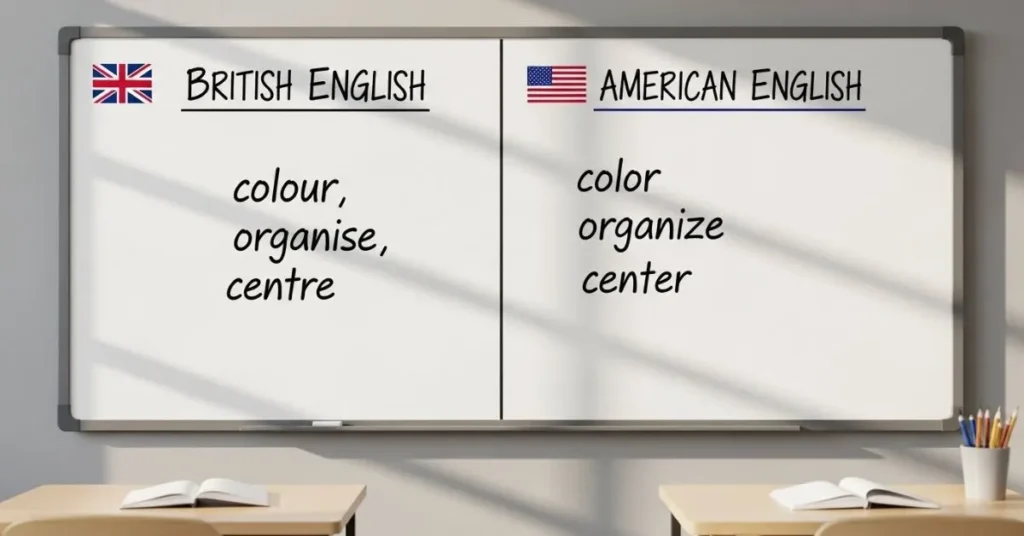
Unlike many spelling debates, this one does NOT change by region.
Key Fact
Both British English and American English use inattentive.
Comparison Table
| Feature | American English | British English |
| Preferred spelling | Inattentive | Inattentive |
| Accepts unattentive? | ❌ No | ❌ No |
| Used in formal writing | ✅ Yes | ✅ Yes |
| Dictionary supported | ✅ Yes | ✅ Yes |
Conclusion: This is not a UK vs US issue. One spelling wins globally.
Which Spelling Should You Use?
Your audience matters but in this case, the advice is simple.
Use inattentive if:
- You’re writing for a US audience
- You’re writing for a UK or Commonwealth audience
- You’re publishing content globally
- You’re writing academic and professional content.
Avoid unattentive because:
- It is not standard
- It may look like a spelling mistake
- It reduces credibility and clarity
Professional rule: When one form is clearly dominant, always choose it.
Common Mistakes with Unattentive or Inattentive
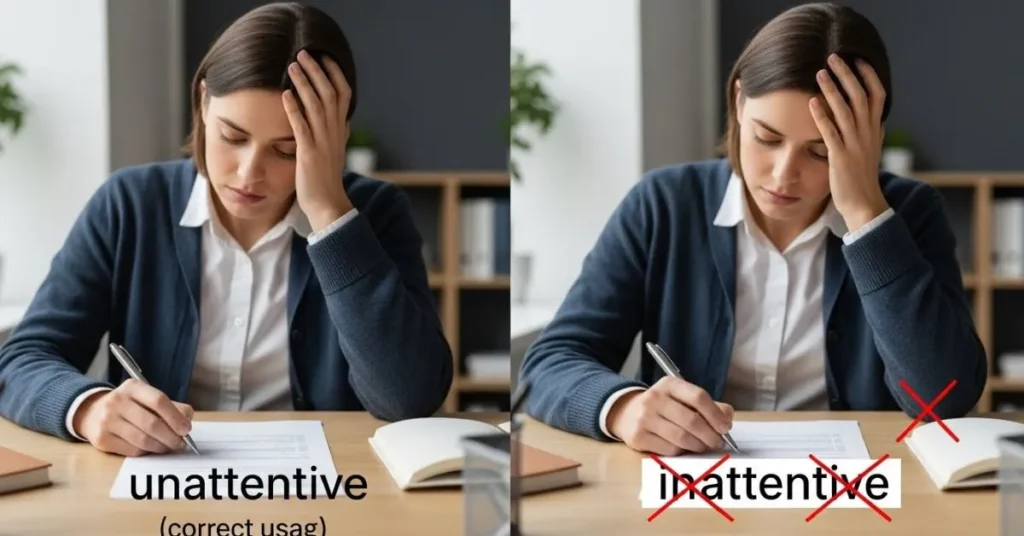
Here are frequent errors people make and how to fix them.
❌ Mistake 1: Thinking both are equally correct
- Wrong: Both spellings are acceptable.
- Correct: Only inattentive is standard.
❌ Mistake 2: Assuming un- is more natural
- Many English words use un-, but not this one.
- Correct form: inattentive
❌ Mistake 3: Using unattentive in formal writing
- This can reduce trust in professional or academic work.
❌ Mistake 4: Autocorrect confusion
- Some tools fail to flag unattentive, but that doesn’t make it right.
Unattentive or Inattentive in Everyday Examples
Emails
- ✅ Sorry if I seemed inattentive during the meeting.
News Writing
- ✅ The report criticized inattentive driving as a major safety risk.
Social Media
- ✅ Feeling inattentive today too many notifications.
Academic Writing
- ✅ Inattentive behavior can negatively affect learning outcomes.
Formal Reports
- ✅ The error was caused by inattentive data entry.
Inattentive works naturally in all writing styles.
Unattentive or Inattentive – Google Trends & Usage Data
Search and usage data show a clear winner.
Usage Insights
- Inattentive is searched many times more than unattentive.
- Used heavily in:
- Education
- Psychology
- Driving safety
- Workplace communication
- Education
By Region
- United States: Inattentive dominates
- United Kingdom: Inattentive dominates
- Canada & Australia: Inattentive dominates
- Global English: Inattentive dominates
Comparison Table: Keyword Variations
| Spelling | Correct? | Common Usage | Recommended |
| Inattentive | ✅ Yes | Very common | ⭐ Yes |
| Unattentive | ❌ No | Rare | ❌ No |
FAQs:
1. Is unattentive a real word?
It appears rarely, but it is not standard and should be avoided.
2. Which spelling do dictionaries accept?
Major dictionaries list inattentive as the correct form.
3. Is this a British vs American difference?
No. Both varieties use inattentive.
4. Can I use unattentive creatively?
In creative writing you can, but it may confuse readers.
5. Is inattentive formal or informal?
It works in both formal and informal writing.
6. What Does “Unattentive” Mean?
Unattentive means not paying attention or failing to notice what is happening.
7. What’s a synonym for inattentive?
Distracted, careless, absent minded, unfocused.
Conclusion:
The confusion between unattentive or inattentive is understandable, but the correct choice is clear. Inattentive is the standard, dictionary approved spelling used in both American and British English.
Unattentive exists only on the fringes of the language and is best avoided in professional, academic, or SEO writing.
If your goal is clarity, credibility, and correctness, always choose inattentive. It works in emails, news articles, research papers, social media posts, and global content without raising doubts.
By using inattentive consistently, you avoid mistakes, sound more professional, and align your writing with modern English standards.
When in doubt, let frequency, dictionaries, and reader expectations guide you and they all point to the same answer.
Gain More About:
Employees or Employee’s: Which One Is Correct?
Availability or Availabilities: Which Is Correct?