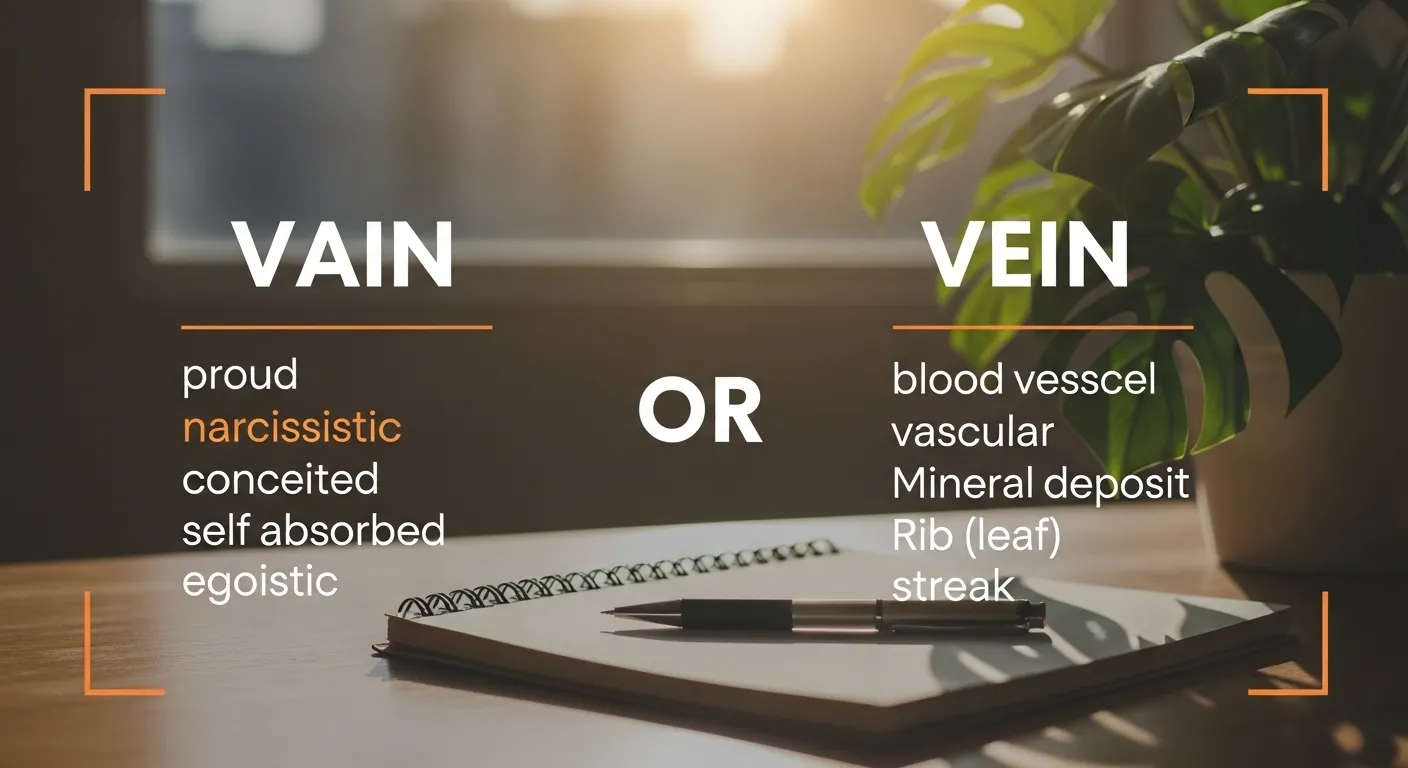
Many people search for “vain or vein” because the two words sound almost identical when spoken. For example, writing “He tried in vein” instead of “He tried in vain” looks incorrect and unprofessional.
Such mistakes appear in emails, essays, and social media posts even among native English speakers.
The key difference is simple. Vain relates to pride or something done without success, while vein refers to blood vessels in the body or mineral lines in rocks.
In this guide, you will quickly learn the meanings, examples, and tips to use vain and vein correctly in everyday writing.
Vain or Vein – Quick Answer
The words vain and vein are homophones. This means they sound alike but have different meanings and spellings.
| Word | Meaning | Example |
| Vain | Excessive pride or something done without success | She is very vain about her appearance. |
| Vein | A blood vessel or a streak in rocks/minerals | The doctor checked the vein in his arm. |
Vain
Vain is an adjective. It usually means:
- Having too much pride in appearance or abilities
- Something done without success
Examples
- He is too vain to admit his mistake.
- Their search for the lost keys was in vain.
- She looked at herself in the mirror, feeling a little vain.
Vein
Vein is a noun. It usually refers to:
- A blood vessel that carries blood to the heart
- A streak of minerals in rock
- A particular mood or style
Examples
- The nurse found a vein in his arm.
- The miners discovered a gold vein underground.
- The comedian continued his joke in the same humorous vein.
Quick tip:
If the sentence is about pride or failure, use vain.
If the sentence is about blood vessels or minerals, use vein.
The Origin of Vain or Vein
Understanding the origins of words often helps explain why they look similar but mean different things.
Origin of Vain
The word vain comes from the Latin word vanus, which means empty, useless, or without value. Over time, this meaning developed into two main ideas:
- Something useless or unsuccessful
- A person who is overly proud or self-admiring
The phrase “in vain” appeared in English as early as the 1300s. It means without success or without result.
Example from traditional English usage:
- They searched in vain for the missing document.
Origin of Vein
The word vein comes from the Latin word vena, meaning blood vessel. In early medical writing, the word described tubes in the body that carry blood.
Later, the meaning expanded to include:
- Mineral veins in rocks
- Styles or moods in speech or writing
For example:
- The miners struck a silver vein.
- The writer continued the story in a humorous vein.
Why the Words Sound Similar
English borrowed both words from Latin and French influences. Over centuries, pronunciation changed, but the spelling remained different. As a result, vain and vein sound alike but represent completely different ideas.
British English vs American English Spelling
Unlike many English spelling differences, vain and vein are spelled the same in both British and American English. There is no regional spelling variation.
However, confusion still happens because the pronunciation is similar in many accents.
Comparison Table
| Word | British English | American English | Meaning |
| Vain | Vain | Vain | Prideful or unsuccessful |
| Vein | Vein | Vein | Blood vessel or mineral line |
Example Sentences
British English
- The attempt was in vain.
- The nurse located the vein quickly.
American English
- Their effort was in vain.
- The doctor injected medicine into the vein.
So the spelling does not change across regions. The only challenge is choosing the correct word based on meaning.
Which Spelling Should You Use?
Choosing between vain and vein depends entirely on the meaning of your sentence.
Use “Vain” When Talking About:
- Pride in appearance
- Arrogance or self-admiration
- Something done without success
Examples
- He is too vain to apologize.
- Their effort was in vain.
Use “Vein” When Talking About:
- Blood vessels
- Medical topics
- Mineral deposits
- A style or mood
Examples
- The doctor inserted the needle into a vein.
- The author continued the story in the same creative vein.
Advice for Different Audiences
| Audience | Best Practice |
| US readers | Use standard meanings for vain and vein |
| UK readers | Same spelling rules apply |
| Global readers | Focus on meaning, not regional spelling |
Since there is no spelling variation worldwide, the key is simply understanding the difference.
Common Mistakes with Vein or Vain
Because the words sound identical in many accents, writers often mix them up.
Mistake 1
❌ He tried in vein to solve the problem.
✔ He tried in vain to solve the problem.
Reason: The phrase in vain means without success.
Mistake 2
❌ The doctor found a vain in his arm.
✔ The doctor found a vein in his arm.
Reason: Vein refers to a blood vessel.
Mistake 3
❌ She is very vein about her looks.
✔ She is very vain about her looks.
Reason: Vain means proud of appearance.
Mistake 4
❌ The miners discovered a gold vain.
✔ The miners discovered a gold vein.
Reason: Mineral deposits in rocks are called veins.
Memory Trick
A simple trick can help you remember the difference:
Vain → Vanity (pride)
Vein → Blood
Vain or Vein in Everyday Examples
Understanding how these words appear in real life helps reinforce the difference.
Emails
- I tried in vain to contact you yesterday.
- The nurse may need to find another vein for the injection.
News Writing
- Rescue teams searched in vain for survivors.
- Doctors discovered a blocked vein during the operation.
Social Media
- “All my workout efforts were in vain after that pizza!”
- “The doctor couldn’t find my vein for the blood test.”
Professional Writing
- The lawyer argued that the investigation was conducted in vain.
- The surgeon repaired a damaged vein in the patient’s leg.
These examples show that context clearly determines which spelling is correct.
Vein vs Vain – Google Trends & Usage Data
Search engines show that many users frequently look up “vain or vein” because they are unsure which spelling fits their sentence.
Popular Search Queries
Common searches include:
- vain vs vein
- what does vain mean
- in vain meaning
- vein meaning in anatomy
- vain or vein spelling difference
Where Searches Are Most Common
Search interest often appears in:
- United States
- United Kingdom
- Canada
- Australia
- India
This happens because learners and writers worldwide encounter these homophones.
Usage Context
| Word | Common Context |
| Vain | Idioms, personality traits, expressions |
| Vein | Medicine, biology, geology |
Phrase Popularity
The phrase “in vain” is extremely common in literature and journalism. Meanwhile, vein appears frequently in medical or scientific writing.
Comparison Table: Vain vs Vein
| Feature | Vain | Vein |
| Part of speech | Adjective | Noun |
| Meaning | Prideful or unsuccessful | Blood vessel or mineral line |
| Common phrase | In vain | Vein in the arm |
| Context | Personality or failure | Medicine, geology |
| Example | She is vain about her looks | The doctor found a vein |
FAQs
1. What is the difference between vain and vein?
Vain means prideful or unsuccessful. Vein refers to a blood vessel or a mineral line in rocks.
2. Is the phrase “in vein” correct?
No. The correct phrase is “in vain,” which means without success.
Example:
- Their search was in vain.
3. Does vein only refer to blood vessels?
No. Vein can also describe:
- Mineral deposits in rocks
- A particular style or mood
Example:
- The comedian spoke in a humorous vein.
4. Is vain always negative?
Usually yes. Vain often suggests excessive pride or arrogance.
Example:
- He is too vain to accept criticism.
5. Are vain and vein pronounced the same?
Yes. In most accents, they are pronounced the same, which is why people confuse them.
6. Are there British vs American spelling differences?
No. Both countries spell the words vain and vein the same way.
7. How can I remember the difference quickly?
Use this memory trick:
- Vain → Vanity (pride)
- Vein → Blood vessel
Conclusion
The confusion between vain and vein happens because the words sound the same, but their meanings are different. Vain describes pride or something done without success, as in the phrase “in vain.” Vein, on the other hand, refers to blood vessels in the body or mineral lines in rocks.
There is no spelling difference between British and American English, so the correct word depends only on the meaning of the sentence.
A simple way to remember is: vain relates to vanity (pride), while vein relates to blood.
Learn More About:
Handle or Handel: Which One Is Right And Wrong (2026)
Analyses or Analysis: Using These Words Correctly