Have you ever stopped mid-sentence and wondered whether to write personalise or personalize? You’re not alone. This small spelling difference confuses writers everywhere.
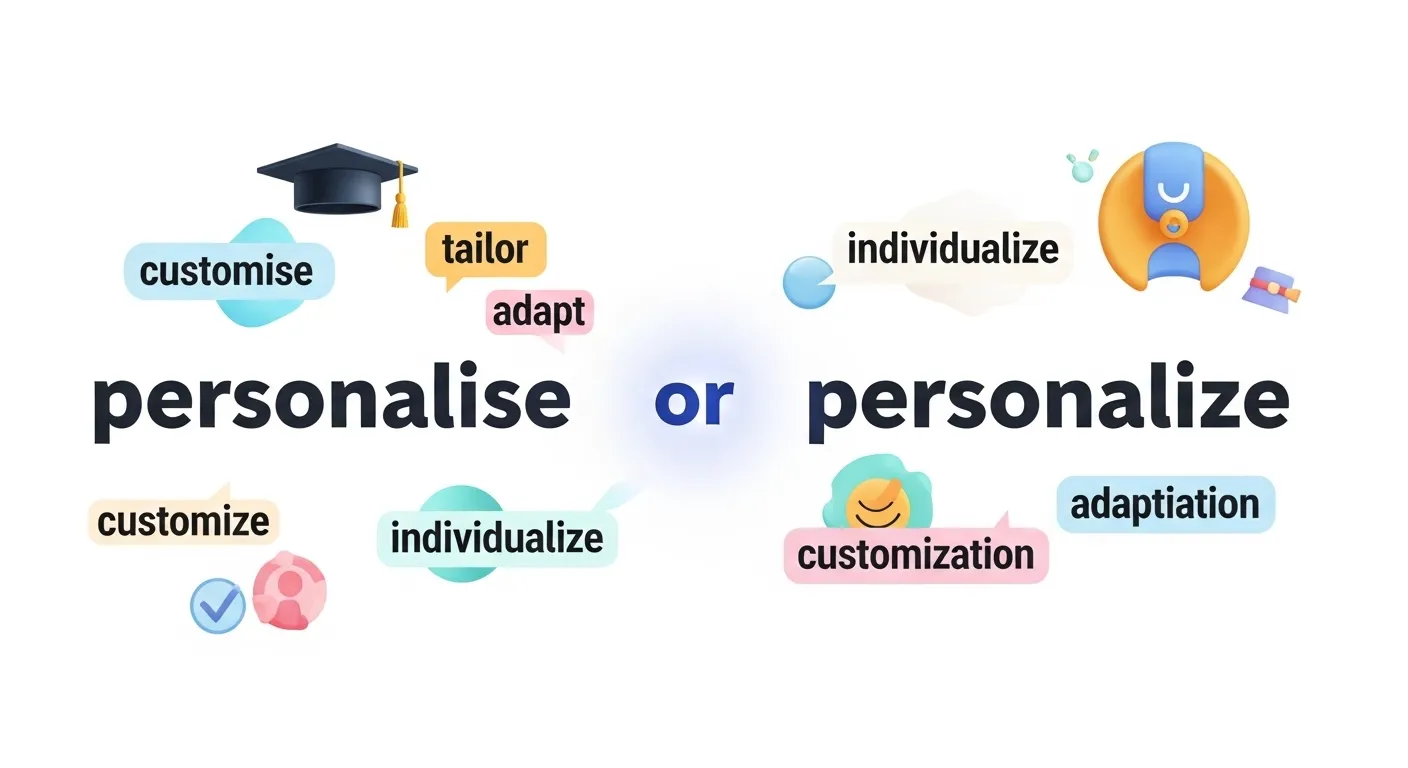
Both words are correct. British English uses “personalise”, while American English uses “personalize.” The meaning stays exactly the same to tailor something for a person.
This confusion happens because English follows two main spelling systems. One uses -ise, and the other prefers -ize. That’s why you see both forms in books, emails, and online content.
In this guide, you’ll learn the clear difference, real examples, and the right way to use each form depending on your audience.
Personalise or Personalize – Quick Answer
Both personalise and personalize are correct.
- Personalise → Used in British English
- Personalize → Used in American English
Examples:
- British: We personalise our services for each customer.
- American: We personalize our services for each customer.
They have the same meaning:
👉 To tailor something for an individual.
The Origin of Personalise and Personalize
The word comes from the root word “person”, combined with the suffix “-al” and the verb ending “-ize.”
The -ize ending comes from Greek “-izein”, meaning to make or to do. This form entered English through Latin and French.
Interestingly, -ize is actually the older and more original form. However, over time, British English adopted -ise as a common spelling due to French influence.
So:
- Personalize → Closer to original Greek/Latin roots
- Personalise → Adapted through British usage and French style
Both forms are now standard in their respective regions.
British English vs American English Spelling
The difference between personalise and personalize is part of a larger spelling pattern.
Key Rule:
- British English → often uses -ise
- American English → uses -ize
Examples:
| British English | American English |
| personalise | personalize |
| organise | organize |
| realise | realize |
| recognise | recognize |
Important Note:
Some British publishers (like Oxford) still prefer -ize, so both forms can appear in British contexts.
Which Spelling Should You Use?
The best spelling depends on your audience.
Use Personalize if:
- You are writing for a US audience
- Your content targets global SEO (Google often favors American English)
- You are working in tech, marketing, or international business
Use Personalise if:
- Your audience is in the UK, Australia, or Commonwealth countries
- You follow British English standards
- You are writing for local publications or academic work in those regions
Pro Tip:
👉 Stay consistent. Do not mix both spellings in one document.
Common Mistakes with Personalize or Personalise
Here are frequent errors people make:
1. Mixing Both Spellings
❌ We personalize services and personalise experiences.
✔ Choose one style and stick to it.
2. Assuming One Is Wrong
❌ Personalise is incorrect.
✔ Both are correct depending on region.
3. Using the Wrong Audience Style
❌ Using personalise in a US business email
✔ Use personalize for American readers
4. Confusing with Similar Words
❌ Personlize (misspelling)
✔ Personalize
5. Ignoring Brand Guidelines
Many companies have style guides. Always follow them.
Personalize and Personalise in Everyday Examples
1. Emails
- British: We can personalise your package based on your needs.
- American: We can personalize your package based on your needs.
2. Social Media
- Brands personalize content to connect with users.
- Companies personalise ads for better engagement.
3. News Writing
- The company plans to personalize customer experiences using AI.
- Retailers personalise shopping journeys to increase sales.
4. Formal Writing
- Organizations personalize communication strategies.
- Institutions personalise learning for students.
5. Marketing Content
- Personalized emails increase conversion rates.
- Personalised campaigns improve customer loyalty.
Personalize vs Personalise – Google Trends & Usage Data
Search trends show clear regional differences:
- United States → Strong preference for personalize
- United Kingdom → More searches for personalise
- Global usage → Personalize is slightly more dominant
Why?
- American English dominates the internet
- Many global companies use US spelling for consistency
However, local audiences still prefer their native spelling.
Comparison Table: Personalise vs Personalize
| Feature | Personalise | Personalize |
| Spelling Style | British English | American English |
| Usage Region | UK, Australia, Commonwealth | USA, global business |
| Origin Influence | French style | Greek/Latin root |
| Meaning | Same | Same |
| SEO Preference | Moderate | High (global content) |
FAQs
1. Is “personalise” wrong?
No. It is correct in British English.
2. Is “personalize” more popular?
Yes. It is more widely used globally, especially online.
3. Can I use both in one article?
No. Always stay consistent with one spelling style.
4. Which spelling is better for SEO?
Personalize is usually better for global SEO.
5. Do both words mean the same?
Yes. Both mean to tailor something for an individual.
6. Why does British English use “-ise”?
It follows French-influenced spelling patterns.
7. Do UK universities prefer “personalise”?
Most do, but some (like Oxford) accept -ize.
Conclusion
The choice between personalise and personalize is not about right or wrong. It is about audience and consistency.
Both spellings mean the same thing: to tailor something to a person. The difference comes from regional spelling rules.
British English prefers personalise, while American English uses personalize.
The key is simple:
👉 Choose one style and use it consistently.
By understanding this small difference, you can improve your writing, avoid confusion, and present a more professional image in any context.
Discover More About:
Inquiring or Enquiring: Difference, Meaning And Usage
Tie or Tye: Meaning, Difference And Usage