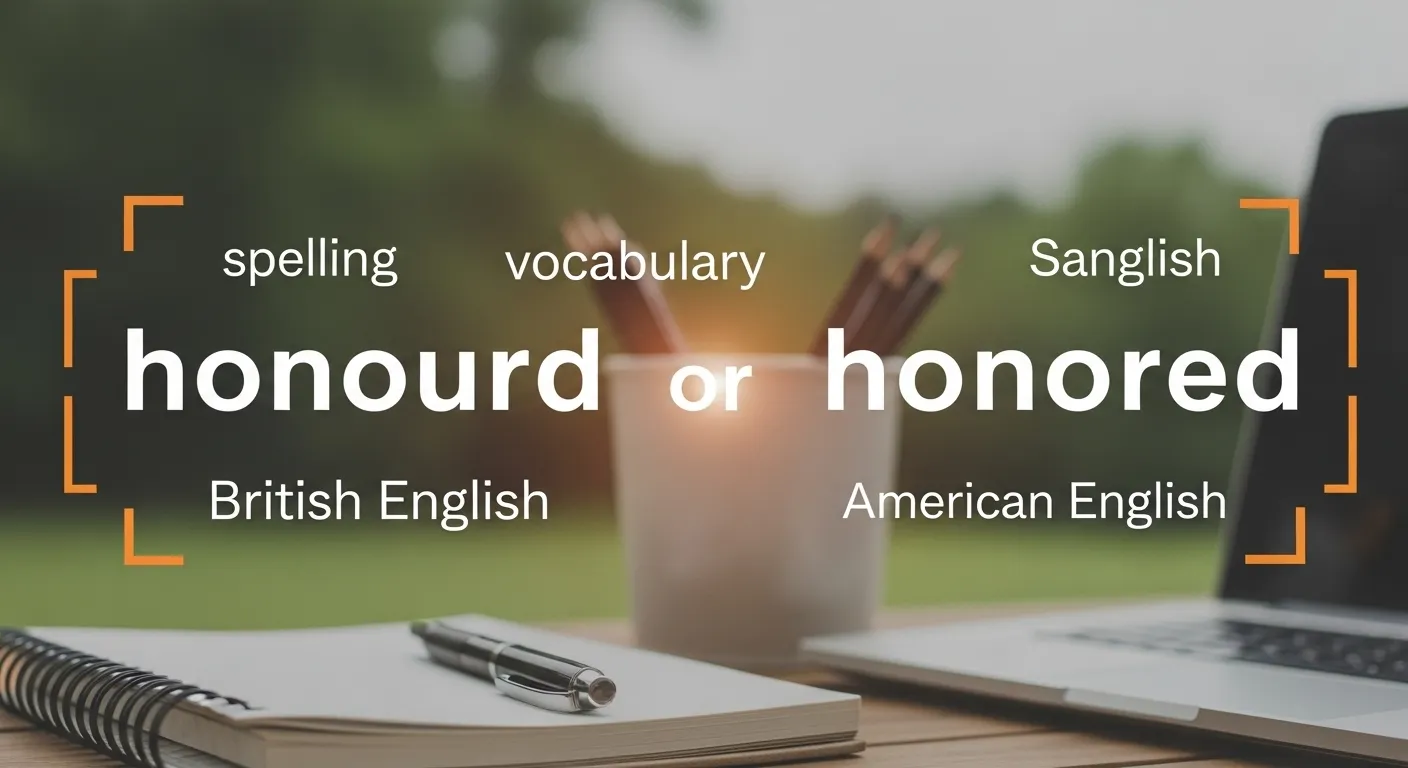
Have you ever stopped while writing and wondered: honoured or honored? You’re not alone. This tiny difference just one letter “u” confuses many writers.
Here’s the quick answer:
👉 Both are correct.
- Honoured = British English
- Honored = American English
The meaning is exactly the same. The only difference is your audience.
If you write for the UK or Commonwealth countries, use honoured.
If you write for the US or a global audience, honored is often the better choice.
Simple rule: Pick one style and stay consistent.
Honoured or Honored – Quick Answer
Both “honoured” and “honored” are correct. The difference depends on the type of English you use:
- Honoured → British English
- Honored → American English
Examples:
- British: She felt honoured to receive the award.
- American: She felt honored to receive the award.
👉 Meaning is the same in both cases:
To feel proud, respected, or recognized.
The Origin of Honoured and Honored
The word comes from the Latin word “honor”, meaning respect, dignity, or recognition. It moved into Old French as honor and then into English.
In early English, spelling was not fixed. Writers used many variations. Over time, British English kept the influence of French spelling, which often includes extra letters like “ou.”
Later, American English simplified many words. This change is linked to Noah Webster, a dictionary writer who wanted simpler spelling. He removed extra letters to make words easier to read and write.
Example of this pattern:
- Colour → Color
- Favourite → Favorite
- Honour → Honor
So, honoured kept the older British form, while honored became the simplified American version.
British English vs American English Spelling
The difference between honoured and honored follows a common spelling rule.
Key Rule:
- British English → adds “u” (honoured)
- American English → removes “u” (honored)
Examples:
- Honoured guest (UK) vs Honored guest (US)
- Deeply honoured (UK) vs Deeply honored (US)
Comparison Table
| British English | American English | Meaning |
| Honoured | Honored | Given respect or recognition |
| Honour | Honor | Respect, pride |
| Honouring | Honoring | Showing respect |
| Honourable | Honorable | Worthy of respect |
👉 Tip: If you see “our” in British English, it often becomes “or” in American English.
Which Spelling Should You Use?
Choosing the right spelling depends on your audience.
Use “Honored” if:
- Your audience is in the United States
- You are writing for American companies or websites
- You follow American English rules
Use “Honoured” if:
- Your audience is in the UK, Canada, Australia, or other Commonwealth countries
- You follow British English style
For Global Writing:
- Pick one style and stay consistent
- American English is more common online, so many global writers prefer “honored”
👉 Best Practice:
Consistency matters more than choice. Do not mix both forms in the same document.
Common Mistakes with Honored or Honoured
Many writers make simple mistakes when using these words.
1. Mixing both spellings
❌ I am honoured and truly honored to be here.
✅ Choose one: honoured OR honored
2. Using wrong version for audience
❌ Using “honoured” in a US business email
✅ Use “honored” for American readers
3. Spelling errors
❌ honerd
❌ honerred
✅ Correct: honored or honoured
4. Confusing with similar words
- Honor (noun) vs Honored (verb/adjective)
- Example:
- It is an honor.
- I am honored.
5. Overuse in casual writing
Using formal words like honoured in casual chats can sound too serious.
Honored and Honoured in Everyday Examples
1. Emails
- British: I am honoured to join your team.
- American: I am honored to join your team.
2. News Writing
- British: The actor was honoured at the ceremony.
- American: The actor was honored at the ceremony.
3. Social Media
- Feeling honored to reach 10k followers!
- So honoured to be part of this event.
4. Formal Writing
- She was honoured for her service to the country.
- He was honored with a lifetime achievement award.
5. Invitations
- We are honoured by your presence.
- We are honored by your presence.
Honored vs Honoured – Google Trends & Usage Data
Search data shows a clear pattern:
- “Honored” is more popular in the United States
- “Honoured” is more common in:
- United Kingdom
- Canada
- Australia
Global Trend Insight:
- American English dominates online content
- Many international websites prefer “honored” for wider reach
Context Usage:
- Formal writing → both forms used depending on region
- Digital content → “honored” slightly more common
- Academic writing → depends on style guide (APA uses American English)
Comparison Table: Honoured vs Honored
| Feature | Honoured | Honored |
| English Type | British | American |
| Spelling Style | Traditional | Simplified |
| Usage Region | UK, Canada, Australia | United States |
| Meaning | Same | Same |
| Popular Online | Less | More |
| Example | She felt honoured | She felt honored |
FAQs
1. Is “honoured” incorrect?
No. It is correct in British English.
2. Is “honored” more common?
Yes. It is more common globally, especially online.
3. Can I use both in the same article?
No. Choose one style and stay consistent.
4. Which is better for SEO?
“Honored” often performs better because it has higher global search volume.
5. Do both words mean the same?
Yes. There is no difference in meaning.
6. What about Canada?
Canada usually follows British English, so “honoured” is common, but both may appear.
7. Which should students use?
Follow your school or exam guidelines (UK → honoured, US → honored).
Conclusion
The difference between honoured and honored is simple. Both are correct and mean the same showing respect or pride. The only change is spelling.
- Honoured → British English
- Honored → American English
There’s no “right” or “wrong,” only what fits your audience. Use honored for US or global readers, and honoured for UK or Commonwealth audiences.
👉 Key tip: Stay consistent. One style, one clear voice.
Find More About:
Chears or Cheers – Difference, Meaning, and Usage
Inquiring or Enquiring: Difference, Meaning And Usage

I’m a U.S. based content writer and language researcher with a strong focus on English grammar, spelling differences, and frequently confused terms. My writing is aimed at helping readers write more clearly and correctly in daily use, workplace communication, and digital content.