Many English learners confuse “little” and “a little” because they look similar but have very different meanings.
This small change can completely affect your sentence tone.
For example, “I have little money” sounds negative, while “I have a little money” sounds more positive.
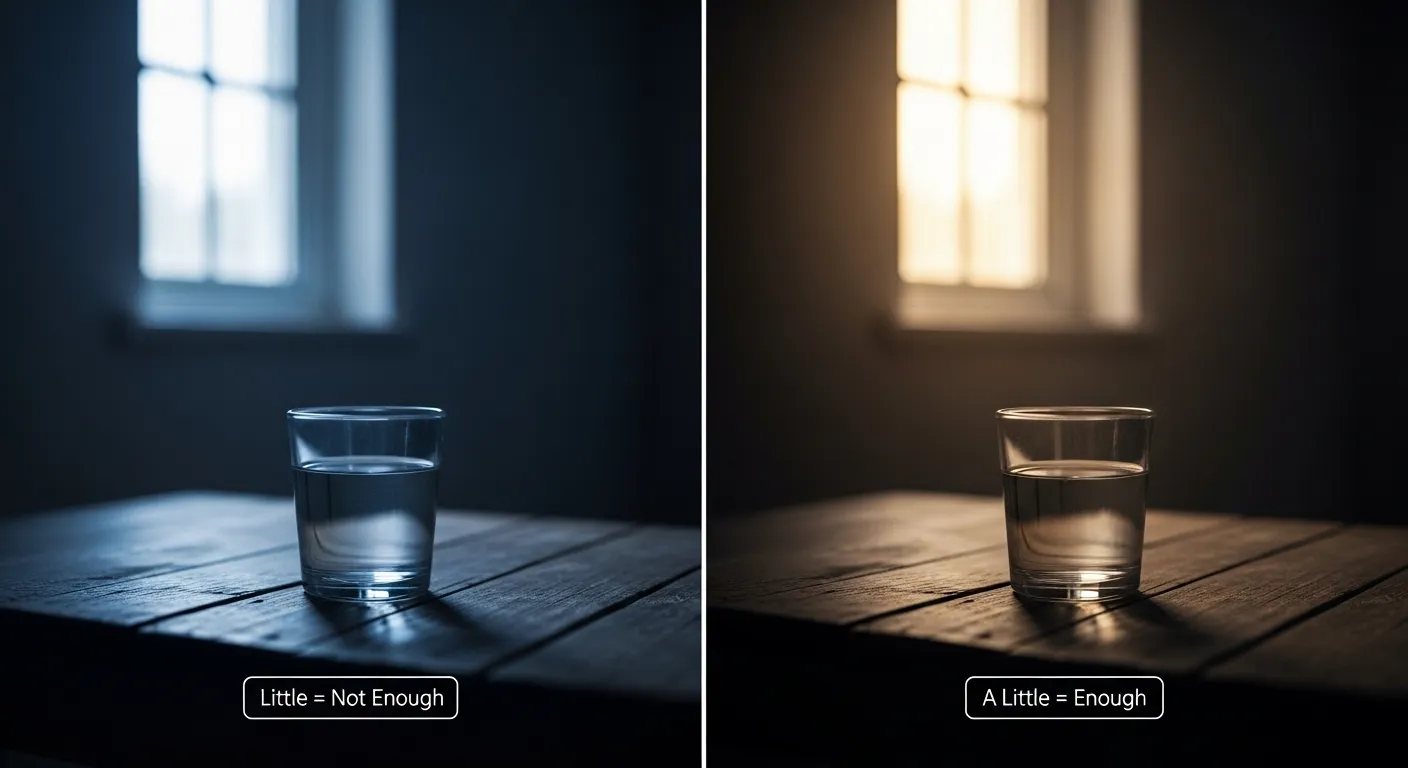
In simple terms: “little” means almost none, and “a little” means some.
This quick guide will help you understand the difference and use both correctly with confidence.
Little or A Little – Quick Answer
The difference is simple:
- Little = almost none (negative meaning)
- A little = some (positive meaning)
Examples:
- I have little time. → Almost no time (problem)
- I have a little time. → Some time (good)
- She has little knowledge. → Not enough knowledge
- She has a little knowledge. → Some knowledge (useful)
👉 Quick Tip:
If you can replace it with “not much”, use little.
If you can replace it with “some”, use a little.
The Origin of Little or A Little
The word “little” comes from Old English “lytel.” It has always meant small in amount or size. Over time, it became common in both spoken and written English.
The phrase “a little” developed later. The article “a” was added to show a small but positive quantity. This small addition changed the meaning from negative to positive.
Why the Difference Exists
English often uses articles (like a, an, the) to change meaning. In this case:
- Little → focuses on lack
- A little → focuses on presence
This is why learners often get confused. The grammar looks similar, but the meaning is not.
British English vs American English Spelling
Good news:
There is no spelling difference between British and American English for “little” and “a little.”
Both forms are used in the same way in:
- British English
- American English
- Australian English
- Global English
Comparison Table
| Form | British English | American English | Meaning |
| Little | Correct | Correct | Almost none |
| A little | Correct | Correct | Some amount |
Example:
- UK: I have a little free time.
- US: I have a little free time.
👉 Same meaning, same usage.
Which Spelling Should You Use?
Since there is no spelling difference, your choice depends on meaning, not region.
Use “Little” When:
- You want to show shortage
- You mean almost nothing
- The tone is negative
Example:
- We have little hope left.
Use “A Little” When:
- You want to show some amount
- The tone is positive or neutral
- You mean not much, but enough
Example:
- We have a little hope left.
Audience Advice
- Students (Exams): Be careful. This is a common grammar question.
- Professional Writing: Use “a little” for polite tone.
- Global Audience: Always choose based on meaning, not location.
Common Mistakes with Little or A Little
Many learners make these mistakes:
1. Using “Little” Instead of “A Little”
❌ I have little money, so I can go shopping.
✔ I have a little money, so I can go shopping.
👉 “Little” would make this sentence confusing.
2. Mixing Positive and Negative Meaning
❌ She has little experience, so she can do the job well.
✔ She has a little experience, so she can do the job well.
3. Using with Countable Nouns
❌ I have little books.
✔ I have few books.
👉 Use few / a few for countable nouns.
4. Forgetting Tone Difference
- “Little” can sound harsh or serious
- “A little” sounds soft and polite
A Little or Little in Everyday Examples
1. In Emails
- I have a little time to discuss your project.
- I have little time today, so please be brief.
2. In News
- The country has little chance of recovery.
- There is a little improvement in the economy.
3. On Social Media
- I feel a little tired today.
- I have little patience for negativity.
4. In Formal Writing
- The study shows little evidence.
- The study shows a little progress.
5. In Daily Conversation
- Can you wait a little longer?
- I have little interest in that topic.
Little or A Little – Google Trends & Usage Data
Search data shows that many learners search for:
- “little vs a little”
- “difference between little and a little”
- “when to use little”
Popular Countries
- India
- Pakistan
- UK
- USA
- Philippines
Why It’s Popular
- Common in exams (IELTS, TOEFL)
- Used in daily English
- Easy to confuse
Usage Context
| Context | Preferred Form |
| Negative tone | Little |
| Positive tone | A little |
| Formal writing | Both (careful use) |
| Spoken English | A little (more common) |
Comparison Table – Little vs A Little
| Feature | Little | A Little |
| Meaning | Almost none | Some |
| Tone | Negative | Positive |
| Example | Little time | A little time |
| Usage | Serious situations | General use |
| भावना (Feeling) | Lack | Availability |
FAQs
1. What is the main difference between little and a little?
“Little” means almost none, while “a little” means some amount.
2. Can I use them interchangeably?
No. They change the meaning of the sentence completely.
3. Which one is more polite?
“A little” is more polite and friendly.
4. Is this difference important in exams?
Yes. It is a common grammar topic in English exams.
5. Can I use them with countable nouns?
No. Use few / a few instead.
6. Why does “a” change the meaning?
The article “a” adds a positive sense of quantity.
7. Which is more common in speaking?
“A little” is more common in daily conversation.
Conclusion:
A small word can change everything.
“Little” vs “A little” is simple but powerful:
- Little = not enough (negative)
- A little = enough (positive)
There’s no difference between British and American English just focus on meaning. Many learners confuse them because they look similar, but their meanings are opposite.
Think clearly: Do you mean lack or some amount?
With a bit of practice, choosing the right one becomes easy and natural.
Discover More Post: