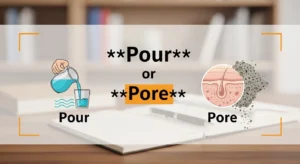
English has many word pairs that sound the same but mean very different things. A common example is sore or soar. If you’ve ever stopped mid sentence to think about which one to use, you’re not alone.
These words are homophones. They sound alike, but their meanings are completely different.
People search for “sore or soar” because they want a quick, clear answer. Maybe you’re writing an email, a caption, or an exam paper. One small spelling mistake can change your whole meaning.
This guide makes it simple. You’ll quickly learn the difference, see easy examples, and know exactly when to use sore and when to use soar.
Sore or Soar – Quick Answer
Here is the simple rule:
- Sore = pain or hurt
- Soar = to fly high or rise quickly
Examples:
- My legs are sore after the gym.
- Her throat feels sore.
- Prices will soar next month.
- The eagle began to soar in the sky.
If you are talking about pain, use sore.
If you are talking about flying or rising, use soar.
That’s it. Simple and clear.
The Origin of Soar or Sore
Understanding history helps you remember the difference.
Origin of “Sore”
The word sore comes from Old English sār, which meant pain or wound. Over time, it kept the same meaning. It has always been linked to physical or emotional pain.
Examples:
- sore muscles
- sore throat
- sore loser
The meaning stayed stable for centuries.
Origin of “Soar”
The word soar comes from Old French essorer, meaning “to rise” or “to fly upward.” It entered English in the 14th century.
It first described birds flying high. Later, people used it for things like prices, emotions, and success.
Examples:
- Birds soar in the sky.
- Profits soar each year.
- His confidence soared.
So even though they sound the same, their roots are completely different.
British English vs American English Spelling
Good news: There is no spelling difference between British and American English for sore and soar.
Unlike words such as:
- Oxford English Dictionary
- Merriam-Webster
Both dictionaries list the same spellings:
- sore
- soar
There are no regional variations.
Comparison Table
| Word | Meaning | British English | American English |
| Sore | Pain or hurt | Sore | Sore |
| Soar | Rise or fly high | Soar | Soar |
So whether you write for the US, UK, Australia, Canada, or anywhere else, the spelling stays the same.
Which Spelling Should You Use?
Your choice does not depend on country. It depends on meaning.
If You Are Writing for the US
Follow meaning rules:
- Pain → sore
- Rise/fly → soar
If You Are Writing for the UK or Commonwealth
The same rule applies:
- Pain → sore
- Rise/fly → soar
If You Are Writing for a Global Audience
Use the same rule again. There is no regional change.
The key is context, not location.
Common Mistakes with Sore or Soar
Here are frequent errors and how to fix them.
1. Mixing Physical Pain and Rising
❌ My profits are sore this year.
✅ My profits are soar this year. (Still wrong grammar form)
✅ My profits will soar this year.
Correct word: Soar (because profits rise).
2. Confusing Emotional Pain
❌ She was soar after losing the match.
✅ She was sore after losing the match.
Correct word: Sore (emotional hurt).
3. Misspelling Verb Forms
Remember:
- Soar (base form)
- Soared (past tense)
- Soaring (continuous)
Examples:
- Prices soared.
- The plane is soaring.
4. “Sore” as an Adjective Only
“Sore” is usually an adjective.
Examples:
- sore feet
- sore back
It is not used to describe rising action.
Sore or Soar in Everyday Examples
Let’s see how these words appear in daily life.
Emails
- I am feeling sore after yesterday’s workout.
- We expect sales to soar next quarter.
News Headlines
- Fuel prices soar after policy change.
- Hospitals report increase in sore throat cases.
Social Media
- My arms are so sore today!
- Watch this bird soar over the mountains.
Formal Writing
- The patient reported a sore shoulder.
- The company’s revenue began to soar in 2025.
The difference is always about meaning.
Sore or Soar – Google Trends & Usage Data
Search data shows that people often confuse these words because they sound identical.
In countries like:
- United States
- United Kingdom
- Canada
- Australia
Both words are commonly searched.
Usage Context:
- “Sore throat” and “sore muscles” are health-related searches.
- “Prices soar” and “stocks soar” are financial news searches.
“Sore” appears more in medical contexts.
“Soar” appears more in business and news contexts.
They are both common but used in very different topics.
Side-by-Side Comparison Table
| Feature | Sore | Soar |
| Meaning | Pain, hurt | Rise, fly high |
| Part of Speech | Adjective | Verb |
| Example 1 | Sore throat | Eagles soar |
| Example 2 | Sore muscles | Prices soar |
| Related Forms | Soreness | Soared, Soaring |
| Used for Emotion? | Yes | No |
| Used for Growth? | No | Yes |
FAQs:
1. Is it sore throat or soar throat?
It is sore throat. Sore means pain.
2. Is it prices sore or prices soar?
It is prices soar. Soar means rise quickly.
3. Why do sore and soar sound the same?
They are homophones. English has many words that sound alike but have different meanings.
4. Can sore be used as a verb?
Rarely. It is mostly used as an adjective.
5. What is the past tense of soar?
The past tense is soared.
6. Is there a spelling difference in British English?
No. Both British and American English use the same spelling.
7. How can I remember the difference?
Think:
- Sore = ow! pain!
- Soar = sky, air, rise
Conclusion:
The confusion between sore or soar is common, but the solution is simple. These words sound the same but have very different meanings.
Use sore when talking about pain, injury, or emotional hurt.
Use soar when talking about flying, rising, or increasing quickly.
There is no spelling difference between British and American English. The correct choice depends only on meaning. Context is everything.
If you are writing an email, a business report, a school essay, or a social media post, pause and check your sentence. Ask yourself:
Am I talking about pain?
Or am I talking about rising?
That quick question will help you choose correctly every time.
Mastering small word pairs like this improves your writing. It makes you look confident, clear, and professional. And now, you never have to confuse sore and soar again.
Discover More About:
Maximise or Maximize: Which Is Correct?
Trialled or Trialed: Which Spelling Is Correct? (2026)

I’m a U.S. based content writer and language researcher with a strong focus on English grammar, spelling differences, and frequently confused terms. My writing is aimed at helping readers write more clearly and correctly in daily use, workplace communication, and digital content.