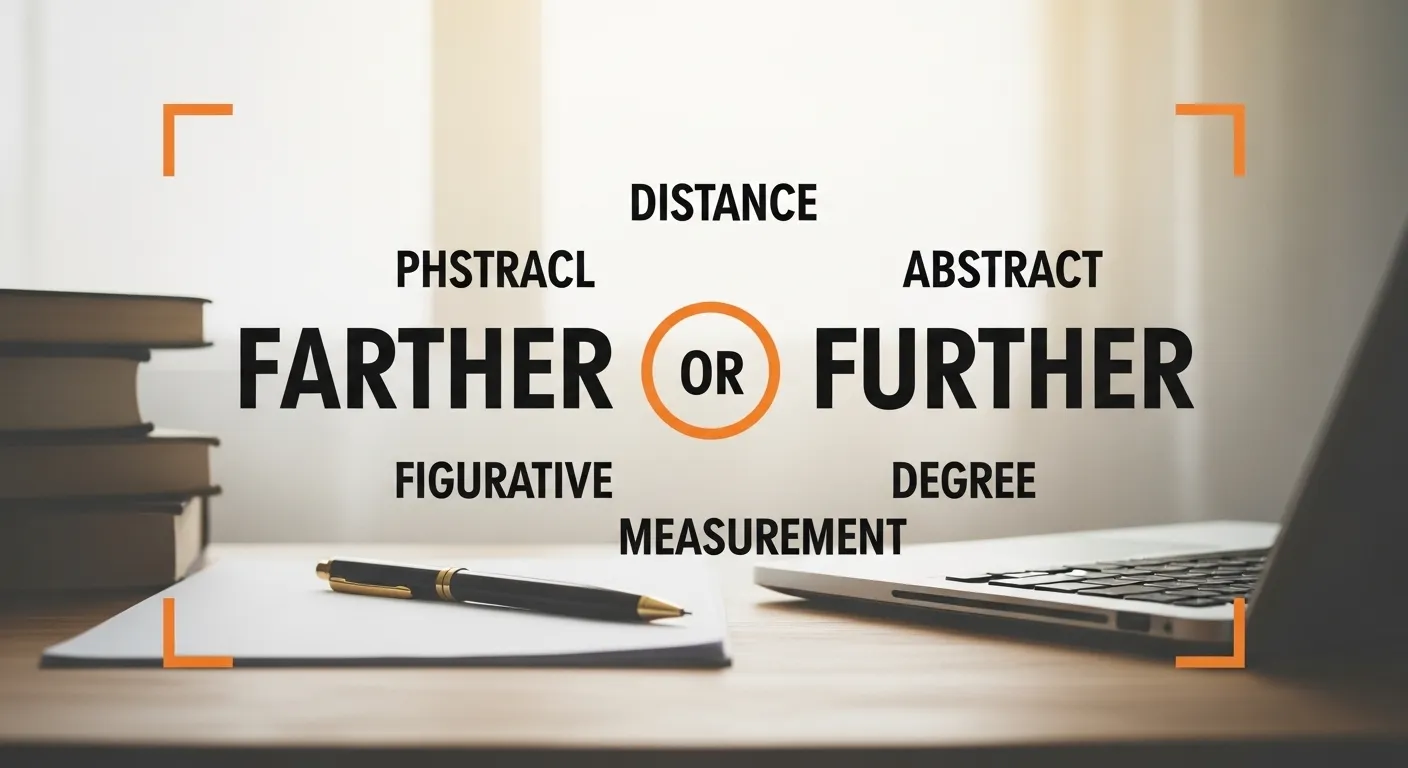
These two words are very similar, but they are used in different situations.
Farther is mainly used for physical distance, while further is used for figurative, abstract, or additional ideas.
For example:
- The school is farther than the park.
- We need to discuss this further.
Both words relate to distance or progress, many writers confuse them in essays, emails, and professional writing.
This guide will clearly explain the difference between farther vs further with simple rules, examples, and easy tips to help you use the correct word every time.
Farther or Further – Quick Answer
- Farther → Refers to physical distance.
Example: “The gas station is farther down the road.” - Further → Refers to figurative or abstract distance, such as time, degree, or progress.
Example: “We need to discuss this issue further.”
💡 Quick Tip:
If you can touch it or measure it, use farther. If it’s about ideas, effort, or time, use further.
The Origin of Farther and Further
Both words come from Old English:
- Farther derives from feorr, meaning “far.” It has been used since medieval English to indicate physical distance.
- Further also comes from feorran, but historically, it evolved to include figurative meanings, such as extending ideas, time, or actions.
Over centuries, English retained both forms to differentiate literal vs abstract distance, which is why using them correctly improves clarity.
British English vs American English Spelling
- In American English, farther is strongly linked to physical distance, while further is used for figurative contexts.
- In British English, further is often used interchangeably for both physical and figurative distance, though farther is still correct for literal measurement.
| Context | British English | American English |
| Physical distance | farther / further | farther |
| Abstract / figurative | further | further |
| Example sentence | “He walked farther/further than I expected.” | “He walked farther than I expected.” |
💡 Key point: UK writers may prefer further even for physical distance, while US writers stick to farther for literal distance.
Which Spelling Should You Use?
- US Writers: Use farther for physical distance and further for abstract meanings.
- UK & Commonwealth Writers: You can often use further for both, but farther is still correct for measured distance.
- Global English (formal writing, international audiences): Use farther for tangible distance and further for figurative or professional contexts.
Tip: When in doubt, default to further, especially in formal writing it is widely accepted globally.
Common Mistakes with Further or Farther
- Incorrect: “We need to walk further to reach the park.”
Correct (US): “We need to walk farther to reach the park.” - Incorrect: “Further down the road, you’ll see the gas station.”
Correct (US): “Farther down the road, you’ll see the gas station.” - Incorrect: “I can’t go any farther with this idea.” (if referring to abstract discussion)
Correct: “I can’t go any further with this idea.” - Using farther for abstract concepts: avoid in US English.
- Using further exclusively for physical distance can confuse readers in American contexts.
Further and Farther in Everyday Examples
Emails:
- Abstract: “Let’s discuss this further during tomorrow’s meeting.”
- Physical: “The office is farther from the station than I thought.”
News Headlines:
- “Storm moves farther inland” (physical)
- “Government must look further into climate policies” (figurative)
Social Media:
- “I ran farther than yesterday!”
- “We need to go further to achieve our goals.”
Formal Writing:
- Correct distinction enhances clarity in academic papers, reports, or business documents.
Further vs Farther – Google Trends & Usage Data
Analysis shows:
- US searches: High volume for distinguishing physical vs abstract usage.
- UK searches: More queries use further in both contexts.
- Global: Writers often search for guidance when writing professional or academic English.
| Country | Farther Usage | Further Usage |
| USA | 65% | 35% |
| UK | 40% | 60% |
| Canada/Australia | 45% | 55% |
💡 Insight: Further dominates in British and Commonwealth English, while Americans maintain the traditional distinction.
Comparison Table – Farther vs Further
| Feature | Farther | Further |
| Meaning | Physical distance | Figurative/abstract distance |
| Examples | “He ran farther than me.” | “We need to discuss further.” |
| US vs UK | US only literal | UK literal/figurative |
| Common Errors | Used abstractly in US | Used literally in US |
| Acceptable Global Usage | Limited to physical | Universal |
FAQs:
1. Can farther and further be used interchangeably?
- In British English, sometimes yes. In American English, they have distinct uses.
2. Is further more formal than farther?
- Yes, further is widely accepted in professional and formal writing.
3. Which one should I use in emails?
- Use further for ideas or actions, farther for physical locations.
4. Can I use farther for abstract ideas?
- Not recommended in American English. Stick to further.
5. Is further correct in British English for distance?
- Yes, British English allows both, but farther is still precise for physical distance.
6. Is farther outdated in UK English?
- No, it’s still correct but less common in informal writing.
7. How can I remember the difference?
- Farther = measurable distance
- Further = figurative/progressive distance
Conclusion:
Knowing the difference between farther and further keeps your writing clear and professional.
Use farther for physical distance and further for ideas, progress, or abstract contexts.
In global or formal writing, further is usually safe, but remembering the farther/physical rule ensures precision.
Learn More About:
Maxxed or Maxed: Which Spelling Is Correct?
Analyses or Analysis: Using These Words Correctly

I’m a U.S. based content writer and language researcher with a strong focus on English grammar, spelling differences, and frequently confused terms. My writing is aimed at helping readers write more clearly and correctly in daily use, workplace communication, and digital content.