Many writers stop when choosing between than or then. The words look alike and sound similar, but they mean very different things.
One small mistake can change your sentence. For example, “She is taller then me” is wrong. It should be “She is taller than me.”
People search for “than or then” because they want a quick, clear rule.
This guide gives you the simple difference, easy examples, and tips so you can use the right word every time.
Than or Then – Quick Answer
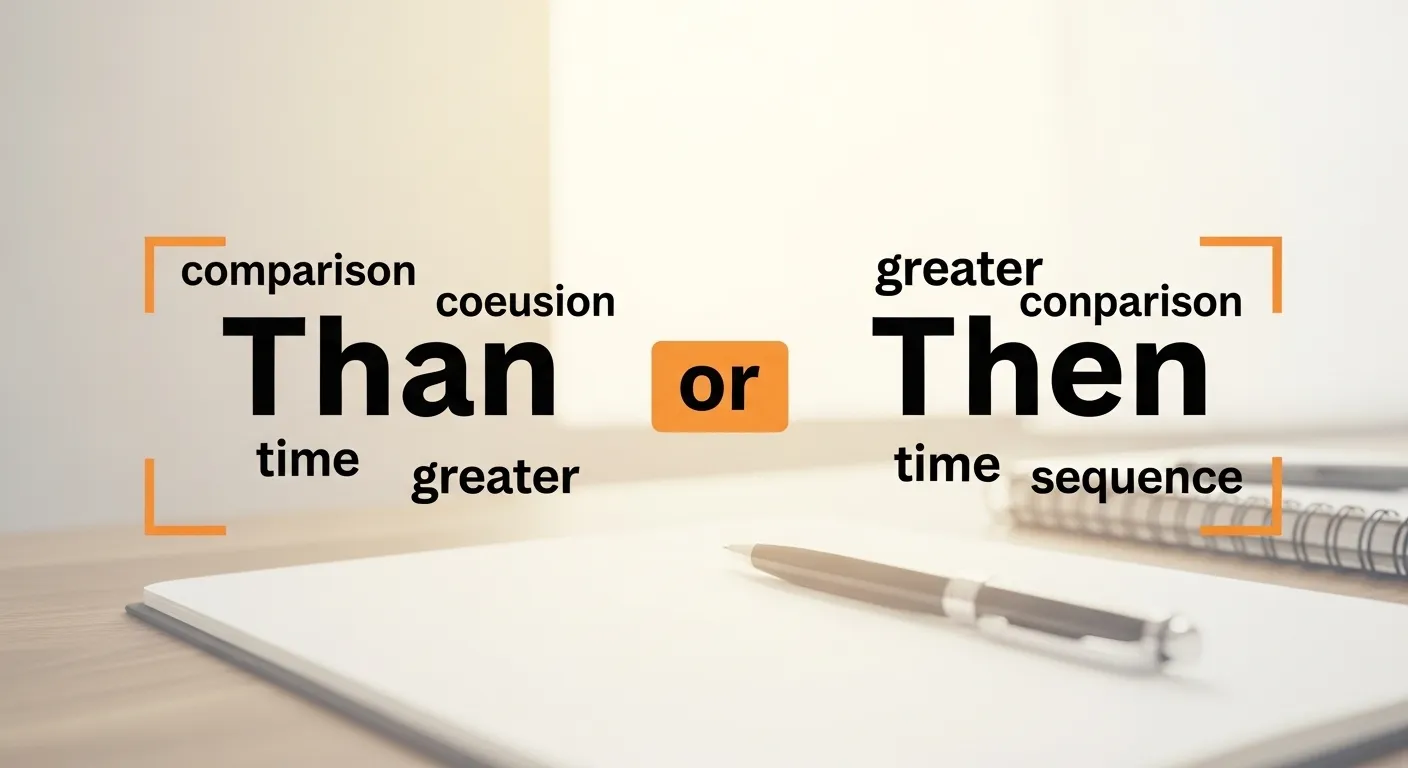
Than is used for comparison.
Then is used for time or order.
Use than when comparing:
- She is taller than her sister.
- This book is better than the last one.
- I would rather walk than drive.
Use then for time or sequence:
- We ate dinner, then we watched a movie.
- Finish your work. Then you can relax.
- Back then, life was slower.
Simple rule:
👉 Comparison = than
👉 Time = then
The Origin of Than or Then
Both words come from Old English. Long ago, they were closely related.
- Than comes from the Old English word þanne, used in comparisons.
- Then also comes from þanne, but it developed a time meaning.
Over time, English spelling changed. Meanings became clearer. Writers separated the two words to avoid confusion.
That is why today:
- Than = comparison
- Then = time or sequence
The words share history, which explains why they look and sound alike. But modern English treats them as completely different words.
British English vs American English Spelling
Good news:
There is no spelling difference between British and American English for than or then.
Both countries use:
- Than
- Then
Unlike words such as color/colour or judgment/judgement, these spellings stay the same.
Examples in British English:
- She is older than me.
- We had tea, then dessert.
Examples in American English:
- This car is faster than that one.
- Call me, then we will decide.
Comparison Table
| Word | Meaning | Used For | Example | US Spelling | UK Spelling |
| Than | Comparison | Comparing two things | She is smarter than him. | Than | Than |
| Then | Time/Order | Sequence or result | We left, then it rained. | Then | Then |
There is no regional variation. Only meaning changes.
Which Spelling Should You Use?
The answer depends on your sentence—not your country.
If you are in the United States:
Follow standard grammar rules. Use:
- Than for comparison
- Then for time
If you are in the UK or Commonwealth:
The same rule applies.
If you write for a global audience:
Stick to the correct meaning. Readers everywhere expect the same usage.
This is not a regional spelling issue. It is a grammar issue. Choosing the correct word depends only on function in the sentence.
Common Mistakes with Then or Than
Here are frequent errors and how to fix them:
❌ She is taller then me.
✅ She is taller than me.
❌ I would rather stay home then go out.
✅ I would rather stay home than go out.
❌ Finish your homework than call me.
✅ Finish your homework, then call me.
❌ Back than, things were cheaper.
✅ Back then, things were cheaper.
Why Mistakes Happen
- Fast typing
- Similar pronunciation
- Autocorrect errors
- Lack of grammar awareness
Tip: If you can replace the word with “compared to,” use than.
If you can replace it with “after that,” use then.
Than or Then in Everyday Examples
In Emails
Correct:
- Please review the document. Then send feedback.
- This option is cheaper than the other one.
In News Writing
- The economy grew faster than expected.
- The meeting ended. Then officials spoke to the press.
On Social Media
- Life was simpler back then.
- I like coffee more than tea.
In Academic Writing
- Students performed better than last year.
- First gather data. Then analyze results.
Using the correct word improves clarity and professionalism.
Than or Then – Google Trends & Usage Data
Search data shows that “than or then” is a highly searched grammar query. Many users search:
- “Difference between than and then”
- “When to use than”
- “Then vs than examples”
Countries with high search volume include:
- United States
- United Kingdom
- Canada
- Australia
- India
This shows that confusion is global.
In writing frequency:
- Than appears often in academic and comparison writing.
- Then appears more in storytelling and instructions.
Both words are common. But misuse is also common. That is why grammar guides often explain this topic.
Than Vs Then Comparison Table
| Feature | Than | Then |
| Function | Comparison | Time/Sequence |
| Part of Speech | Conjunction | Adverb (sometimes adjective) |
| Example 1 | Better than before | Eat, then sleep |
| Example 2 | More than enough | Back then |
| Replace With | Compared to | After that |
| Common Error | Used for time | Used for comparison |
This table makes the difference clear and simple.
FAQs:
1. What is the main difference between than and then?
Than is used for comparison. Then is used for time or order.
2. Is “better then” ever correct?
No. It should be “better than.”
3. Can then be used in comparisons?
No. Then does not compare things.
4. Why do people confuse than and then?
They look and sound similar. Fast typing causes mistakes.
5. Are than and then interchangeable?
No. They have different meanings.
6. Is there a spelling difference in British English?
No. Both US and UK use the same spelling.
7. How can I remember the difference?
Think:
A in than = compArison
E in then = timE
Conclusion:
Choosing between than or then is simple. Use than for comparison. Use then for time or order. That’s the only rule you need.
If you can say “compared to,” choose than. If you can say “after that,” choose then.
Master this small difference, and your writing will look clearer, sharper, and more professional every time.
Discover More About:
Analyses or Analysis: Using These Words Correctly
Maxxed or Maxed: Which Spelling Is Correct?