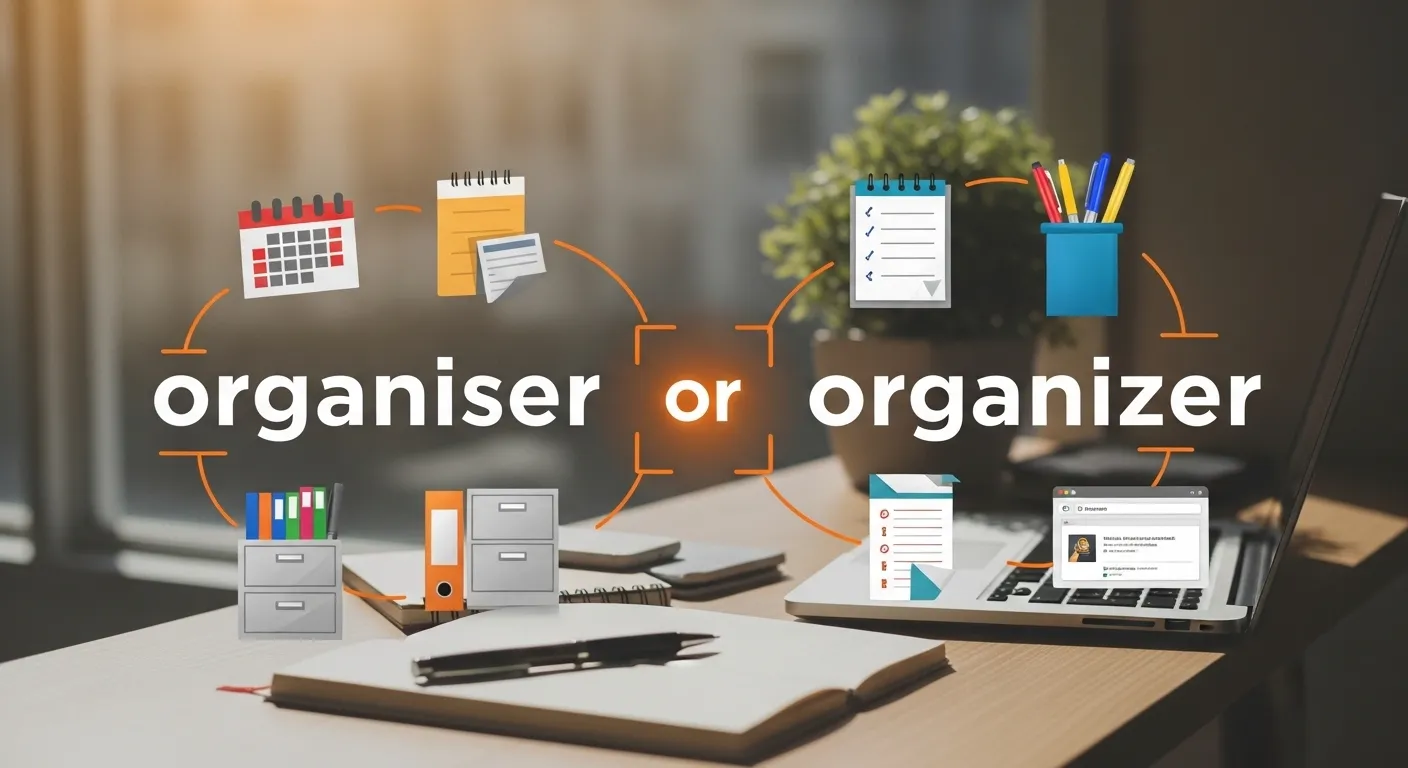
English has many words with different spellings, and organiser or organizer is a common example. Both mean a person or tool that arranges, plans, or coordinates things, but the spelling depends on region:
organizer for American English,
organiser for British and Commonwealth English.
In this guide, you’ll quickly learn the difference, see real examples, avoid common mistakes, and know which spelling to use for your audience.
Organiser or Organizer – Quick Answer
The difference is simple and regional:
| Word | Usage | Example |
| Organizer | American English | She is a professional event organizer. |
| Organiser | British English | He bought a desk organiser for his office. |
Organizer
- Refers to a person, tool, or system that arranges, plans, or manages.
- Common in the US.
Examples:
- She is an excellent organizer of community events.
- The conference organizer emailed all participants.
Organiser
- Same meaning but used in UK, Australia, Canada, India, and other Commonwealth countries.
Examples:
- He bought a new desk organiser.
- The school organiser coordinated the science fair.
Quick Tip: Both spellings are correct; just match the form to your audience.
The Origin of Organiser or Organizer
Understanding the origin clarifies why English allows both forms.
Origin of Organizer
- Comes from the verb “organize”, which is derived from the Greek “organon” meaning tool or instrument.
- The -ize suffix became standard in American English.
Origin of Organiser
- British English often uses the -ise ending instead of -ize.
- Historical texts show both spellings coexisted, but British English eventually preferred organiser.
Even though they differ in spelling, the meaning has remained consistent: someone or something that arranges, plans, or structures efficiently.
British English vs American English Spelling
| Feature | British English | American English | Example |
| Suffix | -ise | -ize | organiser / organizer |
| Preference | UK, Australia, Canada, India | US | The event organiser / The event organizer |
Key Notes
- British English favors -ise endings for verbs (organise, organise → organiser).
- American English favors -ize endings (organize → organizer).
- Both forms are widely understood internationally.
Example Sentences
British English:
- The office organiser kept all documents in order.
- Our school organiser scheduled the annual play.
American English:
- The conference organizer sent the agenda to attendees.
- She is a professional event organizer.
Which Spelling Should You Use?
Choosing between organiser or organizer depends on your audience and region.
| Audience | Recommended Usage |
| United States | Organizer |
| United Kingdom | Organiser |
| Australia / Canada / India | Organiser |
| Global / Mixed audience | Either, but keep consistent |
Tip: Always stay consistent in one document or website. Don’t mix organiser and organizer in the same text.
Common Mistakes with Organizer or Organiser
Mistake 1: Mixing spellings
Incorrect:
- The event organiser sent the agenda, but the organizer forgot the venue.
Correct:
- The event organizer sent the agenda. (US audience)
- The event organiser sent the agenda. (UK audience)
Mistake 2: Wrong regional preference
Incorrect:
- He is a professional organiser in New York.
Correct:
- He is a professional organizer in New York.
Mistake 3: Using the wrong suffix for verbs
Incorrect:
- We need to organise the event (US context).
Correct:
- We need to organize the event (US context).
Quick Tip: Match the verb ending to the noun spelling (organize → organizer, organise → organiser).
Organiser or Organizer in Everyday Examples
Emails
- US: “The event organizer will send all updates by tomorrow.”
- UK: “Please contact the organiser for the schedule.”
News Articles
- US: “The conference organizer announced new guidelines.”
- UK: “The charity organiser thanked all volunteers.”
Social Media
- US: “Shoutout to the amazing wedding organizer!”
- UK: “Loving this desk organiser from the local shop!”
Professional Writing
- US: “Project organizers need to track deadlines carefully.”
- UK: “The office organiser ensures files are always in order.”
Organizer vs Organiser – Google Trends & Usage Data
Search data shows confusion between organiser or organizer is global. People often search:
- organiser vs organizer
- organizer spelling UK or US
- organiser meaning
- organizer meaning
Usage by Country
| Country | Most Common Spelling |
| United States | Organizer |
| United Kingdom | Organiser |
| Canada | Organiser |
| Australia | Organiser |
| India | Organiser |
Trend Insight: Searches spike during school terms, event planning seasons, and when writing guides for professional documents.
Comparison Table: Organiser vs Organizer
| Feature | Organiser | Organizer |
| Region | UK, Australia, Canada, India | US |
| Suffix | -ise | -ize |
| Meaning | Person or tool that arranges, plans, or coordinates | Person or tool that arranges, plans, or coordinates |
| Verb Origin | organise | organize |
| Example | She bought a desk organiser | She is a professional event organizer |
FAQs
1. Are organiser and organizer the same?
Yes, both words have the same meaning; the difference is regional spelling.
2. Which one is correct in the US?
Organizer is correct in American English.
3. Which one is correct in the UK?
Organiser is preferred in British English and Commonwealth countries.
4. Can I mix both spellings?
No, always stay consistent in one document or website.
5. Does it apply to the verb too?
Yes. Organize (US) → organizer, Organise (UK) → organiser.
6. Is it understood globally?
Yes, both are widely understood, but regional preference matters in formal writing.
7. Can it refer to objects or people?
Yes. Example: desk organiser (object), event organizer (person).
Conclusion
The difference between organiser or organizer is simple: it depends on regional spelling. Both refer to a person or tool that arranges, plans, or coordinates. Organizer is standard in American English, while organiser is used in British English, Australia, Canada, India, and other Commonwealth countries.
Always match the verb form with the noun: organize → organizer, organise → organiser. Understanding this distinction ensures professional, clear, and correct communication in emails, articles, and official documents.
By following these rules, you’ll avoid common mistakes and confidently use organiser or organizer in every context.
Discover More About:
Maximise or Maximize: Which Is Correct?
Handle or Handel: Which One Is Right And Wrong (2026)

I’m a U.S. based content writer and language researcher with a strong focus on English grammar, spelling differences, and frequently confused terms. My writing is aimed at helping readers write more clearly and correctly in daily use, workplace communication, and digital content.