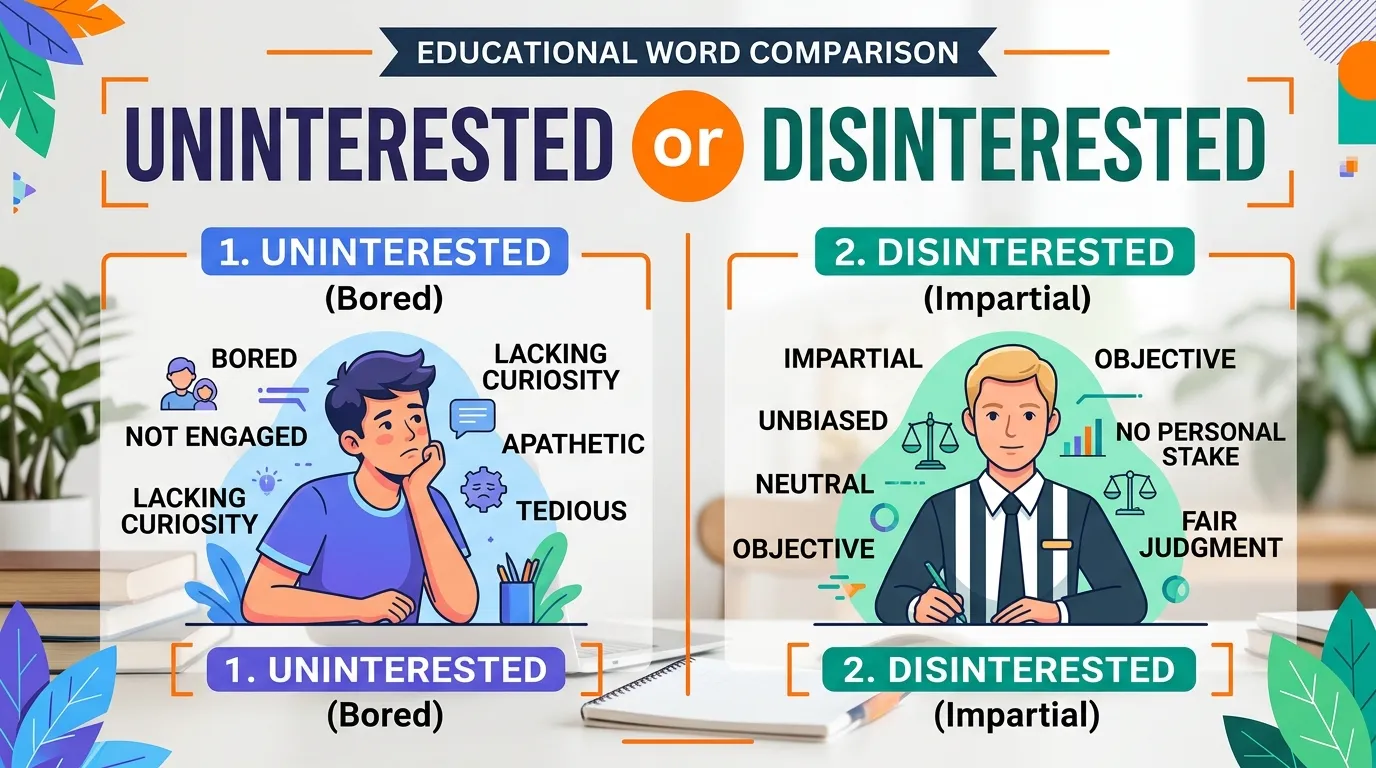
The difference is simple but important. Uninterested means bored or not interested, while disinterested means neutral or unbiased. Using the wrong word can change your message, especially in professional or academic writing.
✔ One-line answer:
Uninterested = not interested | Disinterested = neutral and fair
In this guide, you’ll quickly learn the difference, see clear examples, and understand exactly when to use each word.
Uninterested or Disinterested – Quick Answer
The difference is simple:
- Uninterested = not interested, bored
- Disinterested = neutral, not biased
Examples:
- She was uninterested in the movie.
- The judge must be disinterested in the case.
✔ Quick rule:
- Feeling bored? → Uninterested
- Being fair? → Disinterested
The Origin of Uninterested and Disinterested
Understanding the origin helps clear confusion.
Origin of “Uninterested”
- Formed from un + interested
- Means “not interested”
- Used for emotions and feelings
Origin of “Disinterested”
- Comes from dis + interest
- Originally meant “not influenced by personal gain”
- Used in law and formal writing
Why Confusion Exists
- Over time, people started using disinterested to mean “not interested”
- This blurred the meanings
- Modern English still prefers the traditional distinction
British English vs American English Spelling
There is no spelling difference between British and American English.
However, usage preference can vary slightly.
| Word | British English | American English | Meaning |
| Uninterested | Same | Same | Not interested |
| Disinterested | Same | Same | Neutral, unbiased |
Key Point:
- Both regions follow the same spelling
- Formal writing still prefers strict meanings
Which Spelling Should You Use?
Choosing the right word depends on your meaning.
Use Uninterested when:
- You mean bored
- You lack interest
- You show no curiosity
Examples:
- He seemed uninterested in the meeting
- Students were uninterested in the topic
Use Disinterested when:
- You mean fair or neutral
- No personal benefit is involved
- You are unbiased
Examples:
- A disinterested judge is important
- The referee must stay disinterested
Audience-Based Advice
- United States:
- Casual writing may mix meanings
- Professional writing keeps them separate
- United Kingdom:
- Strong preference for traditional meanings
- Global Use:
- Follow the clear rule to avoid confusion
✔ Safe choice:
Always use the correct meaning to stay professional
Common Mistakes with Disinterested or Uninterested
Many writers mix these words incorrectly.
Mistake 1
❌ I am disinterested in this movie
✔ I am uninterested in this movie
Mistake 2
❌ The judge was uninterested
✔ The judge was disinterested
Mistake 3
❌ She gave a disinterested look (meaning bored)
✔ She gave an uninterested look
Why These Mistakes Happen
- Words sound similar
- Meanings overlap in casual speech
- Lack of clear understanding
✔ Quick Tip:
- Emotion = Uninterested
- Neutrality = Disinterested
Disinterested and Uninterested in Everyday Examples
Emails
- I am uninterested in this offer
- We need a disinterested reviewer
News
- Voters appeared uninterested
- The panel remained disinterested
Social Media
- I’m totally uninterested in drama
- Stay disinterested in arguments
Formal Writing
- The subject seemed uninterested
- A disinterested opinion is required
Disinterested vs Uninterested – Google Trends & Usage Data
Search data shows strong interest in this keyword.
Why People Search It
- Confusion in exams
- Business writing mistakes
- Grammar improvement
Usage Trends
- Uninterested is more common in daily speech
- Disinterested is more common in formal contexts
Popular Countries Searching
- United States
- United Kingdom
- India
- Pakistan
- Canada
Context Usage
- Social media → Uninterested
- Legal/business → Disinterested
Uninterested vs Disinterested – Comparison Table
| Feature | Uninterested | Disinterested |
| Meaning | Not interested | Neutral, unbiased |
| Emotion | Yes | No |
| Usage | Everyday speech | Formal/legal |
| Tone | Personal | Objective |
| Example | I’m uninterested | A disinterested judge |
Use of Uninterested
Uninterested is used when someone feels no interest, boredom, or lack of curiosity about something. It describes a personal feeling or reaction.
Use uninterested in these situations:
- Lack of interest
- She was uninterested in the discussion.
- He seemed uninterested in the job offer.
- Boredom
- The students looked uninterested during the lecture.
- I felt uninterested while watching the movie.
- No curiosity or engagement
- He is uninterested in sports.
- They were uninterested in learning new skills.
In short, uninterested is the correct word for expressing boredom or lack of interest in everyday English.
Use of Disinterested
Disinterested is used when you mean neutral, fair, and not influenced by personal gain or bias. It does not mean bored or uninterested. Instead, it describes someone who is objective and makes decisions without favoritism.
Use disinterested in these situations:
- Legal and formal contexts:
- The judge must remain disinterested in the case.
- Professional decisions:
- We need a disinterested third party to review the issue.
- Conflict resolution:
- A disinterested mediator helped solve the problem.
- Academic or analytical writing:
- The study was conducted by a disinterested researcher.
Key idea:
A disinterested person has no personal interest, so they can be fair and unbiased.
✔ Simple rule:
If you mean fair and objective, use disinterested.
FAQs
1. What is the difference between uninterested and disinterested?
Uninterested means not interested. Disinterested means neutral or unbiased.
2. Can disinterested mean not interested?
In casual use, yes. But in formal writing, it should mean neutral.
3. Which word is correct for boredom?
Uninterested is correct.
4. Which word is used in legal context?
Disinterested is used for fairness and neutrality.
5. Is there a spelling difference in US and UK English?
No, both use the same spelling.
6. Why do people confuse these words?
Because they sound similar and meanings overlap in informal use.
7. Which word is safer to use?
Use the correct meaning to avoid confusion.
Conclusion
The difference between uninterested and disinterested is simple but important.
Use uninterested when you mean bored or not interested.
Use disinterested when you mean neutral or unbiased.
There is no spelling difference worldwide only meaning matters.
✔ Easy rule:
Uninterested = feeling | Disinterested = fairness
Knowing this helps you write clearly and professionally every time.
Discover More About:
Maxxed or Maxed: Which Spelling Is Correct? (2026)
Incurable or Uncurable? Meaning, Difference And Usage?