We see news and posts every day, but not all information is true. This is why many people search for misinformation or disinformation.
Both sound similar, but the difference is simple: misinformation is false information shared by mistake, while disinformation is shared on purpose to mislead.Using the right word matters. It helps you write clearly and avoid confusion.
In this guide, you’ll quickly learn the difference, see real examples, and know exactly when to use each term.
Misinformation or Disinformation – Quick Answer
Quick Answer:
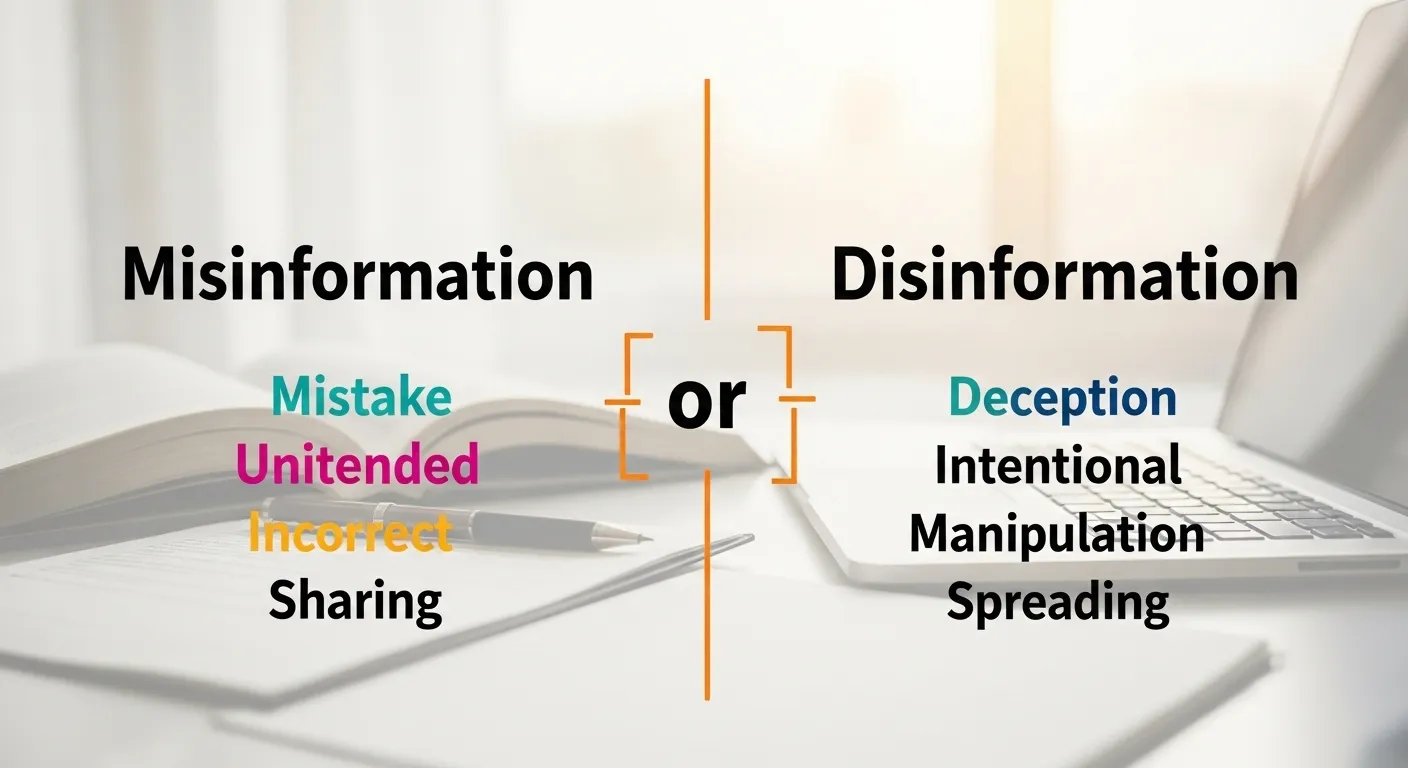
- Misinformation = false information shared by mistake
- Disinformation = false information shared on purpose
Misinformation
- Incorrect or misleading information
- Shared without intent to harm
Examples:
- Sharing a wrong news article by mistake
- Posting outdated facts
- Misunderstanding a statistic
Disinformation
- False information created and spread intentionally
- Used to manipulate or deceive
Examples:
- Fake news designed to mislead
- False political campaigns
- Edited videos to create a false story
Simple Rule
- Mis = mistake
- Dis = deliberate
The Origin of Misinformation or Disinformation
Understanding origins helps explain the difference.
Origin of Misinformation
- Comes from the prefix “mis-”, meaning wrong or incorrect
- Combined with “information”
- First used to describe accidental errors or misunderstandings
Origin of Disinformation
- Comes from the prefix “dis-”, meaning apart, away, or negative action
- Popularized during the 20th century, especially in political contexts
- Often linked to deliberate propaganda and manipulation
Key Insight
- Misinformation = wrong by accident
- Disinformation = wrong on purpose
British English vs American English Spelling
There is no spelling difference between British and American English for these words.
Comparison Table
| Word | British English | American English | Meaning |
| Misinformation | Misinformation | Misinformation | False info (no intent) |
| Disinformation | Disinformation | Disinformation | False info (intentional) |
Examples
British English:
- The article spread misinformation.
- The campaign used disinformation tactics.
American English:
- Social media spreads misinformation quickly.
- Authorities warned about disinformation online.
Which Spelling Should You Use?
Since both words have the same spelling globally, the focus is on correct usage, not spelling.
Audience-Based Advice
| Audience | Recommendation |
| United States | Use based on intent |
| United Kingdom | Same rule applies |
| Australia / Canada | Same rule applies |
| Global audience | Choose based on meaning |
Tip
Ask yourself:
- Is it a mistake? → Use misinformation
- Is it intentional? → Use disinformation
Common Mistakes with Disinformation or Misinformation
Mistake 1: Using both words as synonyms
Incorrect:
- The article spreads disinformation (when it was unintentional)
Correct:
- The article spreads misinformation
Mistake 2: Ignoring intent
Incorrect:
- He shared misinformation to mislead people
Correct:
- He shared disinformation to mislead people
Mistake 3: Overusing “fake news”
Incorrect:
- This is fake news
Better:
- This is misinformation (if accidental)
- This is disinformation (if intentional)
Quick Tip
- Check intent before choosing the word
Misinformation or Disinformation in Everyday Examples
In Emails
- “Please verify this data. It may be misinformation.”
- “The report contains disinformation meant to mislead clients.”
In News
- “Social media spreads misinformation rapidly.”
- “Officials warned about election disinformation.”
Social Media
- “Stop sharing misinformation without checking facts.”
- “This post is clear disinformation.”
Professional Writing
- “The study avoids misinformation through proper research.”
- “The campaign used disinformation strategies.”
Disinformation vs Misinformation – Google Trends & Usage Data
Search trends show growing interest in misinformation or disinformation, especially in recent years.
Popular Searches
- misinformation vs disinformation
- what is disinformation
- misinformation examples
- difference between misinformation and disinformation
Usage by Country
| Country | Common Usage |
| United States | Both widely used in media |
| United Kingdom | Used in journalism and academia |
| India | Increasing in digital literacy topics |
| Australia | Used in news and policy discussions |
Trend Insight
- Searches increase during:
- Elections
- Global events
- Health crises
- Social media debates
Comparison Table: Misinformation vs Disinformation
| Feature | Misinformation | Disinformation |
| Meaning | False info (no intent) | False info (intentional) |
| Intent | Accidental | Deliberate |
| Usage | Everyday mistakes | Manipulation or propaganda |
| Example | Sharing wrong fact | Creating fake story |
| Impact | Misleading | Deceptive and harmful |
FAQs
1. Are misinformation and disinformation the same?
No. The difference is intent. Misinformation is accidental, disinformation is intentional.
2. Can misinformation become disinformation?
Yes, if someone knowingly spreads false information later.
3. Which word is more serious?
Disinformation is more serious because it involves intent to mislead.
4. Is fake news misinformation or disinformation?
It can be both, depending on intent.
5. Why is the difference important?
It helps identify whether the error is accidental or deliberate.
6. Can social media spread both?
Yes. Both misinformation and disinformation spread quickly online.
7. How can you tell if something is misinformation or disinformation?
If it was shared without knowing it’s false, it is misinformation. If it was created or shared deliberately to mislead people, it is disinformation.
8. How can I avoid spreading misinformation?
- Check sources
- Verify facts
- Avoid sharing unverified content
Conclusion
The difference between misinformation and disinformation is simple:
Misinformation is a mistake, Disinformation is deliberate. Both involve false information, but intent changes everything.
Using the right term helps you communicate clearly and responsibly. Remember this rule to avoid confusion and keep your writing accurate, professional, and impactful in any situation.
Discover More About:
Devide or Divide: Which Is Correct?
Incurable or Uncurable? Difference And Uses?

I’m a U.S. based content writer and language researcher with a strong focus on English grammar, spelling differences, and frequently confused terms. My writing is aimed at helping readers write more clearly and correctly in daily use, workplace communication, and digital content.