
Choosing between alternately and alternatively can be tricky because the words look and sound so alike. Yet they have very different meanings.
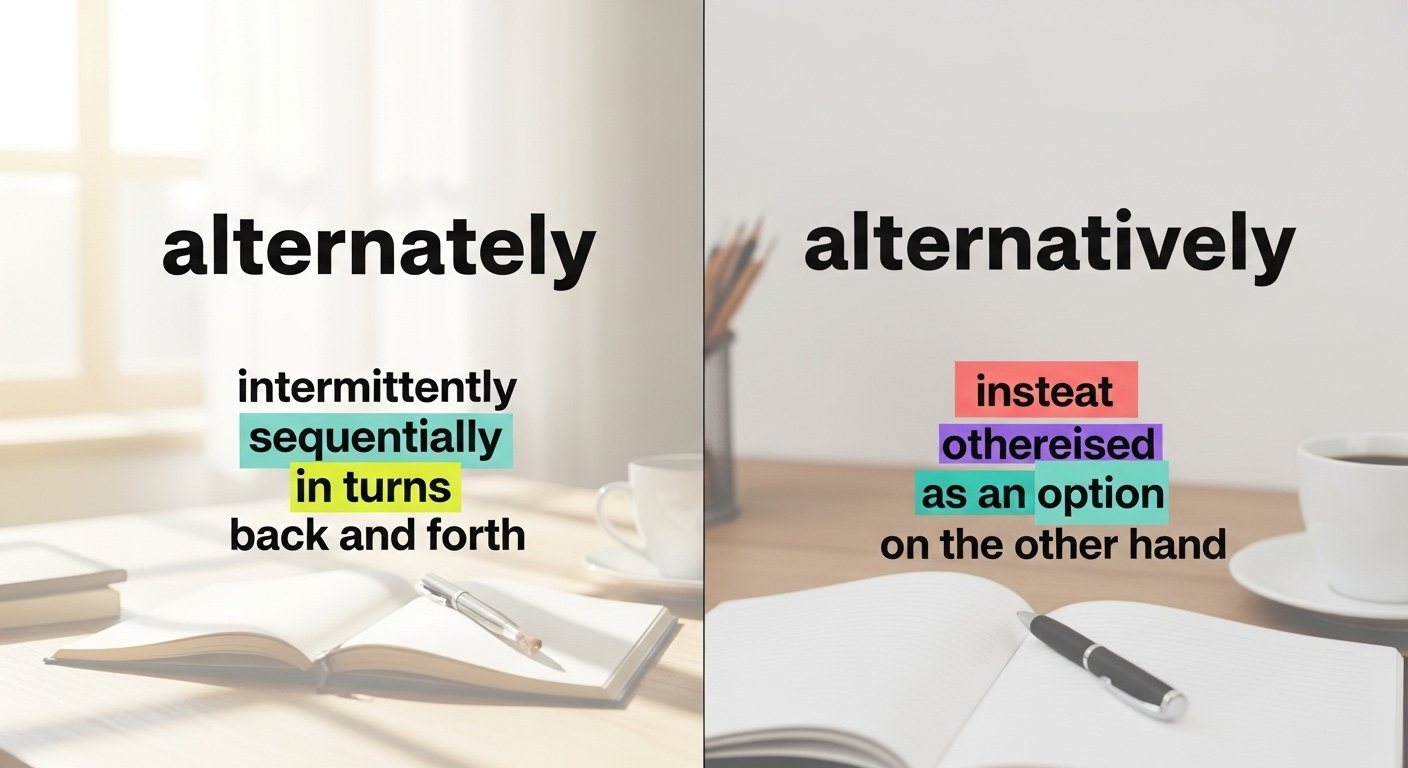
Alternately means taking turns or happening one after another, while alternatively introduces another option or choice.
This is a common writing mistake in emails, essays, and professional documents. Using the wrong word can confuse your reader.
In this guide, you’ll quickly learn the difference, see clear examples, and know exactly when to use each word with confidence.
Alternately or Alternatively – Quick Answer
Both words are correct, but they mean different things.
- Alternately means one after the other, in turns, or back and forth.
- Alternatively means as another option, instead, or on the other hand.
Simple Examples
- The children answered the questions alternately.
- We could drive to the beach. Alternatively, we could take the train.
A quick way to remember it:
- Alternately = taking turns
- Alternatively = another choice
If things switch back and forth, use alternately. If you are offering another option, use alternatively.
The Origin of Alternately and Alternatively
Both words come from the Latin word alternatus, which means “one after the other” or “to do by turns.” This Latin root also gave English words like alternate, alternative, and alternation.
- Alternately developed from alternate + -ly. It has been used since the early 15th century.
- Alternatively developed later from alternative + -ly.
Over time, the meanings became more specialized.
- Alternately kept the original sense of taking turns.
- Alternatively came to mean offering another possibility or choice.
That is why the words look related but serve different purposes today. They are linguistic cousins, not identical twins. One takes turns; the other offers options.
British English vs American English Spelling
Good news: there is no spelling difference between British and American English. Both varieties use alternately and alternatively in the same spellings.
The real difference is not spelling. It is usage.
In both British and American English:
- Alternately means in turn or one after another.
- Alternatively means as another option.
However, American English is slightly more flexible. In casual writing, some Americans may use alternate where British writers would prefer alternative. But for the adverbs, the distinction remains the same.
| Feature | British English | American English |
| In turns | alternately | alternately |
| Another option | alternatively | alternatively |
| Preferred formal usage | Strict distinction | Same distinction |
So, whether you write for London, New York, or Sydney, these two adverbs keep the same meanings.
Which Spelling Should You Use?
Choose the word based on meaning, not location.
Use alternately when:
- Two things happen in turns.
- Actions switch back and forth.
- A pattern repeats.
Examples:
- The lights flashed red and blue alternately.
- She felt alternately excited and nervous.
Use alternatively when:
- You present another option.
- You suggest a different choice.
- You mean “instead” or “otherwise.”
Examples:
- You can email us. Alternatively, call our office.
- We could meet on Monday. Alternatively, Tuesday works too.
Audience-Based Advice
- For US readers: Follow the same rule.
- For UK readers: Follow the same rule.
- For global audiences: Use the standard distinction to avoid confusion.
Clear writing travels well.
Common Mistakes with Alternatively or Alternately
These two words are often confused because they look alike. Here are the most common mistakes.
Mistake 1: Using alternatively for a repeating pattern
❌ The lights blinked alternatively.
✅ The lights blinked alternately.
Mistake 2: Using alternately to present a choice
❌ You can pay online. Alternately, visit our office.
✅ You can pay online. Alternatively, visit our office.
Mistake 3: Using alternatively as a comparison word
❌ The bag was alternatively cheaper.
✅ The bag was a cheaper alternative.
Or:
✅ Alternatively, you could buy the cheaper bag.
Quick Fix
Ask yourself:
- Is this about taking turns? Use alternately.
- Is this about another option? Use alternatively.
Alternately or Alternatively in Everyday Examples
In Emails
- Please send the document today. Alternatively, upload it to the shared folder.
In News Writing
- The two candidates spoke alternately during the debate.
On Social Media
- I spend weekends alternately reading and hiking.
- We could order pizza. Alternatively, we could cook at home.
In Formal Writing
- The samples were heated and cooled alternately.
- Participants could respond online. Alternatively, they could complete a paper survey.
These examples show how each word works in real life.
Alternatively vs Alternately – Google Trends & Usage Data
Search interest in alternatively is generally higher than alternately. That makes sense because people often use it in everyday speech and writing when offering options.
- Alternatively is common in business writing, academic work, and formal communication.
- Alternately appears more often in technical, scientific, and descriptive writing.
Popular Usage by Context
| Word | Main Meaning | Common Contexts |
| Alternately | In turns | Science, narration, descriptions |
| Alternatively | Another option | Business, education, everyday writing |
Popularity by Region
- United States: Strong use of both, especially alternatively.
- United Kingdom: Clear distinction between the two.
- Australia and Canada: Similar to British usage.
- Global English: Alternatively is more frequently searched.
This pattern reflects how often people need to present options in writing.
Comparison Table: Alternately vs Alternatively
| Feature | Alternately | Alternatively |
| Part of speech | Adverb | Adverb |
| Core meaning | In turns | As another option |
| Similar to | In rotation, by turns | Instead, otherwise |
| Example | The players spoke alternately. | Alternatively, we can wait. |
| Best used for | Patterns and switching | Choices and options |
FAQs
Is alternately the same as alternatively?
No. Alternately means in turns. Alternatively means as another option.
Can I use alternatively instead of instead?
Yes, often you can. It works well when introducing another choice.
Can alternately mean alternatively?
In rare older usage, yes. In modern writing, it is better to keep them separate.
Which word is more common?
Alternatively is more common in everyday and professional writing.
Is there a British or American difference?
No. Both forms are spelled and used the same way in both varieties of English.
How can I remember the difference?
Think of this:
- Alternately = alternating turns
- Alternatively = alternative choice
Is “alternatively cheaper” correct?
No. Use “cheaper alternative” or rewrite the sentence.
Conclusion
The difference between alternately and alternatively is simple once you know the rule. Even though the words look similar, they do very different jobs.
Use alternately when things happen in turns, one after the other, or back and forth. It describes a pattern, sequence, or repeated switch.
Use alternatively when you want to offer another option, suggest a different choice, or mean “instead.” It introduces an alternative path.
This distinction is the same in British English, American English, and other forms of global English. That makes it easy to apply wherever you write.
If you remember just one thing, remember this: alternately is about turns, while alternatively is about choices.
Using the correct word will make your writing clearer, sharper, and more professional. Whether you are writing an email, article, report, or social post, choosing the right term helps your message land exactly as you intend.
Learn More About:
Mater or Matter: Meaning, Difference And Usage (2026)
Synched or Synced: Which Spelling Is Correct?

I’m a U.S. based content writer and language researcher with a strong focus on English grammar, spelling differences, and frequently confused terms. My writing is aimed at helping readers write more clearly and correctly in daily use, workplace communication, and digital content.