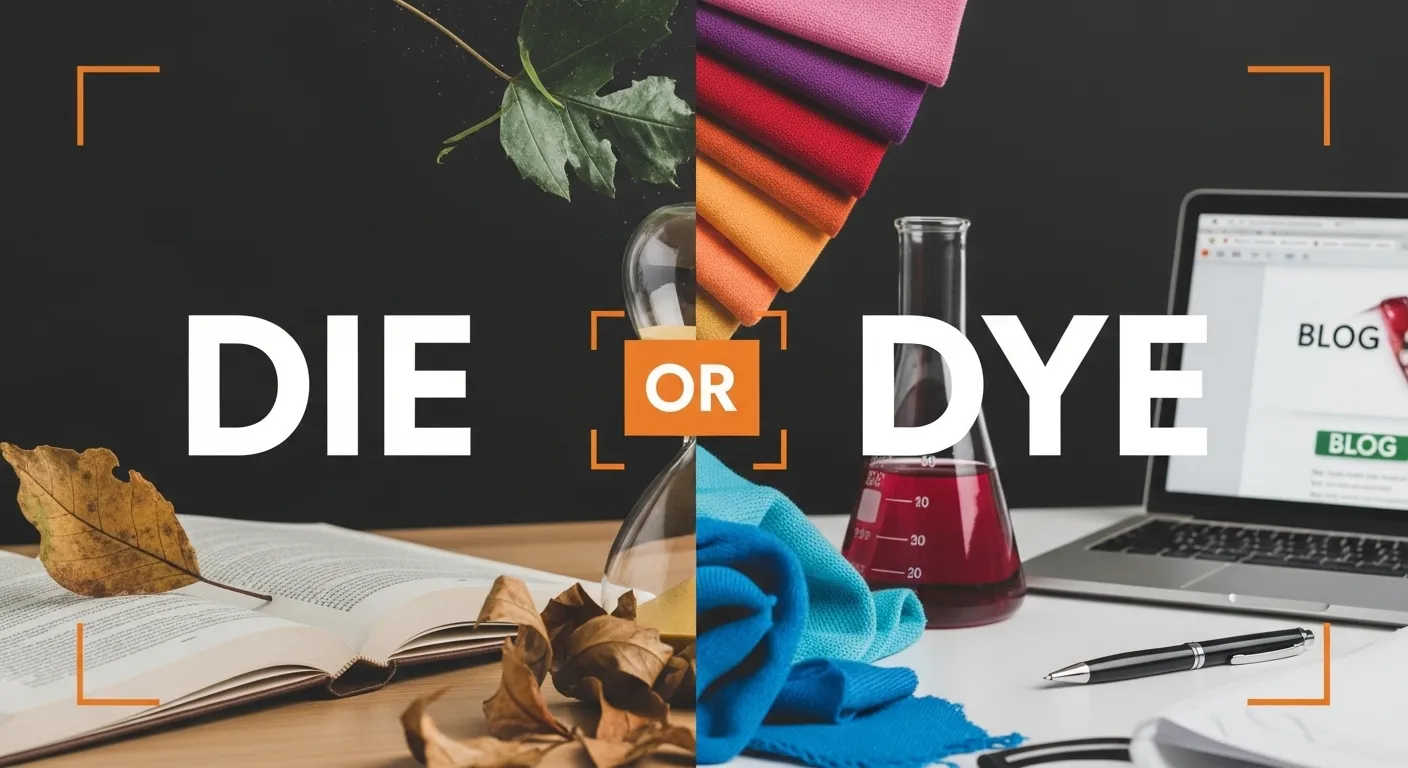
Have you searched “die or dye” because you are not sure which spelling is correct? You are not alone. These two words sound the same, but they have very different meanings. One small letter can completely change your sentence.
If you write, “I want to die my hair,” it sounds wrong and scary. The correct phrase is “I want to dye my hair.” This simple mistake happens in emails, school work, blog posts, and even professional writing.
If you are here for a quick answer, here it is:
Die means to stop living.
Dye means to add color.
In this guide, you will get a clear explanation, simple examples, and easy tips so you never confuse die or dye again.
Die or Dye – Quick Answer
Die means to stop living.
Dye means to color something.
Examples:
- Plants die without water.
- Many people die from disease each year.
- She will dye her hair blue.
- They dyed the fabric red.
Think of it this way:
- Die = death
- Dye = color
The letter “y” in dye can remind you of colorful “yarn” or “yellow.” That may help you remember.
The Origin of Die or Dye
Origin of “Die”
The word die comes from Old Norse deyja, which means “to pass away.”
It entered English many centuries ago. It has always meant death or stopping life.
It is used in:
- Health news
- History books
- War reports
- Everyday speech
Origin of “Dye”
The word dye comes from Old English deag, which meant color or stain. It was used in textile work. People dyed cloth long before modern factories existed.
Both words are very old. They developed from different roots. That is why they look similar but mean very different things.
The spelling difference stayed because English keeps historical forms. Even if two words sound alike, they may not share spelling.
British English vs American English Spelling
Good news: there is no spelling difference between British and American English for die and dye.
Unlike words such as:
- Harry Potter and the Philosopher’s Stone (British spelling “Philosopher’s”)
- Harry Potter and the Sorcerer’s Stone (American spelling “Sorcerer’s”)
The words die and dye stay the same in:
- 🇺🇸 American English
- 🇬🇧 British English
- 🇨🇦 Canadian English
- 🇦🇺 Australian English
Comparison Table
| Word | Meaning | British Spelling | American Spelling |
| Die | To stop living | Die | Die |
| Dye | To color something | Dye | Dye |
There is no regional change. Only the meaning changes.
Which Spelling Should You Use?
It depends on your meaning.
Use die if:
- You talk about death.
- You describe something stopping.
- You write news or medical content.
Example:
- “Many fish die in polluted water.”
Use dye if:
- You talk about color.
- You describe hair, fabric, or clothes.
- You run a fashion or beauty blog.
Example:
- “She wants to dye her hair brown.”
Audience Advice
- 🇺🇸 US audience → Use the correct meaning. Spelling stays the same.
- 🇬🇧 UK audience → Same rule.
- 🌍 Global audience → Choose based on meaning only.
There is no country-based spelling difference here.
Common Mistakes with Dye or Die
Here are frequent errors:
❌ I will die my hair tomorrow.
✔ I will dye my hair tomorrow.
❌ The shirt will dye in the sun.
✔ The shirt will fade in the sun.
(or)
✔ The shirt was dyed blue.
❌ Many people dye in accidents.
✔ Many people die in accidents.
Why Do People Confuse Them?
- They sound the same.
- They are short words.
- Autocorrect sometimes misses the mistake.
- Fast typing causes errors.
Always check the meaning before sending a message.
Dye vs Die in Everyday Examples
Let’s see how these words appear in real life.
In Emails
- “I heard his grandfather may die soon.”
- “Can you dye this uniform black?”
News Headlines
- “Thousands die after major earthquake.”
- “Factory dyes river water red.”
In Social Media
- “Thinking to dye my hair pink!”
- “Flowers die without sunlight.”
In Formal Writing
- “Cells die when oxygen stops.”
- “The company dyes fabrics using natural methods.”
Context matters. Read your sentence again. Ask: Is this about death or color?
Die or Dye – Google Trends & Usage Data
Search data shows both words are common worldwide. However:
- Die appears more often in news and health searches.
- Dye is popular in beauty, fashion, and craft topics.
Countries with high search interest:
- United States
- United Kingdom
- India
- Canada
- Australia
“Hair dye” is a very common search phrase. So is “how plants die.”
Context decides which word people use. The confusion happens because users type quickly.
Die vs Dye – Side-by-Side Comparison
| Feature | Die | Dye |
| Meaning | Stop living | Add color |
| Part of Speech | Verb / Noun | Verb / Noun |
| Example Verb | People die daily. | She will dye her dress. |
| Example Noun | A game die (dice singular). | Red dye was added. |
| Related Words | Death, dying | Dyed, dyeing |
| Field of Use | Health, history | Fashion, textiles |
Notice: “Die” can also mean a singular form of dice.
Example: “Roll the die.”
But that is a different meaning from death.
FAQs
1. Is it “hair die” or “hair dye”?
Correct: hair dye.
Dye means color.
2. What is the past tense of dye?
It is dyed.
Example: She dyed her hair.
3. What is the past tense of die?
It is died.
Example: The plant died.
4. Are die and dye pronounced the same?
Yes. They sound the same. That is why people confuse them.
5. Can dye be a noun?
Yes.
Example: The blue dye stained the shirt.
6. Can die be a noun?
Yes.
Example: Roll the die. (Single dice)
7. Is there a spelling difference in the UK?
No. Both words stay the same in British and American English.
Conclusion:
The difference between die and dye is simple:
die = death,
dye = color.
There’s no British or American spelling difference just focus on context. Always check if you mean death or color before writing.
This small step helps you write clearly and avoid mistakes in emails, essays, or posts.
Find More About:
Devide or Divide: Which Is Correct?
Employees or Employee’s: Which One Is Correct?