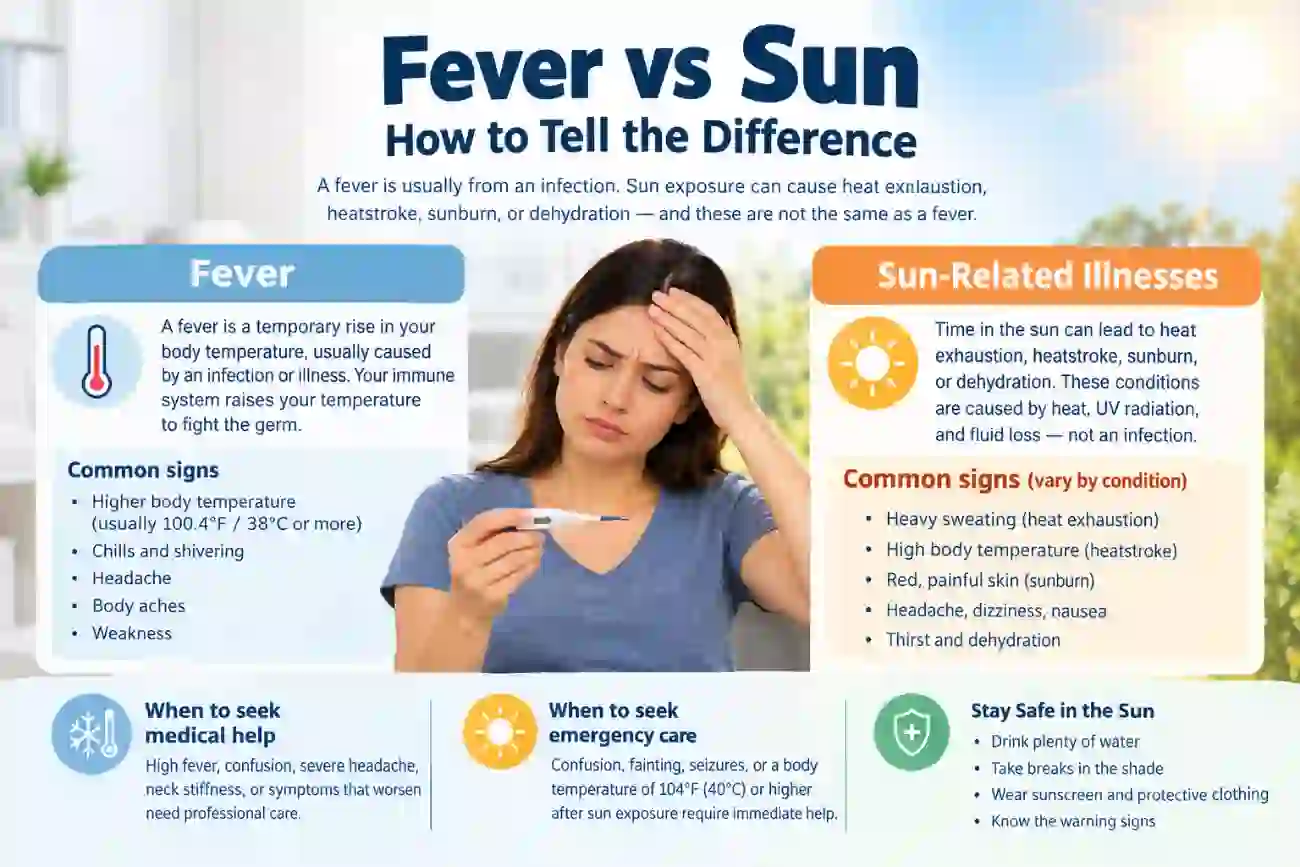
Fever vs sun is not a standard medical comparison. A fever usually happens when the body raises its internal temperature in response to illness or infection, while sun exposure can cause overheating, dehydration, sunburn, heat exhaustion, or heatstroke. Heatstroke is an emergency and can cause a core temperature of 104°F (40°C) or higher.
Key Takeaways
- A fever is usually part of the body’s response to an infection or illness.
- Spending time in intense heat or sun can cause heat exhaustion or heatstroke, which are different from an ordinary fever.
- A severe sunburn can sometimes cause fever, headache, nausea, and fatigue.
- Heatstroke can cause a core body temperature of 104°F (40°C) or higher and requires emergency medical care.
- Confusion, seizures, loss of consciousness, or very high body temperature after heat exposure require immediate emergency help.
Is “Sun Fever” a Real Medical Term?
People sometimes search for “sun fever” when they feel hot, weak, dizzy, or sick after spending time outdoors. However, “sun fever” is not a standard medical diagnosis.
The symptoms may actually point to several different conditions, including ordinary fever, heat exhaustion, heatstroke, dehydration, or a severe sunburn.
This distinction matters because these problems have different causes and can require different responses.
A fever is generally associated with an internal immune response to illness. Heat illness happens when the body gains more heat than it can safely remove.
Fever vs Sun Exposure: What Is the Difference?
The simplest way to think about fever vs sun exposure is to consider why your body temperature is rising.
What causes a fever?
A fever is a temporary increase in body temperature and is commonly associated with infection. Your body’s temperature-regulation system can raise its internal temperature as part of an immune response.
Fever can occur with illnesses such as viral or bacterial infections. Chills, shivering, headache, muscle aches, sweating, weakness, and dehydration can accompany it.
For many adults, an oral temperature around 100.4°F (38°C) or higher is generally considered a fever, although readings can vary depending on the measurement method.
What happens when the sun overheats your body?
Heat-related illness has a different mechanism. Hot weather, direct sun, physical activity, humidity, and dehydration can make it harder for your body to release heat.
Heat exhaustion can cause heavy sweating, headache, dizziness, weakness, nausea, thirst, muscle cramps, and a rapid pulse.
If the body’s temperature regulation fails and the condition progresses to heatstroke, the situation becomes much more serious.
Fever vs Heat Exhaustion: Key Differences
Fever and heat exhaustion can look similar because both may cause headache, weakness, sweating, and an elevated temperature.
The circumstances surrounding the symptoms can provide an important clue.
| Feature | Fever | Heat exhaustion |
| Common cause | Infection or illness | Heat exposure, exertion, dehydration |
| Chills | Common | Less characteristic |
| Heavy sweating | May occur | Common |
| Dizziness | Possible | Common |
| Nausea | Possible | Common |
| Muscle cramps | Possible | Common |
| Recent hot-weather exposure | Not required | Often present |
| Cooling response | Does not address the underlying infection | Moving somewhere cool can help |
| Main concern | Underlying illness | Progression to heatstroke |
Heat exhaustion often develops after working, exercising, or spending time in a hot environment. The CDC describes it as the body’s response to excessive loss of water and salt, usually through heavy sweating.
If symptoms started after several hours outside, particularly with heavy sweating and thirst, heat illness becomes an important possibility.
How to Tell If Heat Is Causing Your High Temperature
Context is important, but you should not rely on symptoms alone.
Use a thermometer to measure your temperature and consider what happened before the symptoms began.
For example, suppose you spend several hours outside on a very hot afternoon. You return indoors with a headache, intense thirst, weakness, dizziness, and heavy sweating. That pattern can fit heat exhaustion more closely than a typical infection-related fever.
On the other hand, if you develop a temperature along with chills, body aches, cough, sore throat, or other illness symptoms without significant heat exposure, an infection-related fever may be more likely.
These clues are not a diagnosis. Different conditions can occur together, and a healthcare professional may need to evaluate persistent or severe symptoms.
Can Sunburn Cause a Fever?
Yes. A significant sunburn can be associated with fever, headache, nausea, fatigue, and other symptoms.
A sunburn is skin damage caused by excessive ultraviolet radiation. The affected skin may become red, warm, swollen, painful, or blistered.
The CDC notes that severe sunburn can be accompanied by fever and other symptoms. It also recommends staying out of the sun until the burn has healed.
This means a person who says, “I have a fever after being in the sun,” could actually have a fever associated with a significant sunburn, heat illness, an infection, or another cause.
That is why the surrounding symptoms and measured temperature matter.
Is Sun Poisoning the Same as a Fever?
No. “Sun poisoning” is not a formal medical diagnosis. The term is commonly used for a severe sunburn or an intense reaction after substantial sun exposure.
Someone with severe sunburn may experience blistering, severe redness, burning or itching, chills, nausea, dehydration, headache, or fever.
So, if someone searches “sun poisoning fever,” they may be asking whether feeling feverish after severe sun exposure is possible. It is, but fever is a symptom rather than another name for sun poisoning.
Severe symptoms deserve medical attention, particularly when dehydration, extensive blistering, confusion, fainting, or very high temperature is involved.
Heatstroke vs Fever: When It Becomes an Emergency
Heatstroke should not be treated like an ordinary fever.
Heatstroke occurs when the body becomes dangerously overheated. A core temperature of 104°F (40°C) or higher is a major warning sign, and changes in mental status such as confusion, agitation, slurred speech, seizures, or unconsciousness can occur.
If you suspect heatstroke, call 911 or your local emergency service immediately and begin cooling the person while waiting for help. Mayo Clinic recommends moving the person out of the heat, removing excess clothing, and cooling the body as quickly as possible.
Do not wait to see whether the person simply has a “sun fever.” Heatstroke can damage the brain and other organs and can be fatal without prompt treatment.
What to Do After Feeling Sick in the Sun
If you develop symptoms that suggest heat exhaustion, stop exercising or working and move to a cool, shaded, or air-conditioned location.
Remove unnecessary heavy clothing and cool your body. If you are alert and able to drink, sip cool water or a suitable electrolyte-containing drink.
Watch your symptoms carefully.
If they worsen, fail to improve, or progress to confusion, fainting, seizures, inability to drink, or a very high core temperature, seek emergency medical care.
For a mild sunburn, getting out of the sun, drinking fluids, using cool baths or wet cloths, and moisturizing the affected skin can help with symptoms.
When Should You Get Medical Help?
Get urgent help after heat exposure if there is confusion, loss of consciousness, seizures, severe behavior changes, or a suspected temperature of 104°F (40°C) or higher. These can indicate heatstroke.
For an ordinary fever, medical advice may also be appropriate when the temperature is very high or when concerning symptoms occur. Mayo Clinic advises adults to contact a healthcare professional for a temperature of 103°F (39.4°C) or higher, and immediate medical attention is appropriate when fever occurs with symptoms such as confusion, severe headache, stiff neck, breathing difficulty, chest pain, persistent vomiting, or seizures.
Severe sunburn also deserves medical attention, particularly with dehydration, extensive burns, extreme pain, or fever above 101°F (38.3°C).
Frequently Asked Questions
Can being in the sun cause a fever?
Sun exposure itself is not the usual cause of an infection-related fever. However, prolonged heat exposure can cause heat-related illness, and a severe sunburn can be accompanied by fever. If you feel sick after being outdoors, consider heat exhaustion, heatstroke, sunburn, dehydration, and other possible causes.
How can you tell fever from heat exhaustion?
Look at both the symptoms and the circumstances. Fever is commonly associated with an illness or infection, while heat exhaustion typically follows heat exposure or strenuous activity and often causes heavy sweating, thirst, dizziness, headache, weakness, and nausea. A thermometer can provide useful temperature information, but it cannot identify the cause by itself.
Can sunburn cause a fever?
Yes. A severe sunburn can cause symptoms including fever, headache, nausea, and fatigue. The CDC recommends avoiding additional sun exposure while the burn heals and seeking medical attention for severe symptoms such as dehydration or a fever above 101°F (38.3°C).
What temperature is considered heatstroke?
A core body temperature of 104°F (40°C) or higher is a major sign of heatstroke. Heatstroke can also cause confusion, seizures, unconsciousness, rapid breathing, rapid pulse, and other serious symptoms. It requires immediate emergency medical attention.
Conclusion
When comparing fever vs sun, remember that “sun fever” is not a standard medical diagnosis. A true fever is commonly related to an infection or other illness, while time in the sun can contribute to heat exhaustion, heatstroke, dehydration, or sunburn.
The most important distinction is severity. Mild discomfort after being outside may improve with rest, cooling, and fluids, but confusion, fainting, seizures, or a very high body temperature can signal heatstroke and require emergency care.
If you are unsure whether symptoms are caused by fever, heat, or sunburn—especially when symptoms are severe or worsening—contact a healthcare professional rather than relying on the label “sun fever.”