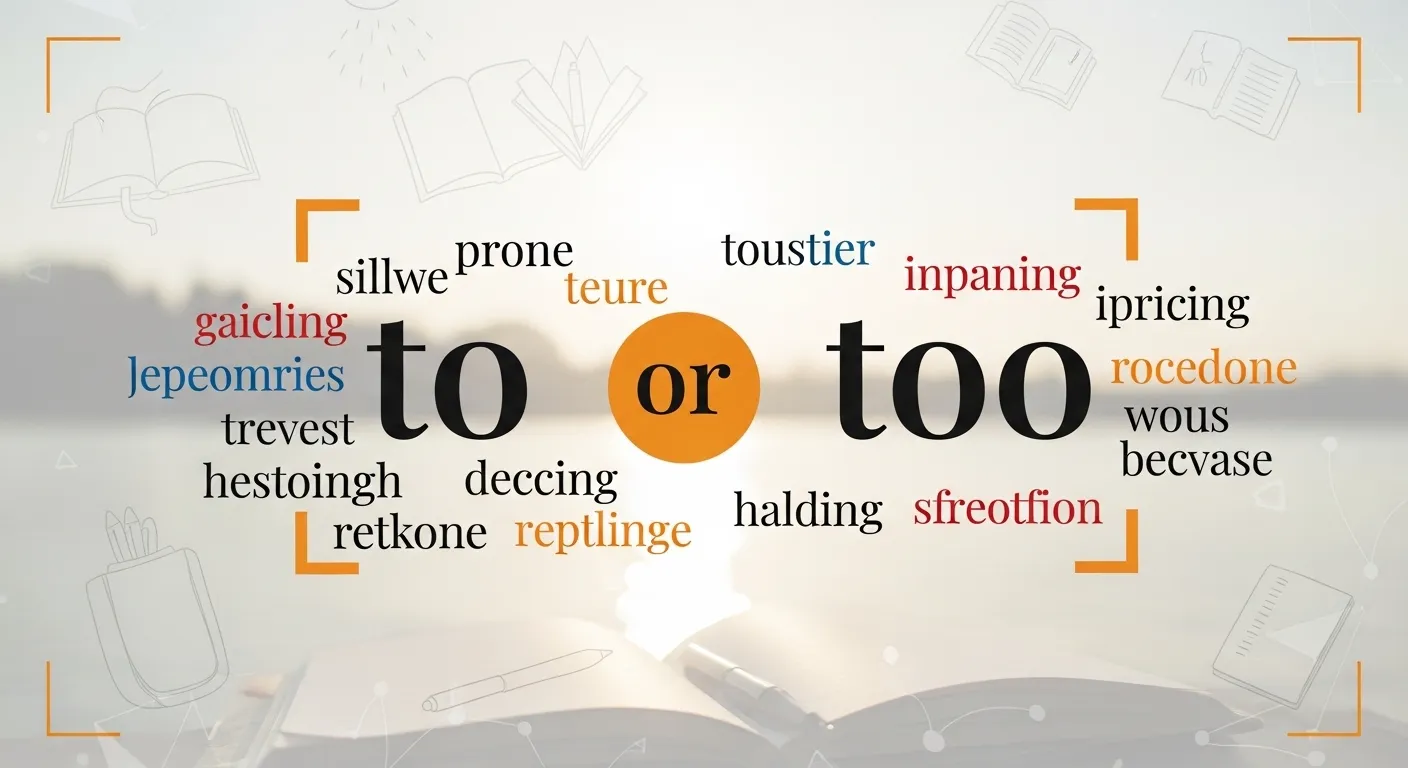
Many people search for “to or too” because these two words sound exactly the same. They are homophones, but their meanings are different. A small mistake can change your whole sentence.
For example:
“I want to go.” ✅
“I want too go.” ❌
The second sentence is wrong. But many people type it by mistake. This confusion often happens in emails, school work, social media posts, and even business writing. Spell check may not catch it because both words are spelled correctly. That is why people look for a quick and simple answer.
Here is the clear rule:
- To is used for direction or before a verb.
Example: I am going to school. / I want to eat. - Too means “also” or “very.”
Example: I am coming too. / It is too cold.
Easy tip: “Too” has two O’s. Think of it as “extra.”
If you remember this small trick, you will never confuse to and too again.
To or Too – Quick Answer
Here is the simple rule:
- To is a preposition or part of an infinitive verb.
- Too means “also” or “very.”
That’s it.
When to Use To
Use to when:
- Showing direction → “I am going to school.”
- Showing purpose → “I came to help.”
- Before a verb → “I want to eat.”
Examples:
- She gave the book to me.
- We plan to travel tomorrow.
- He walked to the store.
When to Use Too
Use too when:
- You mean “also” → “I want to go too.”
- You mean “very” → “It is too cold.”
Examples:
- She is coming too.
- This bag is too heavy.
- I am too tired to work.
Easy memory tip:
Too has two “o” letters. Think of it as “extra.”
The Origin of To or Too
Understanding word history helps explain the difference.
Origin of “To”
The word to comes from Old English tō. It has existed for over 1,000 years. It was used to show direction, movement, or purpose. It is one of the oldest and most common words in English.
Over time, it also became part of the infinitive verb form:
- to eat
- to sleep
- to learn
It stayed short and simple.
Origin of “Too”
The word too comes from Old English tō as well. Yes, both words share the same origin. Over time, spelling changed to separate meanings.
English added the extra “o” to show a different meaning:
- also
- excessively
- more than enough
Spelling differences developed to avoid confusion. English often changes spelling instead of pronunciation.
That is why they sound the same but look different today.
British English vs American English Spelling
Good news: There is no spelling difference between British and American English for “to” and “too.”
Both countries use the same rules.
For example:
| Meaning | American English | British English |
| Direction | I went to London. | I went to London. |
| Also | I went too. | I went too. |
| Excess | It’s too cold. | It’s too cold. |
Unlike words such as:
- Color vs Colour
- Favorite vs Favourite
“To” and “too” never change spelling by region.
Why No Difference?
Because these are grammar words, not vocabulary spelling variations. Function words usually stay the same in both dialects.
So whether you write for:
- The United States
- The United Kingdom
- Canada
- Australia
The rule stays the same.
Which Spelling Should You Use?
The answer depends on meaning, not country.
If You Are Writing for the US
Follow standard grammar rules:
- Use to for direction and verbs.
- Use too for also or very.
American readers expect correct grammar. Mixing them looks careless.
If You Are Writing for the UK or Commonwealth
The same rule applies. There is no regional variation.
If You Write for a Global Audience
Keep sentences simple. Double-check usage. Use grammar tools if needed. Many international readers are learning English. Clear grammar builds trust.
Professional advice:
If you are unsure, read the sentence aloud. Replace “too” with “also” or “very.” If it makes sense, use too. If not, use to.
Common Mistakes with Too or To
Here are the most common errors.
Mistake 1: Using “Too” Before a Verb
❌ I want too eat.
✅ I want to eat.
Rule: Before a verb, always use to.
Mistake 2: Forgetting “Too” for “Also”
❌ I am coming to.
✅ I am coming too.
Rule: If you mean “also,” use too.
Mistake 3: Confusing “Too” and “Very”
❌ It is to hot.
✅ It is too hot.
Rule: Use too when something is excessive.
Mistake 4: Overusing “Too”
❌ I too went to the market too.
Better: I went to the market too.
Keep sentences natural.
Mistake 5: Informal Text Errors
On social media, people type fast:
- “Me to.”
Correct form: - “Me too.”
Small mistakes change meaning.
Too vs To in Everyday Examples
Let’s see real-life usage.
In Emails
Correct:
- I would like to schedule a meeting.
- I am available too if needed.
Incorrect:
- I would like too schedule a meeting.
Professional emails must be correct.
In News Writing
- The company plans to expand.
- The weather was too severe.
Journalists follow strict grammar rules.
In Social Media
Common:
- Me too!
- I want to try that.
Errors often happen in fast typing.
In Academic Writing
- Students need to complete assignments.
- The data was too limited.
Grammar matters in essays and research papers.
In Business Communication
- Please send the file to me.
- The price is too high.
Wrong grammar may harm credibility.
To or Too – Google Trends & Usage Data
Search data shows that “to or too” is a popular grammar query. It is searched in:
- United States
- United Kingdom
- India
- Pakistan
- Canada
Students and non-native speakers search this keyword often. It appears in grammar quizzes and school materials.
“To” is one of the most used words in English. It appears in almost every sentence. “Too” is less frequent but still common.
Most searches happen during school months. That shows students are learning the rule.
Grammar confusion drives search traffic. People want fast answers.
Comparison Table: To vs Too
| Feature | To | Too |
| Part of Speech | Preposition / Infinitive marker | Adverb |
| Meaning | Direction, purpose, verb form | Also, very, excessively |
| Example 1 | Go to school | I am coming too |
| Example 2 | Need to study | It is too loud |
| Before Verb? | Yes | No |
| Means “Also”? | No | Yes |
| Means “Very”? | No | Yes |
Quick memory trick:
Too = extra “o” = extra meaning.
FAQs
1. What is the main difference between to and too?
“To” shows direction or is used before a verb. “Too” means also or very.
2. Can “too” come before a verb?
No. Use “to” before verbs. Example: I want to sleep.
3. Is there a British vs American difference?
No. Both use the same spelling and rules.
4. How can I remember the difference?
Too has two “o” letters. Think of it as “extra” or “more.”
5. Is “me to” correct?
No. The correct phrase is “me too.”
6. Can a sentence end with “too”?
Yes. Example: I want pizza too.
7. Why do people confuse to and too?
Because they sound the same. English keeps similar pronunciations for different spellings.
Conclusion
The difference between to and too is small, but it matters a lot. “To” shows direction or comes before a verb. “Too” means also or very. Just one extra letter can change your meaning.
There is no British or American difference. The rule is the same everywhere. So you only need to focus on meaning, not location.
Most mistakes happen when we type fast. Before you send a message or post online, pause for a second. Ask yourself: Do I mean direction? Or do I mean also or very?
Remember this simple trick: “Too” has an extra “o” for extra meaning.
When you master small words like these, your writing becomes clearer and more professional. Clear writing builds confidence. And confident writing builds trust.
Discover More About:
Analyses or Analysis: Using These Words Correctly
Maxxed or Maxed: Which Spelling Is Correct? (2026)