If you’ve ever wondered whether judgment or judgement is correct, you’re not alone. Both spellings appear in books, news, and official writing, which makes the choice confusing.
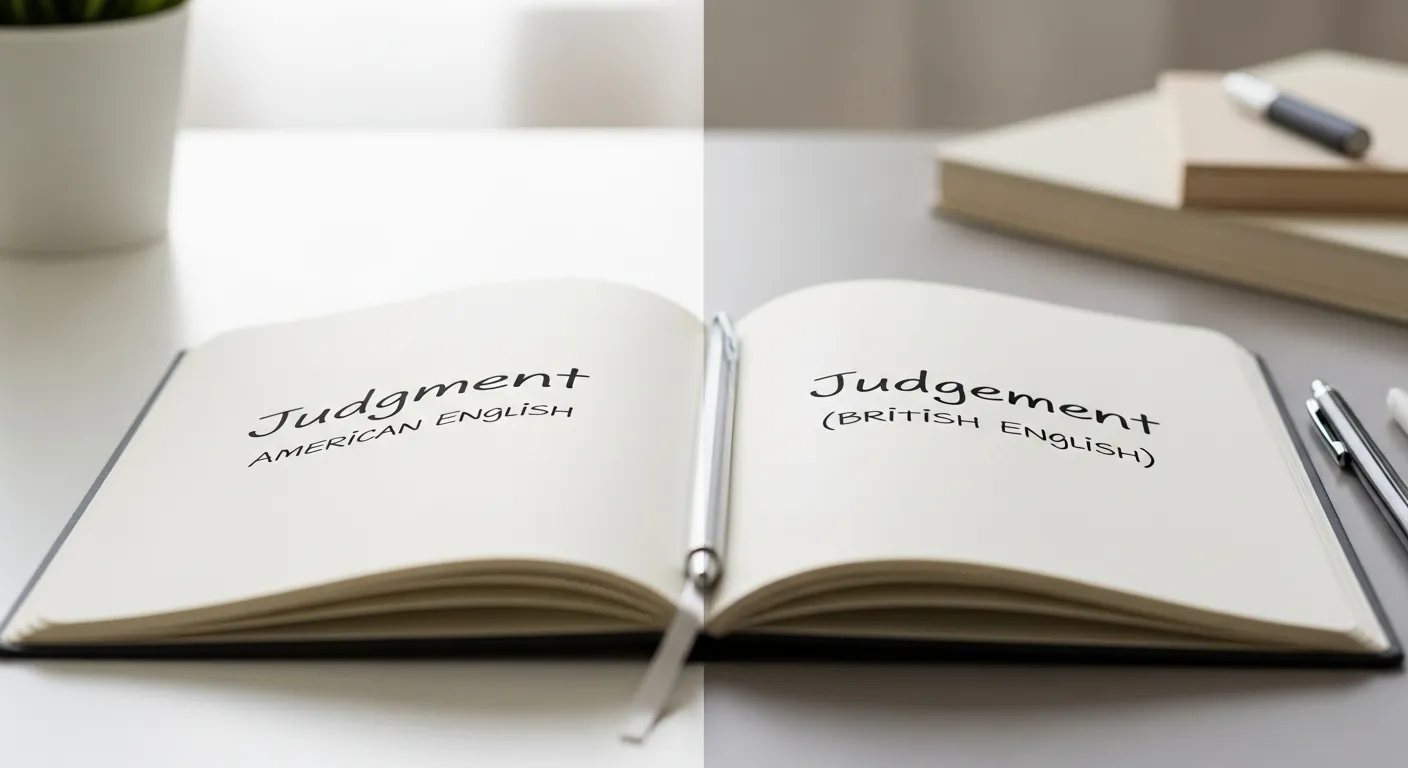
The difference comes down to regional English. American English prefers judgment, while British English often uses judgement.
Using the wrong one can make your writing look inconsistent or unprofessional.
This article gives a clear answer, simple examples, and quick guidance so you always choose the right spelling with confidence.
Judgment or Judgement – Quick Answer
Both spellings are correct, but their usage depends on the type of English you are writing.
- Judgment is the preferred and standard spelling in American English.
- Judgement is commonly used in British English and other Commonwealth countries.
Examples
- American English: The court delivered its final judgment.
- British English: She showed poor judgement in that situation.
If you are writing for a US audience, use judgment. If your audience is UK-based, judgement is acceptable and often preferred.
The Origin of Judgment or Judgement
The word comes from Old French jugement, which entered English through Latin judicium, meaning “decision” or “opinion.” Early English spelling was not fixed, so both forms appeared in writing for centuries.
During the 18th and 19th centuries, American English began simplifying spellings to make reading and writing easier. Noah Webster, a key figure in American spelling reform, promoted shorter forms. This is why American English favors judgment without the extra “e.”
British English, however, kept the traditional spelling judgement, closer to its French roots. Over time, this difference became standardized rather than corrected.
So the spelling difference is not an error—it is a result of historical language development and regional preference.
British English vs American English Spelling
The difference between judgment and judgement follows a common pattern in English spelling variations.
Key Rule
- American English: Drops the silent “e” → judgment
- British English: Keeps the silent “e” → judgement
Comparison Table
| Feature | American English | British English |
| Preferred spelling | Judgment | Judgement |
| Used in US courts | Yes | Rare |
| Used in UK courts | Sometimes | Yes |
| Style guides | AP, Chicago | Oxford, Cambridge |
💡 Important note: Even in British English, judgment is often used in legal writing, especially in court rulings.
Which Spelling Should You Use?
The right spelling depends on your audience and purpose.
Use Judgment if:
- You are writing for a US audience
- You follow American style guides
- You are writing legal documents, contracts, or case studies
- You want a globally accepted, neutral option
Use Judgement if:
- Your audience is UK-based
- You follow British or Commonwealth standards
- You are writing blogs, essays, or informal content for British readers
Professional Tip
If you are unsure, judgment is the safer choice for international and SEO focused content because it is more widely searched and globally recognized.
Common Mistakes with Judgment or Judgement
Many errors happen due to inconsistency rather than incorrect spelling.
Common Errors
- Mixing both spellings in the same article
- Using judgement in American academic writing
- Thinking one spelling is “wrong”
- Changing spelling without considering the audience
Correct Usage Examples
❌ The judge gave his judgement in the US court.
✅ The judge gave his judgment in the US court.
❌ Her judgment was questioned in a UK essay.
✅ Her judgement was questioned in a UK essay.
Consistency matters more than preference.
Judgment or Judgement in Everyday Examples
Seeing the word in real-life contexts makes the difference clearer.
Emails
- Please reserve judgment until all facts are reviewed. (US)
- I trust your judgement on this matter. (UK)
News
- The Supreme Court issued its final judgment. (US media)
- Public judgement remains divided. (UK media)
Social Media
- No judgment here, just support.
- That comment shows poor judgement.
Formal Writing
- The court’s judgment set a new precedent.
- Sound judgement is critical in leadership roles.
Judgment or Judgement – Google Trends & Usage Data
Search data shows that judgment is more popular worldwide, especially in:
- United States
- Canada
- Philippines
- SEO and academic searches
Judgement remains strong in:
- United Kingdom
- Australia
- New Zealand
Usage Context
- Judgment dominates legal, academic, and professional searches.
- Judgement appears more in opinion-based and informal British writing.
For websites targeting global traffic, judgment performs better in search engines.
Comparison Table: Judgment vs Judgement
| Aspect | Judgment | Judgement |
| English type | American | British |
| Spelling length | Shorter | Longer |
| Legal usage | Preferred | Limited |
| SEO popularity | Higher | Lower |
| Global acceptance | Strong | Moderate |
FAQs:
1. Are judgment and judgement both correct?
Yes. Both are correct spellings depending on regional English usage.
2. Which spelling is used in American English?
American English uses judgment without the “e.”
3. Which spelling is used in British English?
British English generally uses judgement, especially in non-legal contexts.
4. Why do courts often use “judgment”?
Legal English favors the simplified spelling, even in some British legal documents.
5. Is judgement wrong in the US?
It is not technically wrong, but it is considered nonstandard in American writing.
6. Which spelling is better for SEO?
Judgment is better for SEO due to higher global search volume.
7. Can I use both spellings in one article?
No. Always choose one spelling and stay consistent.
Conclusion:
The difference between judgment and judgement reflects regional English usage. Both spellings are correct, but context matters.
Judgment is standard in American English and widely used in legal and global writing, while judgement follows British tradition.
Choose the spelling based on your audience. Use judgment for US or international readers and judgement for UK audiences.
Most importantly, stay consistent once you do, this spelling choice becomes simple and your writing more confident.
Find More About:
Trialled or Trialed: Which Spelling Is Correct? (2026)
Incurable or Uncurable? Difference And Uses?

I’m a U.S. based content writer and language researcher with a strong focus on English grammar, spelling differences, and frequently confused terms. My writing is aimed at helping readers write more clearly and correctly in daily use, workplace communication, and digital content.