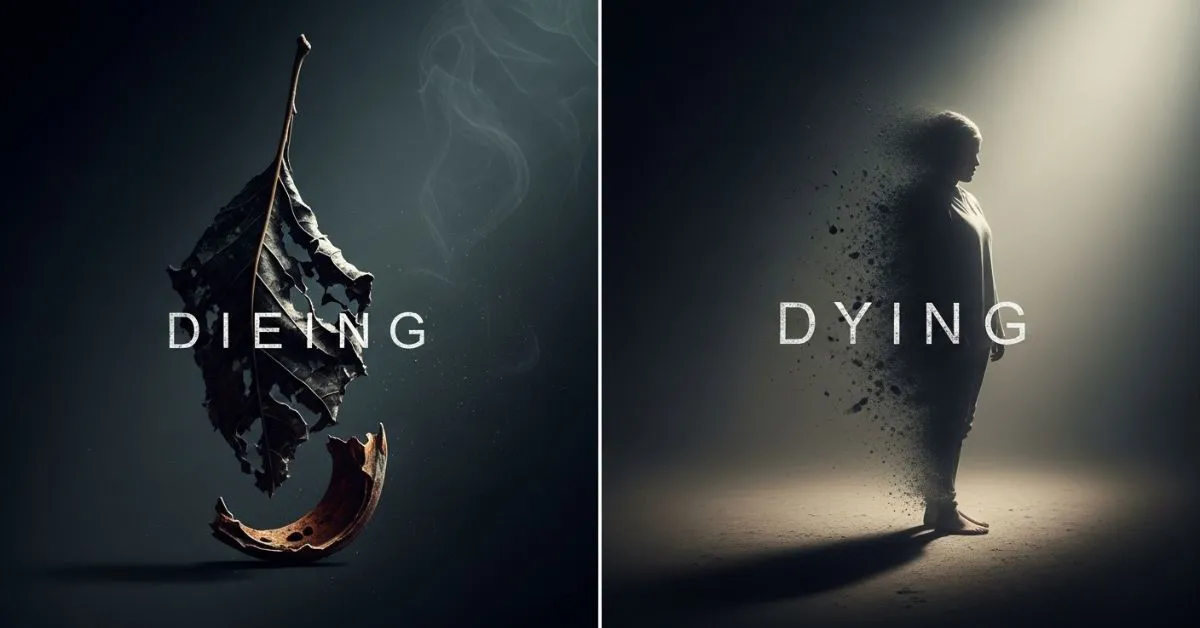
Have you ever written “dieing” or “dying” and wondered which spelling is correct? Dying is the correct spelling when you mean becoming dead or approaching death. Dieing is not the standard spelling when the verb die is used in this sense.
For example, you would write, “The flowers are dying,” not “The flowers are dieing.” The confusion happens because when die takes the -ing ending, its spelling changes from die to dying rather than dieing.
Similar spelling changes can be seen in lie → lying and tie → tying. If you’re searching for dieing or dying, you may want to know not only which form is correct, but also why the spelling changes and how to use it naturally.
In this guide, you’ll learn the difference between dieing and dying, see clear examples, understand the spelling pattern, and discover an easy way to remember the correct form.
Dieing or Dying
Short Direct Explanation:
✅ The correct spelling is “dying.”
❌ “Dieing” is almost never correct in standard English.
Examples:
- She is dying her hair blue.
- The plant is dying from lack of water.
- The athlete looked like he was dying on the last mile.
Note: The only time you might see “dieing” is in very rare technical terms (like metal casting, where “die” is a tool used for cutting or shaping). But in regular writing, it’s always “dying.”
The Origin of Dieing and Dying
Why do people type “dieing”? It’s because of how verbs form the ‑ing form in English.
Word Origin
- Die comes from Old English dīeġan meaning “to cease living.”
- When English adds ‑ing, the final e is usually dropped before adding ‑ing (e.g., make → making, take → taking).
So:
die + ‑ing → dying (the e is dropped)
Why the Confusion?
Many people see die ends with ie and think:
Maybe I keep the i and add ‑ing → “dieing”
But the rule is simple:
Drop the final e and add ‑ing → dying
British English vs American English Spelling
In this case, both British and American English use “dying.” There is no difference.
Why?
English spelling rules for ‑ing forms are shared across major English dialects. Whether you follow UK or US English, “dying” is correct.
Comparison Table
| Spelling Form | British English | American English |
| dying | ✔ Correct | ✔ Correct |
| dieing | ✖ Incorrect | ✖ Incorrect |
Examples:
- UK: The old tree is dying.
- US: The patient is dying peacefully.
So you can use “dying” anywhere in English writing.
Which Spelling Should You Use?
1. United States
👉 Always use “dying.”
Example: “The website is dying because of low traffic.”
2. United Kingdom & Commonwealth
👉 Always use “dying.”
Example: “He felt like he was dying during the exam.”
3. Technical or Niche Use
In rare cases, in very specific technical fields such as:
- Manufacturing
- Metalworking
They might use dieing as a gerund of ‘die’ meaning a tool used in shaping metal. But this is not common English usage.
👉 General rule: Use dying in almost all writing.
Common Mistakes with Dieing
People make many similar errors. Here’s how to correct them:
| Incorrect | Correct | Explanation |
| dieing | dying | Rule: drop e + ‑ing |
| tieing | tying | Same pattern (tie + ing → tying) |
| lieing | lying | Same pattern (lie + ing → lying) |
| dyeing (unrelated meaning) | dying | dyeing means coloring cloth |
Tip:
Don’t confuse dying with dyeing (with e).
- dyeing: coloring material (fabric, hair)
She is dyeing the cloth red. - dying: losing life or fading
The fish is dying in the hot sun.
Dying or Dieing in Everyday Examples
Here are real examples showing how to use dying correctly in different contexts:
1. Emails
- I feel like I’m dying after that long meeting!
- The battery on my phone is dying fast.
2. Social Media
- LOL I’m dying at this joke! 😂
- The graphics card market is dying down.
3. News Headlines
- Forest fires leave thousands of trees dying.
- Experts say print newspapers are dying.
4. School or Academic Writing
- Many species are dying due to climate change.
- The experiment was dying because we didn’t adjust the variables.
Dying vs Dieing – Google Trends & Usage Data
People search for “dieing or dying” when they:
- Are unsure about spelling.
- Are learning English.
- Want to check grammar or proofreading.
👉 Google Trends data shows that searches spike when students write essays or when people edit content for work or school.
Search Popularity by Country
Though “dieing” is wrong, countries that use English heavily often search this question:
- United States
- United Kingdom
- Canada
- Australia
- India
This reflects that even advanced learners get confused by spelling rules.
Dieing vs Dying – Comparison Table
| Variation | Correct? | Notes |
| dieing | ❌ No | Wrong in normal English |
| dying | ✔ Yes | Standard – people and things losing life |
| dyeing | ✔ Yes | Different meaning: coloring |
| die-ing | ❌ No | Not used |
| dy-ing | ❌ No | Not used |
FAQs:
1. Is “dieing” ever correct?
Rarely. Only in very technical contexts referring to tools (like a die). In everyday English, use dying.
2. What does “dying” mean?
It usually means losing life or slowing down significantly (e.g., battery dying).
3. What’s the difference between “dying” and “dyeing”?
- dying: losing life or fading.
- dyeing: coloring fabric, hair, or material.
4. Why do people type “dieing”?
Because they see die ends with ie and wrongly add ‑ing without the rule.
5. Does British English ever use “dieing”?
No. Both British and American English use dying.
6. How do I remember the rule?
Drop the final e before adding ‑ing → die → dying (like make → making).
7. Should I worry about “dieing” in school or work?
Yes. Always use dying to look professional.
Conclusion:
In conclusion, the correct spelling is dying, while dieing is a common mistake.
This small difference matters in writing because clarity and professionalism depend on accuracy.
Remember, dying refers to the process of death or ending, and it’s universally accepted in English.
Writers, students, and content creators should always double-check such commonly confused words.
By focusing on correct spelling, you not only improve readability but also build credibility. Precision in language makes every piece of writing stronger and more effective.
Learn More About:
Maxxed or Maxed: Which Spelling Is Correct?
Volcanos or Volcanoes: Which Is Correct?