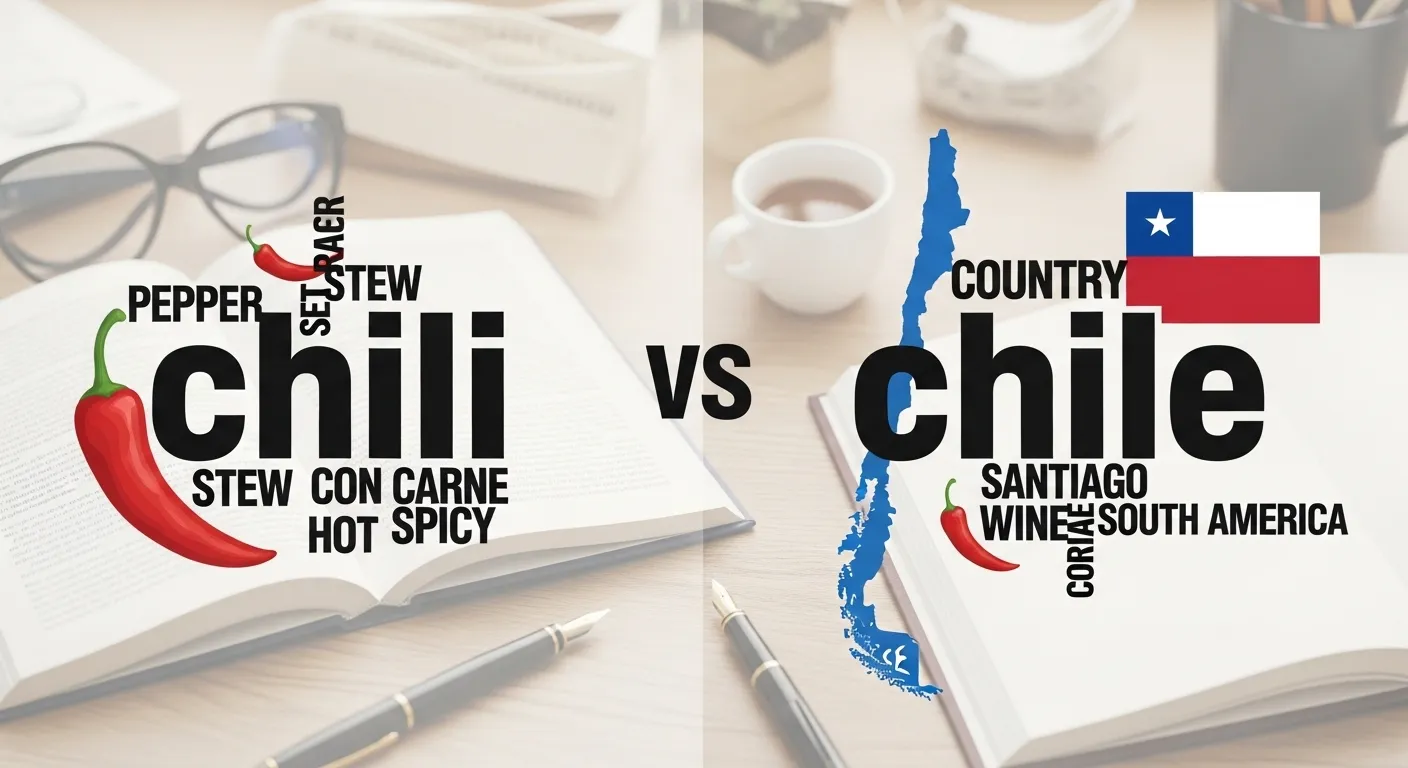
One small spelling difference can completely change what you mean. Chili and Chile are both correct words, but they are not interchangeable in every context. Chili can refer to a hot pepper and, especially in American English, to a spicy dish made with ingredients such as meat, beans, tomatoes, and seasonings.
Chile is the name of the country in South America, but chile is also used for a chili pepper in some regional and Spanish-influenced varieties of English, particularly in the U.S. Southwest. For example, you might write, “She added a chili pepper to the sauce,” but “They traveled to Chile last summer.
” You may also encounter chilli, a common spelling for the pepper in British English and several other varieties. If you’re searching for chili or chile, this guide will explain their meanings, regional usage, and differences, with clear examples to help you choose the right word for your sentence.
Chili or Chile
Both chili and chile are correct, but they are used in different ways.
- Chili is the most common spelling in American English, especially when referring to the spicy dish, such as chili con carne.
- Chile is often used for the pepper itself, especially in Southwestern United States and Mexican cooking.
Quick Examples
- I made a big pot of chili for dinner.
- This recipe uses roasted green chiles.
- Texas is famous for its beef chili.
- Hatch green chiles are popular in New Mexico.
So, if you are talking about the dish, chili is usually the best choice. If you are referring to the pepper, especially in culinary contexts, chile is also widely accepted.
The Origin of Chili and Chile
The word comes from the Nahuatl word chīlli, the language once spoken by the Aztecs in Mexico. It referred to the spicy pepper plant that has been used in cooking for thousands of years.
When Spanish explorers encountered the pepper, they adopted the word as chile. This spelling became standard in Spanish and remains so today.
Later, English speakers borrowed the term. Over time, the spelling shifted. In American English, chili became more common, especially in the United States. This version was easier for English speakers to pronounce and spell.
That is why both forms exist today:
- Chile reflects the original Spanish spelling.
- Chili reflects the adapted English spelling.
This is a classic example of how words change when they move between languages.
British English vs American English Spelling
Unlike many spelling differences, this is not a simple US-versus-UK issue. Instead, usage depends more on context than geography.
In American English:
- Chili is the standard spelling for the dish.
- Chile is often used for the pepper, especially in regional cuisine.
In British English:
- Chilli is actually the preferred spelling.
- It is used for both the pepper and the dish.
This adds a third variation to the mix.
Spelling Comparison Table
| Region | Preferred Spelling | Common Use |
| United States | Chili | Dish, general use |
| Southwestern US | Chile | Pepper, culinary use |
| United Kingdom | Chilli | Pepper and dish |
| Australia | Chilli | Pepper and dish |
| Canada | Chili / Chilli | Both are seen |
Which Spelling Should You Use?
The best spelling depends on your audience.
For American Audiences
Use chili when referring to the dish. It is the most familiar and widely accepted spelling.
Example:
- Our restaurant serves award-winning beef chili.
Use chile when referring to specific peppers, especially in Mexican or Southwestern recipes.
Example:
- Add two chopped green chiles.
For British and Commonwealth Audiences
Use chilli for both the pepper and the dish.
Example:
- This chilli sauce is very hot.
For Global Audiences
If your audience is international, consider using:
- Chili for general American-style content.
- Chilli for broader international appeal.
- Chile when discussing the pepper in a culinary or botanical context.
Common Mistakes with Chile or Chili
Many writers mix these spellings incorrectly. Here are the most common mistakes.
Mistake 1: Using Chile for the Dish in General Writing
❌ I cooked a bowl of chile.
✅ I cooked a bowl of chili.
Mistake 2: Confusing Chile with the Country
❌ I love food from chili.
✅ I love food from Chile. (country)
✅ I love spicy chili. (food)
Mistake 3: Mixing Regional Spellings in One Piece
❌ This chilli recipe uses roasted chilis.
✅ This chilli recipe uses roasted chillies. (UK)
✅ This chili recipe uses roasted chiles. (US)
Mistake 4: Assuming One Spelling Is Wrong
Both chili and chile are correct. The key is using the right one in the right context.
Chile and Chili in Everyday Examples
Here is how these words appear in daily life.
In Emails
- Please bring your homemade chili to the office party.
- We need fresh green chiles for tonight’s menu.
In News Headlines
- Annual Chili Cook-Off Draws Thousands
- New Mexico Celebrates Hatch Chile Festival
On Social Media
- This chili recipe is perfect for cold nights.
- Roasted green chiles make everything better.
In Formal Writing
- Chili remains one of the most popular comfort foods in America.
- The chile pepper has played a major role in global cuisine.
Chile vs Chili – Google Trends & Usage Data
Search data shows that chili is far more popular in the United States. It is the dominant spelling for recipes, cook-offs, and food-related searches.
Chile is also widely searched, but it often appears in searches related to:
- Chile peppers
- Hatch chile
- New Mexican cuisine
- The country Chile
In the United Kingdom, chilli is by far the most common spelling.
Popularity by Region
| Country | Most Common Spelling |
| United States | Chili |
| United Kingdom | Chilli |
| Australia | Chilli |
| New Zealand | Chilli |
| Mexico (English content) | Chile |
| Canada | Chili / Chilli |
This pattern reflects both language traditions and culinary culture.
Chili vs Chile vs Chilli – Comparison Table
| Word | Meaning | Main Region | Best Use |
| Chili | Spicy dish; general term | United States | American writing |
| Chile | Pepper; Spanish form | Mexico, Southwestern US | Culinary and botanical use |
| Chilli | Pepper and dish | UK, Australia, Commonwealth | British English writing |
When to Use Chili, Chile, or Chilli
Choosing the correct form is easier when you match it to your audience and purpose.
- Use chili for American readers and for the famous meat dish.
- Use chile when referring to peppers, especially in Mexican or Southwestern cooking.
- Use chilli for British, Australian, and international English audiences.
Think about where your readers are and what you are describing.
FAQs
Is chili or chile correct?
Both are correct. Chili usually refers to the dish, while chile often refers to the pepper.
What is the difference between chili and chile?
Chili is commonly the cooked dish. Chile is often the pepper itself, especially in Mexican cuisine.
Is chilli also correct?
Yes. Chilli is the standard British spelling for both the pepper and the dish.
Which spelling is used in America?
Americans usually use chili. In the Southwest, chile is also very common for peppers.
Is Chile the country or the pepper?
It can mean both. Context tells you which one is intended.
Should I write chili powder or chile powder?
Both are used. Chili powder is more common in general American English.
Why does New Mexico use chile?
New Mexico follows Spanish and regional culinary traditions, so chile is the preferred spelling there.
Conclusion:
Choosing between chili and chile is simple once you know the context. Chili is the preferred spelling for the popular dish in American English. Chile is often used for the pepper, especially in Mexican and Southwestern cooking. In British English, chilli is the standard form for both.
The key is consistency. Use the spelling that matches your audience and stick with it throughout your writing. That way, your content stays clear, professional, and easy to understand.
In short: chili for the dish, chile for the pepper, and chilli for British English.
Discover More About:
Minimise or Minimize: Meaning, Difference, and Usage
Eminent or Imminent – Meaning, Difference & Usage
Misinformation or Disinformation: Difference and Usage (2026)