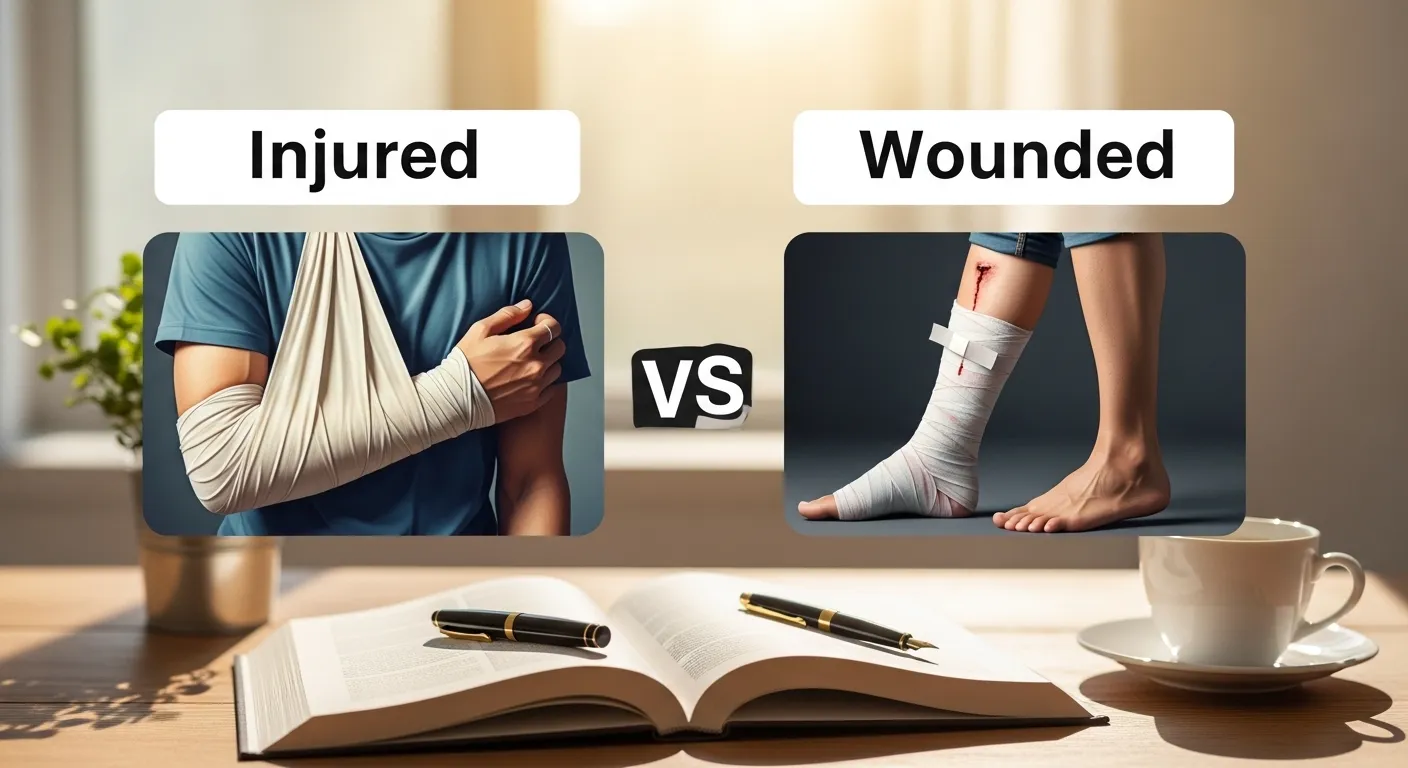
Injured or wounded—which word should you use? Both describe harm, but they are not always interchangeable. Injured is the broader word for physical harm or damage and can describe someone hurt in an accident, during sports, or through physical trauma. Wounded usually emphasizes a specific bodily wound or trauma, especially when someone is hurt by a weapon, attack, or other physical force.
For example, “She was injured in a car accident,” while “The soldier was wounded in battle.” The difference also appears in figurative language: you can have injured pride or an injured reputation, while wounded pride, wounded feelings, and a wounded ego are common expressions with a more emotional tone.
If you’re searching for injured or wounded, you likely want to know when each word is correct, whether they can be used interchangeably, and which sounds more natural in different contexts. This guide explains the difference with clear examples and practical usage tips.
Injured or Wounded
Injured and wounded are both correct, but they are used in different situations.
- Injured is the general term for physical harm.
- Wounded usually means hurt by a weapon, such as a gun, knife, or explosive.
For example:
- She was injured in a car accident.
- Two soldiers were wounded during the attack.
In everyday writing, injured is more common. It covers accidents, sports, falls, and other types of harm. Wounded is often used in military, violent, or dramatic situations.
So, if the harm comes from an accident, use injured. If it comes from combat or an attack, use wounded.
The Origin of Injured and Wounded
Origin of Wounded
The word wounded comes from the Old English word wund, meaning a cut, break, or injury to the body. It has deep roots in Germanic languages.
Unlike injured, wounded has long been tied to visible bodily harm, especially from weapons.
Origin of Injured
The word injured comes from the Latin word injuria, meaning wrong, damage, or injustice. It entered English through Old French and later became a common legal and medical term.
At first, it referred to harm in a broad sense. Over time, it became strongly linked with physical injury.
Why the Difference Exists
The difference comes from history. Injured developed as a broad, formal term. Wounded remained more specific and vivid. That is why modern English still uses them in different contexts.
British English vs American English Spelling
Good news: there is no spelling difference between British and American English for these words.
Both varieties use:
- injured
- wounded
The difference lies in usage, not spelling. American and British writers follow the same rules.
Usage Comparison Table
| Context | Preferred Word | Example |
| Car accident | Injured | Three people were injured in the crash. |
| Sports | Injured | The player was injured during the match. |
| War | Wounded | Several soldiers were wounded in battle. |
| Shooting | Wounded | One officer was wounded in the incident. |
| General harm | Injured | No one was seriously injured. |
Which Spelling Should You Use?
Since both words have the same spelling worldwide, the real question is which word you should use.
For American Audiences
Use injured for accidents, health reports, and general news. Use wounded for military or violent incidents.
For British Audiences
The same rule applies. British English follows the same distinction.
For Global Audiences
Choose based on context:
- Use injured for broad, everyday communication.
- Use wounded when referring to weapon-related harm.
If you want the safest choice, injured is usually best.
Common Mistakes with Wounded or Injured
Many writers mix these words because both involve harm. Here are the most common mistakes.
Mistake 1: Using Wounded for Minor Accidents
❌ He was wounded in a bicycle fall.
✅ He was injured in a bicycle fall.
Mistake 2: Using Injured in Combat Reports When Precision Matters
❌ Three soldiers were injured by enemy fire.
✅ Three soldiers were wounded by enemy fire.
Mistake 3: Assuming One Word Is More Correct
Both words are correct. The key is choosing the one that fits the situation.
Mistake 4: Using Them as Exact Synonyms
They overlap, but they are not identical. Wounded is more specific.
Wounded and Injured in Everyday Examples
In Emails
- One employee was injured at the construction site.
- No staff members were injured during the incident.
In News Reports
- Five passengers were injured in the bus accident.
- Two civilians were wounded in the explosion.
On Social Media
- I injured my ankle while running.
- The journalist was wounded while covering the conflict.
In Formal Writing
- The injured worker received immediate medical care.
- The wounded soldiers were evacuated quickly.
Wounded vs Injured
Search data shows that injured is far more common than wounded in everyday English.
Where Injured Is Most Popular
- United States
- United Kingdom
- Canada
- Australia
- India
It appears often in:
- Health news
- Sports reports
- Accident updates
- Legal writing
Where Wounded Is Most Common
- War reporting
- Historical writing
- Crime news
- Emergency reporting
Why the Difference Matters
People use injured for ordinary situations. Wounded is reserved for serious, violent, or weapon-related events. This makes each word more precise.
Comparison Table: Injured vs Wounded
| Feature | Injured | Wounded |
| Meaning | General physical harm | Harm caused by a weapon or attack |
| Common Use | Everyday situations | Military or violent events |
| Tone | Neutral | Dramatic, serious |
| Medical Context | Very common | Less common |
| News Usage | Accidents and sports | War and shootings |
| Best For | Broad communication | Specific, forceful reporting |
FAQs
1. Are injured and wounded the same?
Not exactly. Both mean hurt, but wounded usually involves weapons or violent attacks.
2. Can I use wounded for an accident?
Usually no. Injured is the better choice for accidents.
3. Is wounded more serious than injured?
Often yes. It can sound more severe and emotionally powerful.
4. Which word is more common?
Injured is much more common in everyday English.
5. Do British and American English use different spellings?
No. Both use the same spellings: injured and wounded.
6. Is a gunshot victim injured or wounded?
Both can be correct, but wounded is more precise.
7. Which word should journalists use?
Use injured for accidents and general harm. Use wounded for attacks, shootings, or warfare.
Conclusion
Choosing between injured and wounded is simple once you know the difference.
Injured is the general word for harm caused by accidents, sports, or everyday events. Wounded is more specific and usually refers to harm caused by weapons or violence.
When in doubt, use injured. It is broader, safer, and fits most situations. Use wounded when the context involves conflict, attack, or combat.
A good rule to remember is: accidents injure, weapons wound. Using the right word makes your writing clearer, sharper, and more professional.
Find More About:
Analyses or Analysis: Meaning, Difference And Usage
Synched or Synced: Which Spelling Is Correct?