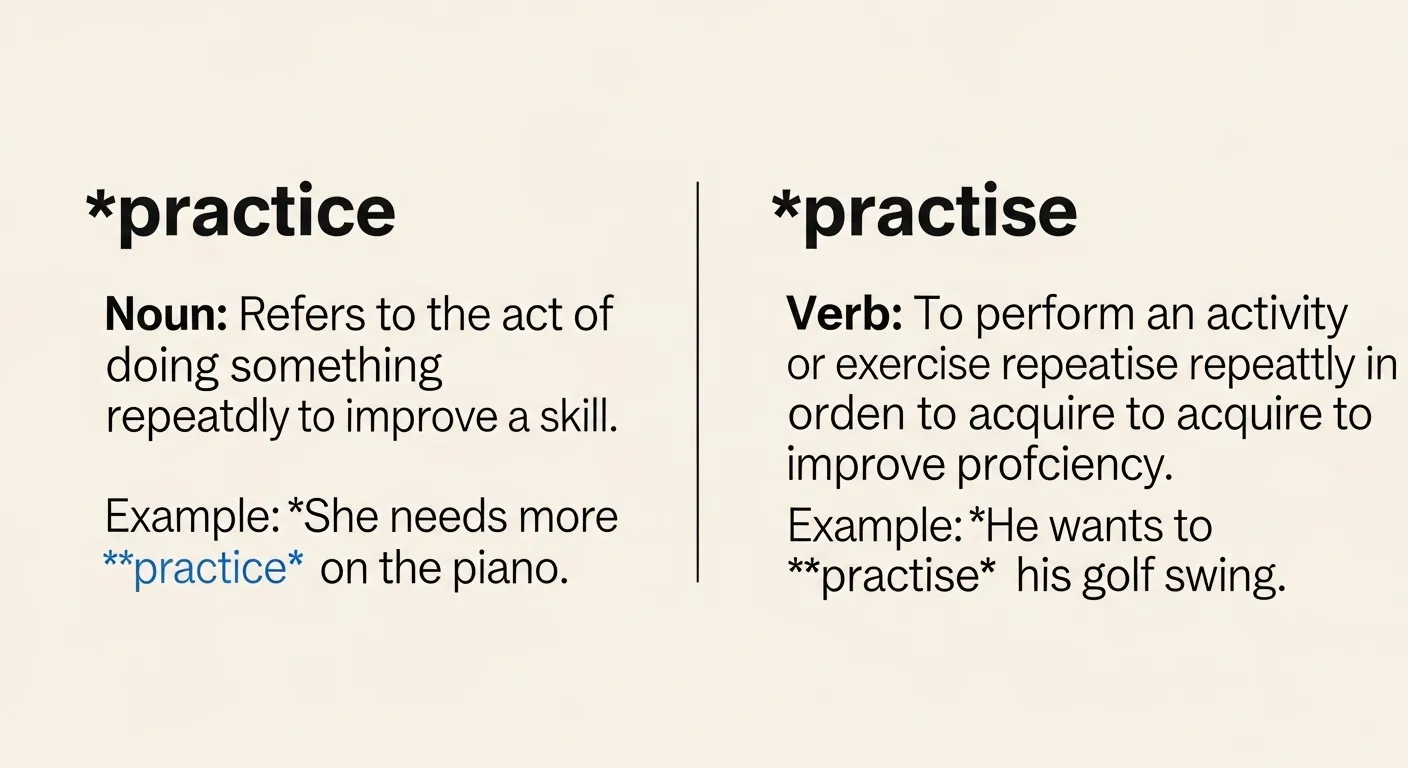
Is it practice or practise? The answer depends on where you use English and whether the word is a noun or a verb. In American English, practice is used for both the noun and verb. In British English, practice is normally the noun, while practise is the verb.
For example, British English uses “I need more practice” but “I practise the piano every day.” American English uses practice in both sentences. Both forms relate to doing something repeatedly to improve a skill, but the spelling changes in British English according to its grammatical role.
This is why the two words are easy to mix up, especially when switching between American and British writing. If you’re searching for practice or practise, this guide explains the simple noun-and-verb rule, regional spelling difference, meanings, and clear examples so you can choose the correct form with confidence.
Practice or Practise
The quick answer is simple:
- Practice is always a noun.
- In American English, practice is also the verb.
- In British English, practise is the verb.
Examples:
- She goes to football practice every evening. (noun)
- I practice piano every day. (American English verb)
- I practise piano every day. (British English verb)
A simple trick can help:
- C in practice = thing (noun)
- S in practise = action (verb)
The Origin of Practice and Practise
Both words come from the same root. They trace back to the Greek word praktikos, meaning active or fit for action. Later, the word moved into Latin as practica, then into Old French as pratique.
From French, it entered English in the Middle Ages. For many years, English spelling was not fixed. Writers often used different forms of the same word.
Over time, British English developed a pattern. It separated the noun and verb forms:
- Practice for the noun
- Practise for the verb
American English later simplified the spelling. It kept practice for both forms.
This is why both spellings exist today.
British English vs American English Spelling
The main difference lies in grammar and regional spelling rules.
British English
- Practice = noun
- Practise = verb
American English
- Practice = noun and verb
- Practise is not used
Comparison Table
| Function | British English | American English |
| Noun | Practice | Practice |
| Verb | Practise | Practice |
Examples
| Sentence Type | British English | American English |
| Noun | Medical practice is changing. | Medical practice is changing. |
| Verb | Doctors practise medicine. | Doctors practice medicine. |
Which Spelling Should You Use?
Your choice depends on your audience.
Use Practice if:
- You are writing for an American audience.
- You want one spelling for both noun and verb.
- You are creating global content and prefer the most widely accepted form.
Use Practise if:
- You are writing in British English.
- Your audience is in the UK, Australia, New Zealand, or other Commonwealth countries.
- You need correct British grammar for formal writing.
Best Choice by Audience
| Audience | Recommended Spelling |
| United States | Practice |
| United Kingdom | Practice (noun), Practise (verb) |
| Australia/New Zealand | Practice (noun), Practise (verb) |
| Global/International | Practice |
Common Mistakes with Practise or Practice
Many writers mix these words, especially when switching between British and American English.
Common Errors
❌ I need to practice more. (British English)
✅ I need to practise more.
❌ Her dental practise is very successful.
✅ Her dental practice is very successful.
❌ He wants to practise law in New York.
✅ He wants to practice law in New York.
Why These Mistakes Happen
- The words sound the same.
- Many spell-check tools default to American English.
- Writers often mix UK and US spelling styles.
Practise and Practice in Everyday Examples
Seeing the words in real life makes the difference easier to understand.
In Emails
- Please practice the presentation before tomorrow. (US)
- Please practise the presentation before tomorrow. (UK)
In News Writing
- The team returned to practice after the break.
- Surgeons must practise strict safety procedures.
On Social Media
- Daily practice leads to progress.
- You must practise what you preach.
In Formal Writing
- Regular practice improves performance.
- Lawyers must practise within legal guidelines.
Practise vs Practice – Google Trends & Usage Data
Usage depends heavily on region.
- Practice dominates in the United States.
- Practise is common in the United Kingdom, Australia, and New Zealand.
- Globally, practice appears more often because American English has a larger online presence.
Search Intent by Region
| Country | Preferred Form |
| United States | Practice |
| Canada | Practice (mostly) |
| United Kingdom | Practise (verb), Practice (noun) |
| Australia | Practise (verb), Practice (noun) |
| New Zealand | Practise (verb), Practice (noun) |
Usage by Context
| Context | Preferred Form |
| Education | Practice |
| Medicine | Practice |
| Legal Writing (UK) | Practise / Practice |
| Digital Content | Practice |
Practice vs Practise: Comparison Table
| Feature | Practice | Practise |
| Part of Speech | Noun; Verb (US) | Verb (UK) |
| American English | Yes | No |
| British English | Noun | Verb |
| Example | I need more practice. | I practise daily. |
| Global Acceptance | Very High | Moderate |
FAQs
Is practice or practise correct?
Both are correct. The right choice depends on whether you are using British or American English.
What is the difference between practice and practise?
In British English, practice is a noun and practise is a verb. In American English, practice is both.
Does American English use practise?
No. American English uses practice for both noun and verb forms.
Is practise used in the UK?
Yes. In British English, practise is the standard verb spelling.
Which spelling should I use for international readers?
Practice is usually the safest choice because it is widely understood worldwide.
How can I remember the difference?
Think of practise with an S as an action. Verbs often involve action.
Can practice be a verb?
Yes. In American English, practice works as both a noun and a verb.
Conclusion
The difference between practice and practise is simple once you know the rule. Both spellings are correct, but they are used differently depending on the form of English.
In American English, practice does all the work. It can be a noun or a verb. In British English, the roles are split: practice is the noun, and practise is the verb.
If your audience is in the United States or international, practice is usually the best choice. If you are writing for the UK or other Commonwealth countries, use practise as the verb and practice as the noun.
Remember this simple rule: practice is the thing, practise is the action. Once you know that, you will never confuse them again.
Find More About:
Minimise or Minimize: Meaning, Difference, and Usage
Eminent or Imminent – Meaning, Difference & Usage
Misinformation or Disinformation: Difference and Usage (2026)

I’m a U.S. based content writer and language researcher with a strong focus on English grammar, spelling differences, and frequently confused terms. My writing is aimed at helping readers write more clearly and correctly in daily use, workplace communication, and digital content.